AI Is Changing the Workforce Faster Than Expected
The Reality Behind the Silicon Valley Restructuring
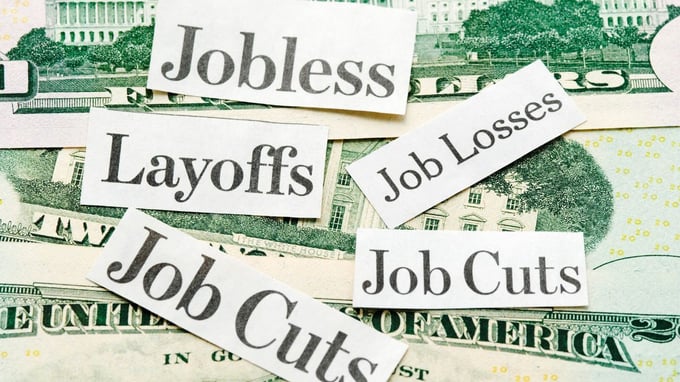
Meta’s massive decision in May 2026 to lay off roughly 8,000 employees—amounting to 10% of its total global team—is far more than a typical tech industry layoff headline. As documented by news reports from The Next Web and India Today, this strategic move reveals a massive, structural transformation taking place across the global enterprise landscape.
Corporate leadership teams worldwide are carefully analyzing why AI is reshaping global hiring faster than expected. Organizations are rapidly abandoning legacy growth strategies that relied on growing headcount solely for scale. Instead, modern corporate playbooks focus on building lean, highly automated, and distributed workforce architectures that maximize operational agility, prioritize machine learning expertise, and access talent globally without geographic boundaries.
Image file name suggestion: meta-workforce-evolution-timeline-2026.webp Alt Text: Detailed infographic chart outlining Meta's structural corporate transition from legacy headcount scaling to a lean, AI-native workforce architecture in 2026.
What This Guide Covers
- The strategic factors behind Meta's 2026 global workforce adjustments.
- How massive capital reallocations into AI infrastructure are shifting global hiring targets.
- The specific specialized roles are seeing explosive growth despite high-profile tech layoffs.
- Why agile, cross-border contractor and EOR staffing structures are the new standard.
- Operational frameworks for borderless, remote-first software and engineering teams.
- How Slasify eliminates the compliance friction of global talent acquisition.
Why Tech Companies Are Restructuring Their Workforces
The Transition from Headcount Accumulation to Tech Efficiency
For nearly a decade, global technology companies scaled their baseline headcounts aggressively to fuel rapid market expansion. However, the maturation of enterprise-grade machine learning models has fundamentally changed how executive leadership calculates workforce efficiency. Detailed reports from Reuters and Bloomberg indicate that instead of maintaining large internal operational and support teams, companies are reallocating billions of dollars directly into:
- Advanced generative AI automation and custom LLM development.
- Gigawatt-scale AI data center infrastructure and high-performance computing hardware.
- Integrated multi-region cloud database systems and automated backend pipelines.
- AI-powered compliance, content design, and algorithmic monitoring applications.
This paradigm shift forces enterprises to build flatter corporate structures comprised of smaller, highly autonomous product pods that can execute complex strategies with minimal administrative drag.
AI Is Changing Hiring Priorities Worldwide

The Shift from Generalized Labor to Niche Technical Experts
Artificial intelligence is not eliminating the need for human capital; instead, it is re-engineering the skills corporate buyers value most. Traditional, repetitive operational positions are seeing slower hiring growth as automation absorbs manual tasks. Simultaneously, corporate demand has surged exponentially for highly specialized technical experts.
Image file name suggestion: enterprise-hiring-priority-pyramid-2026.webp Alt Text: Pyramid graphic illustrating shifting B2B talent demand, highlighting specialized AI, machine learning, and cybersecurity positions as high-value priorities.
Organizations are prioritizing targeted project investments in:
- AI & Machine Learning Engineers: Sourced specifically for algorithmic fine-tuning and localized large language model training.
- Cybersecurity Architects: Necessary to defend complex, borderless corporate digital infrastructure against automated threats.
- Cloud & DevOps Specialists: Required to orchestrate data flows across disparate international server networks.
- Prompt Engineers & Data Analysts: Tasked with optimizing human-to-machine inputs to maximize software development outputs.
What This Means for Employers in 2026
The Agile Talent Mandate
To remain competitive in 2026, enterprises must replace rigid, localized hiring methods with a flexible global workforce strategy. Meta's concurrent elimination of 8,000 traditional roles, cancellation of 6,000 open requisitions, and reassignment of 7,000 workers to AI initiatives proves that talent must be modular, highly specialized, and quickly deployable via global contractor and Employer of Record (EOR) frameworks.
Global Hiring Is Becoming More Borderless
Despite localized reductions in legacy tech centers, the international search for premium technical talent is expanding rapidly. Because elite artificial intelligence developers, data scientists, and cloud architects are distributed across the globe, companies are breaking free from geographic constraints.
As reported by The Economic Times, strategic international tech corridors are experiencing significant inbound corporate investment:
- Singapore & Southeast Asia: Functioning as a high-exposure regional anchor for major tech multinationals scaling APAC engineering hubs.
- India: Serving as the cornerstone for deep software development, enterprise AI-training architecture, and back-office tech operations.
- Eastern Europe & the Middle East: Emerging as high-demand locations for advanced cryptographic engineering, remote operations, and digital transformation initiatives.
By operating borderlessly, companies decouple their growth potential from their physical headquarters location, tapping into top-tier tech talent pools wherever they reside.

Flexible Hiring Models Are Becoming the New Standard
To navigate rapid innovation cycles without assuming the long-term liabilities of permanent local headcount expansion, savvy corporate entities utilize an intentional blend of multiple talent structures.
[Image comparing workforce models charting traditional hiring, independent global contractors, and Slasify global EOR solutions across scalability, workforce flexibility, and AI adaptability] Image file name suggestion: slasify-workforce-model-comparison-matrix.webp Alt Text: Comprehensive B2B comparison matrix evaluating traditional employment models against independent global contractors and Slasify's integrated global EOR platform.
By pairing core, internal leadership teams with flexible global contractors and regional Employer of Record (EOR) professionals, expanding businesses achieve maximum agility, lower structural operational costs, and accelerate project delivery times.
Why Compliance Still Matters in AI-Era Hiring
Accelerating your global onboarding speeds does not exempt your business from strict regional regulations. Transitioning to a borderless, remote-first staffing architecture actually increases your interaction with complex international labor frameworks.
When sourcing talent across multiple countries, your internal legal and HR teams must maintain complete compliance with:
- Country-specific labor regulations and mandatory workplace benefits.
- Strict localized worker classification rules are monitored by agencies like the Internal Revenue Service (IRS) in the United States, HM Revenue & Customs (HMRC) in the United Kingdom, or Singapore’s Ministry of Manpower (MOM).
- Segmented multi-country corporate tax reporting obligations and localized withholding mandates.
- Statutory monthly contributions to regional social systems, such as Singapore's Central Provident Fund (CPF).
Failing to navigate these cross-border complexities can expose your organization to severe classification audits, substantial back-tax penalties, and costly international labor disputes.
How Slasify Supports AI-Driven Workforce Expansion
Slasify removes the logistical friction of international expansion by providing an all-in-one global HR and payroll engine. Designed for agile enterprises navigating fast-moving tech cycles, Slasify allows you to:
- Deploy Turnkey EOR Services: Legally onboard and pay full-time international workers across 150+ countries without building local legal entities.
- Automate Global Contractor Management: Generate legally vetted, country-specific B2B independent contractor agreements instantly.
- Consolidate Multinational Payroll: Pay your entire global workforce across 130+ distinct currencies via a single monthly processing execution.
- Strengthen Regulatory Compliance: Maintain close alignment with changing regional tax structures and evolving global labor standards.
The 2026 Blueprint for AI-Driven Global Teams
Meta's strategic 2026 workforce adjustment makes one reality clear: tracking why AI is reshaping global hiring faster than expected is vital for modern business survival. Traditional, rigid headcount planning cannot keep pace with today's compressed technological cycles. Forward-looking enterprises must embrace flexible, borderless, and compliant talent pipelines to build the lean, efficient teams required for long-term innovation.
Ready to optimize your workforce architecture and secure elite global tech talent without the entity setup delays? Book a free cross-border compliance audit with Slasify's regional HR experts today and scale your 2026 operations risk-free."
FAQs About AI and Global Hiring Changes
1. Why did Meta cut 8,000 jobs in May 2026?
Meta cut 8,000 jobs to transition toward an AI-native operational structure, reduce excessive management layers, and free up billions in capital to fund its historic $145 billion AI infrastructure push. As reported by The Guardian, this enables the company to operate via flatter team structures that deploy software much faster.
2. Is artificial intelligence lowering global hiring rates across all sectors?
No. While AI automation is slowing down hiring for repetitive administrative and operational tasks, it is driving explosive corporate demand for specialized technical roles. Companies are aggressively recruiting experts in machine learning model optimization, cybersecurity hardening, and cloud architecture to lead their digital transformation initiatives.
3. What specific roles are seeing the fastest growth following tech restructuring?
The fastest-growing career pathways include AI systems engineers, machine learning specialists, cloud infrastructure architects, zero-trust cybersecurity experts, and prompt optimization engineers. Modern enterprises prioritize these specialized technical roles to build automated workflows that boost bottom-line efficiency.
4. What are the primary financial risks of misclassifying international contractors?
Misclassifying international workers as contractors can trigger severe retroactive tax audits, major penalty assessments from bodies like the IRS or MOM, and costly labor disputes. Organizations can face significant fines, demands for backdated employee benefits, and potential loss of local corporate operating privileges.
5. Can an organization hire specialized technical talent globally without setting up local entities?
Yes, enterprises can compliantly onboard top-tier international tech talent without establishing complex local legal entities by partnering with a global EOR platform like Slasify. Slasify provides the pre-established legal infrastructure, automated multi-currency payroll, and regional compliance guardrails required to scale teams safely.
6. Which international regions are emerging as primary tech contractor hubs?
The APAC region—anchored by elite technology ecosystems in Singapore, India, Malaysia, and the Philippines—leads global contractor hiring trends. These locations attract considerable international corporate investment due to their highly developed digital infrastructure and deep pools of specialized engineering talent.
7. How does Slasify consolidate international multi-currency contractor payments?
Slasify aggregates an enterprise's entire international contractor invoice queue into one single monthly payment execution. The platform automatically translates conversions across more than 130 regional currencies, ensuring that your distributed workforce is paid accurately and on time while adhering strictly to local banking compliance rules.