
Employment Insights
How to Pay International Employees in USA?
Discover how to pay international employees legally and efficiently in the US. Compare EOR, global payroll, and contractor solutions.

Social Security is an integral part of the overall safety net, offering financial security and stability for millions of Americans by managing risks against unemployment or medical emergencies, ensuring a secure retirement.
Since Social Security tax is a mandatory federal requirement for both employers and employees, each party has its own set of obligations. Failing to comply would result in penalties. It’s important for both employers and employees in the U.S. to understand how this payroll tax works, so you can keep your company in good standing and your employees confident in their future.
In this article, we’ll walk you through:
- How Social Security contributions work in the US.
- The amount of contributions for employees and employers.
- The most commonly asked questions.
Under the Federal Insurance Contributions Act (FICA), Social Security tax funds the Old-Age, Survivors, and Disability Insurance (OASDI) program. This program provides retirement benefits, disability support, and survivor payments. Both employers and employees each contribute 6.2% of the employee's wages, totaling 12.4%, up to an annual wage base limit.
These contributions ensure that employees receive guaranteed, inflation-adjusted monthly benefits upon retirement or disability, safeguarding their financial well-being and providing critical family support.
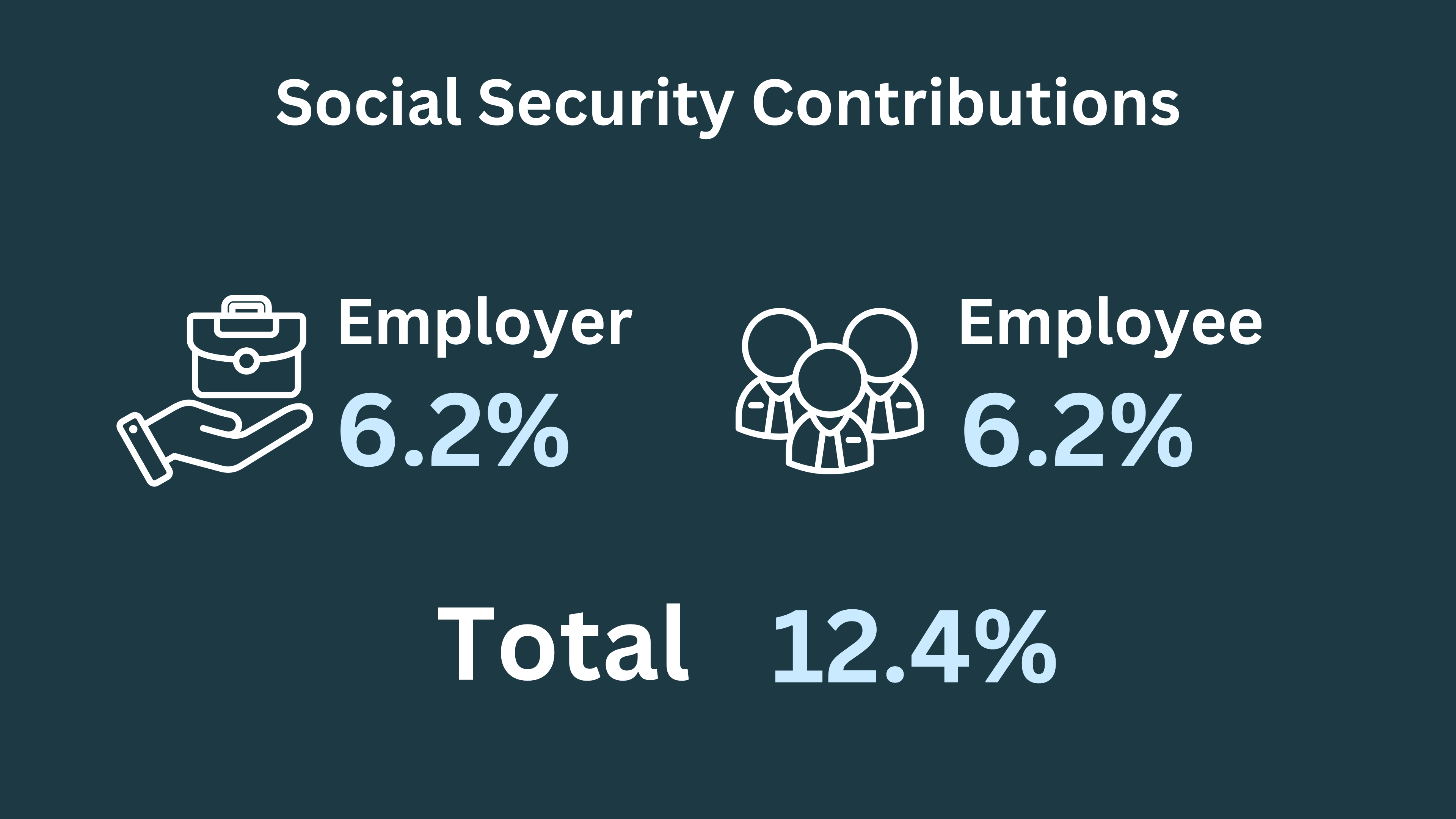
Reference: Social Security tax withholding rate (IRS)
Below is the latest Social Security tax rate for employers and employees in the U.S.:
6.2% Withholding: Employers withhold 6.2% of each employee’s gross wages, clearly shown on each payslip and summarized annually on Form W-2 (Boxes 3 & 4).
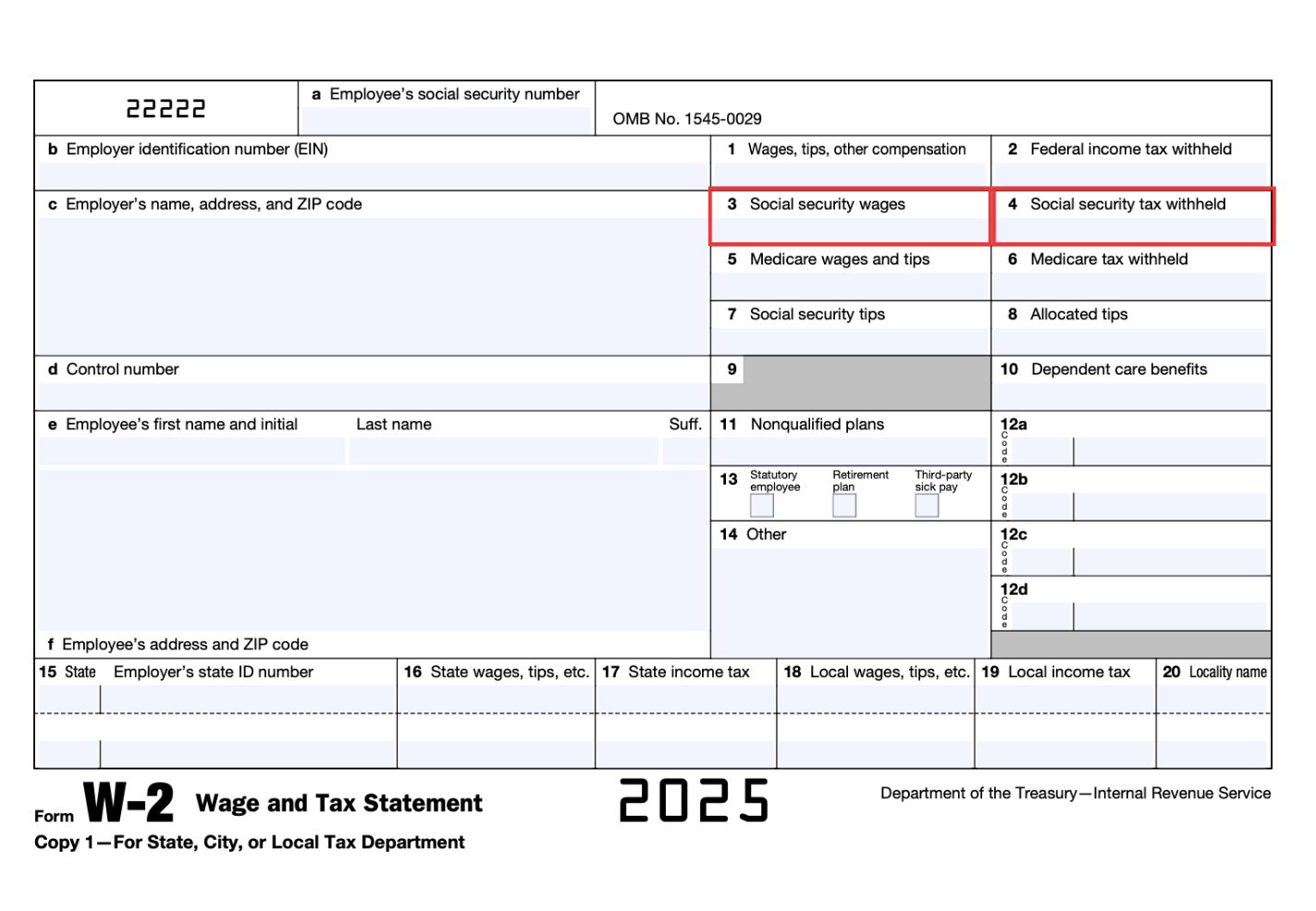
Reference: 2025 W-2 form for employees
Employees typically need no further action unless seeking refunds for excess withholding, which requires careful review of their W-2 for Social Security contributions.
Full Liability: Responsible for both “employee” (6.2%) and “employer” (6.2%) shares, with a total amount of 12.4% based on Social Security wage. Here’s an example below:
Mark is a self-employed digital marketing consultant who earns $90,000 in net income in 2025. Because he's both the “employee” and the “employer,” he must pay the full 12.4% Social Security tax on his earnings, up to the wage base limit. In this scenario, Mark needs to pay $11,160 ($90,000 x 12.4%) in total for his Social Security tax.

In addition to Social Security tax, U.S. employers must also pay Federal Unemployment Tax (FUTA) to support unemployment benefits. For most employers, the effective FUTA tax rate is 6.0% and applies to the first $7,000 paid to each employee during the year. FUTA is reported annually on IRS Form 940.
Note: Payroll tax rules can differ by state. Aside from federal requirements, employers need to check their state’s unemployment and payroll tax rules.
Having a clear understanding of employment guides for different roles, in different countries and regions, keeps your business compliant and ensures every employee’s benefits are properly funded.
Every year, the IRS sets a cap on the amount of an employee’s earnings subject to Social Security tax, which is known as the “wage base limit.” In 2025, the wage base limit for Social Security tax is set at $176,000 USD. Income that’s above the $176,000 threshold is not subject to the tax.
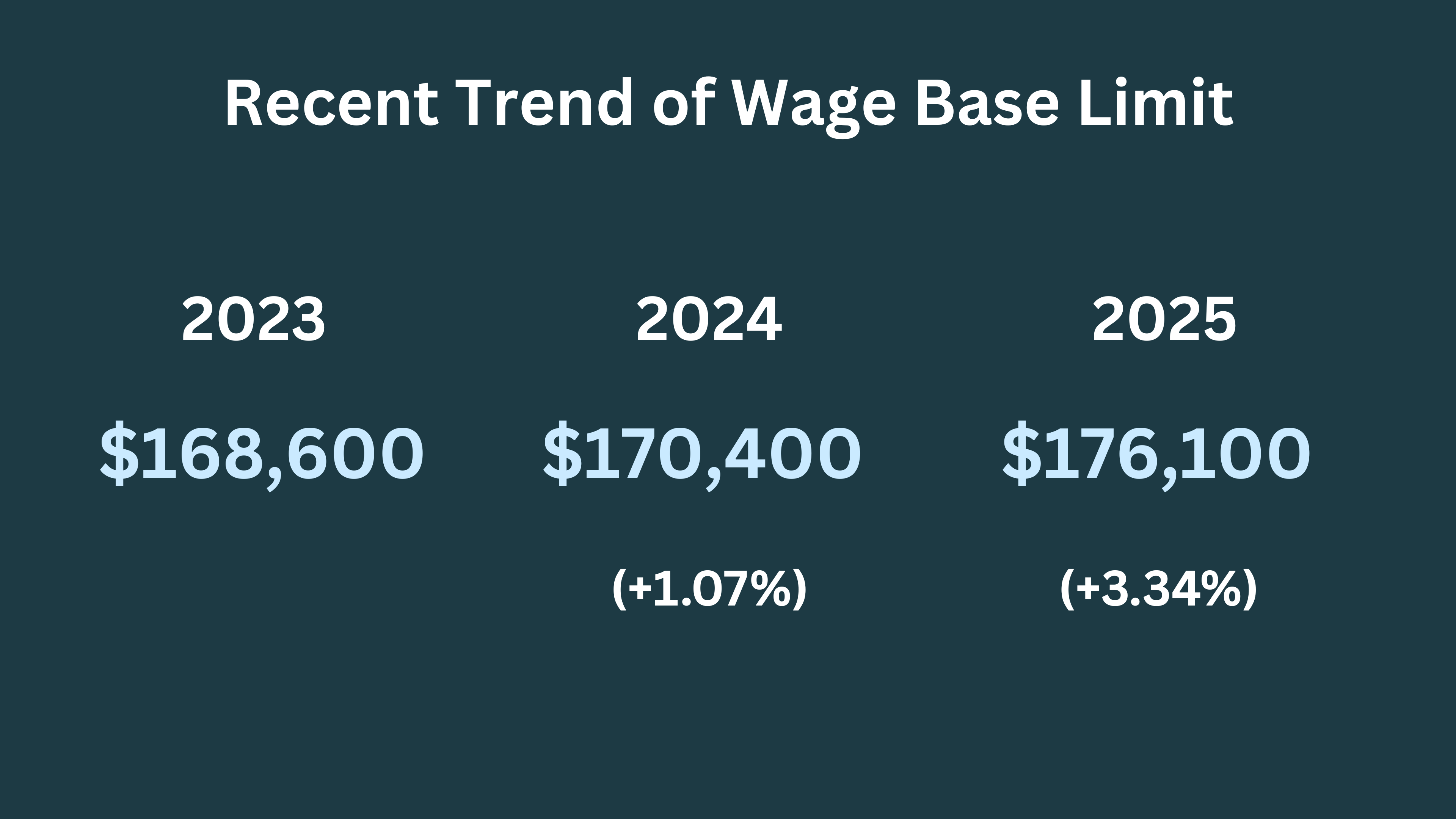
Reference: historic contributions and benefits (SSA)
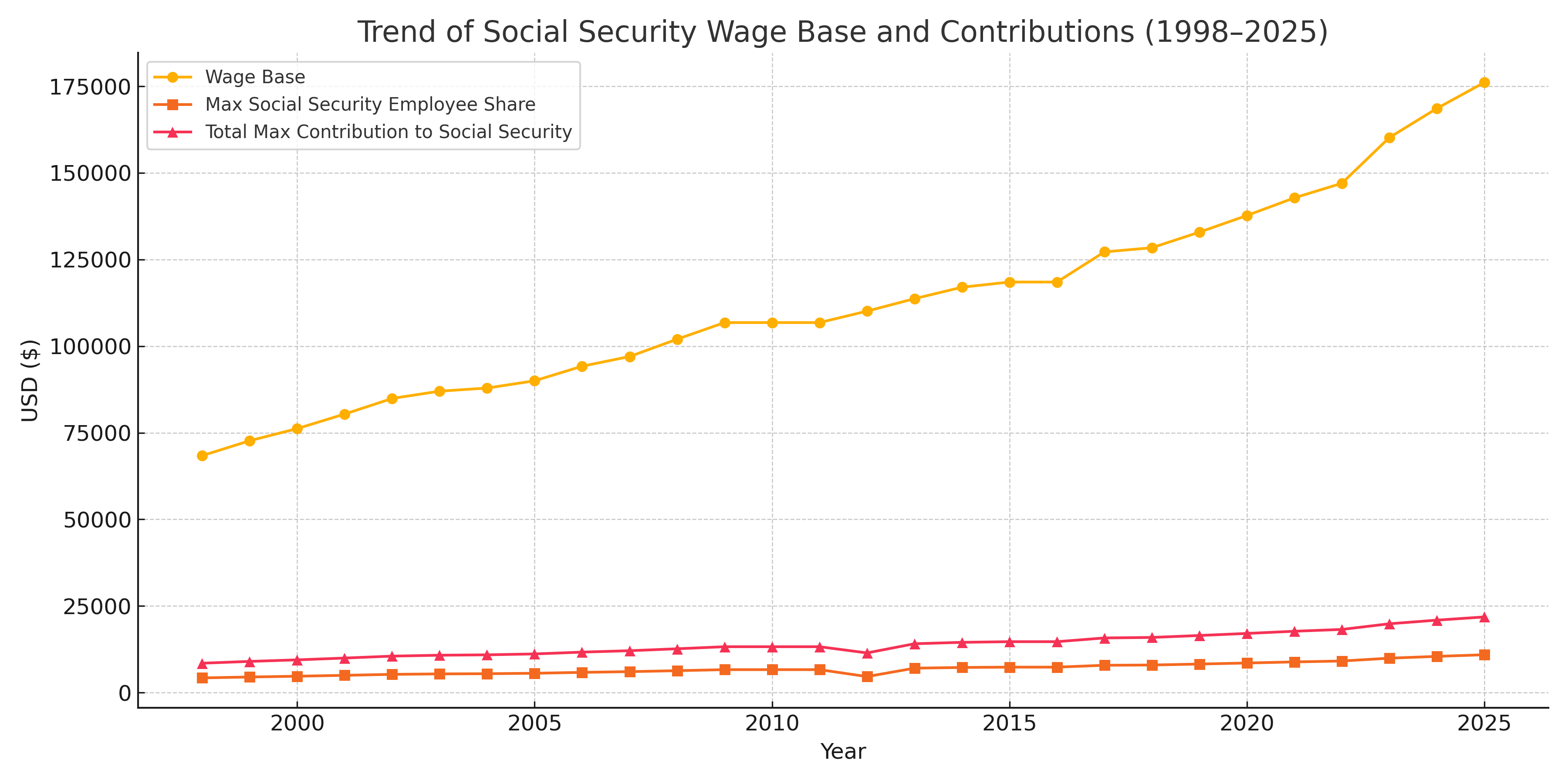
These figures highlight how Social Security tax has become a significant part of payroll expenses. For employers, it impacts cost forecasting and compliance planning. For employees, it shapes their understanding of retirement benefits and paycheck deductions.
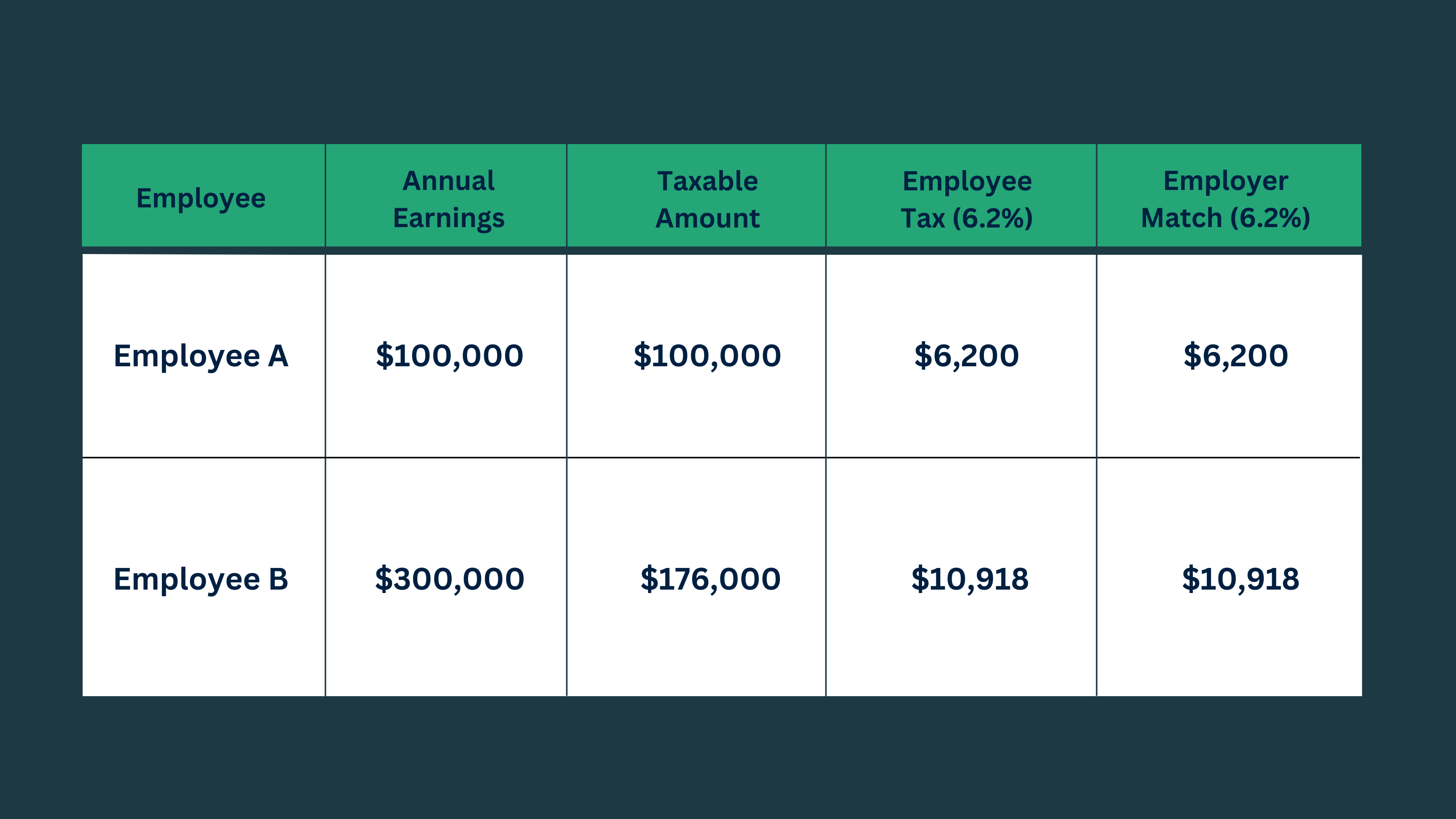
Understanding the wage base limit helps payroll teams avoid over-withholding and gives employees clarity on their maximum Social Security contributions for the year.
While both Social Security and Medicare taxes fall under FICA (Federal Insurance Contributions Act), they differ in rate structure, wage caps, and surtax rules.
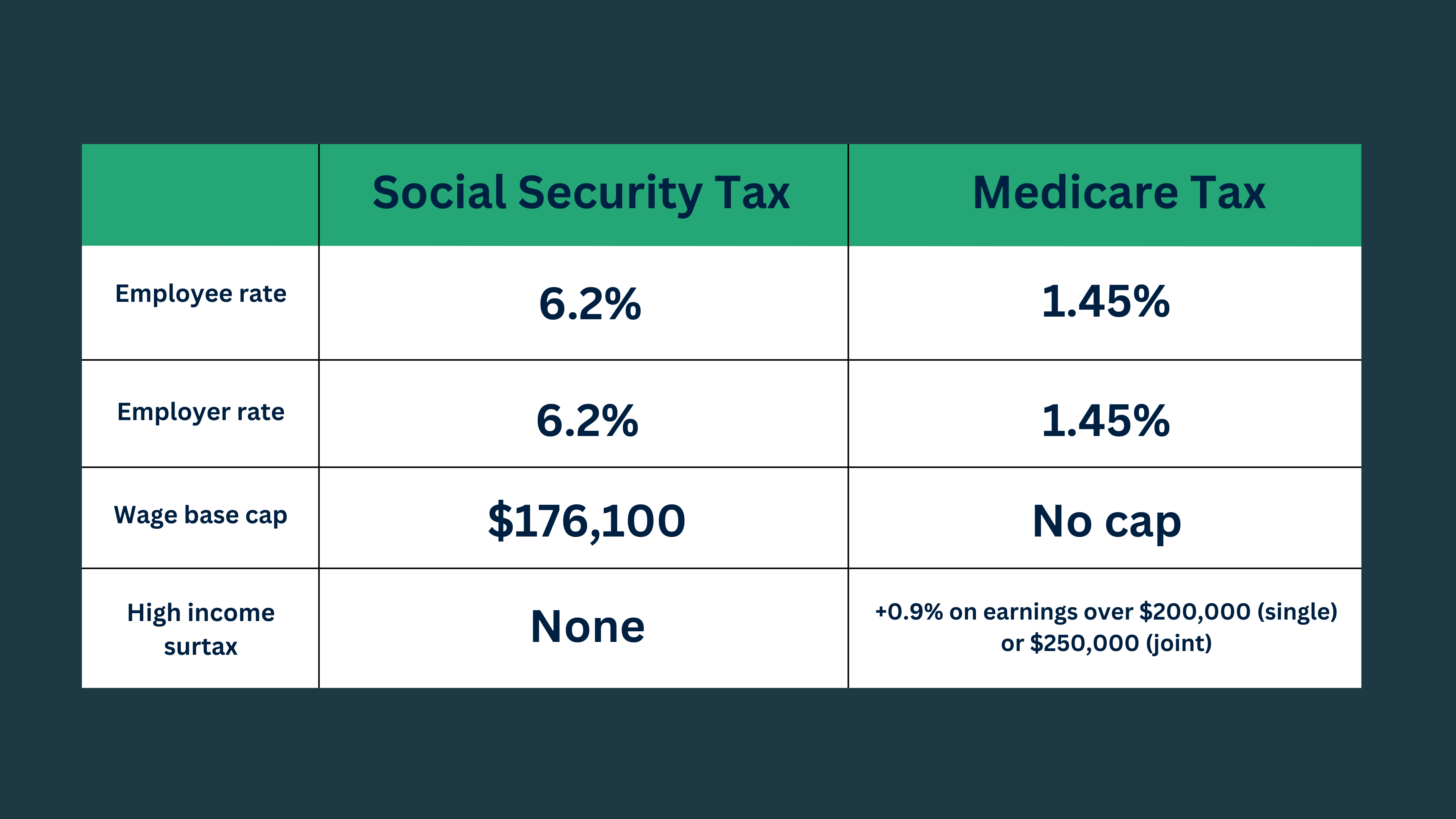
While Social Security tax is set at 12.4% total for employee & employer combined, Medicare tax by contrast, is levied at 1.45% on all earned wages. Medicare contribution is also matched by employers, but with no earnings limit.
High-income earners pay an additional 0.9% surtax on wages over $200,000 for single filers (or $250,000 for joint filers). All Medicare withholdings support the Medicare trust fund, which covers hospital and medical insurance. Below is the threshold amount for each type of filer:
This clear comparison helps employers apply the correct rates and cap to ensure compliance with IRS rules and gives employees full visibility into how their FICA deductions translate into long-term benefits.
Correctly distinguishing these taxes ensures accurate tax withholding for Social Security and Medicare compliance, protecting employers from penalties.
Although both Social Security and Medicare taxes fall under FICA, they serve distinct purposes: Social Security guarantees ongoing income replacement for retirees, disabled workers, and their dependents.
Medicare finances hospital and medical insurance for seniors and certain disabled individuals, focusing on covering the ever-rising healthcare costs going into the future. These two welfare programs form complementary pillars of America’s social safety net, with one securing income, and the other ensuring access to care.
While most U.S. workers must pay Social Security tax, a few groups qualify for exemption:
Employers should verify exemption status and maintain proper documentation to support any non-withholding.
When an employee has more than one job during the taxable year, each employer must withhold Social Security tax on the employee’s wages up to the $176,100 cap. Each employer’s withholding is separate from other employers, which means the taxes withheld might exceed the wage base limit amount. The employee can claim a refund from the Internal Revenue Service (IRS) the following year.
According to the IRS, self-employed individuals must pay both the employer and employee portions of the previously mentioned 12.4% Social Security tax (6.2% each), plus the 2.9% (1.45% each) from Medicare. The same wage base limit of $176,100 applies to self-employed individuals. If your question isn’t listed above, feel free to contact us for further details.
For both employers and employees in the U.S., getting Social Security and Medicare withholding right isn’t just a check in the box and numbers on a payslip. The programs are the foundation that secures employees’ financial stability. Accurate withholding and reporting of both Social Security and Medicare taxes protect your company from IRS penalties.

Managing a global workforce is challenging. Employers often lose clarity amid daily operations, making tailored solutions like Slasify essential for sustainable business growth.
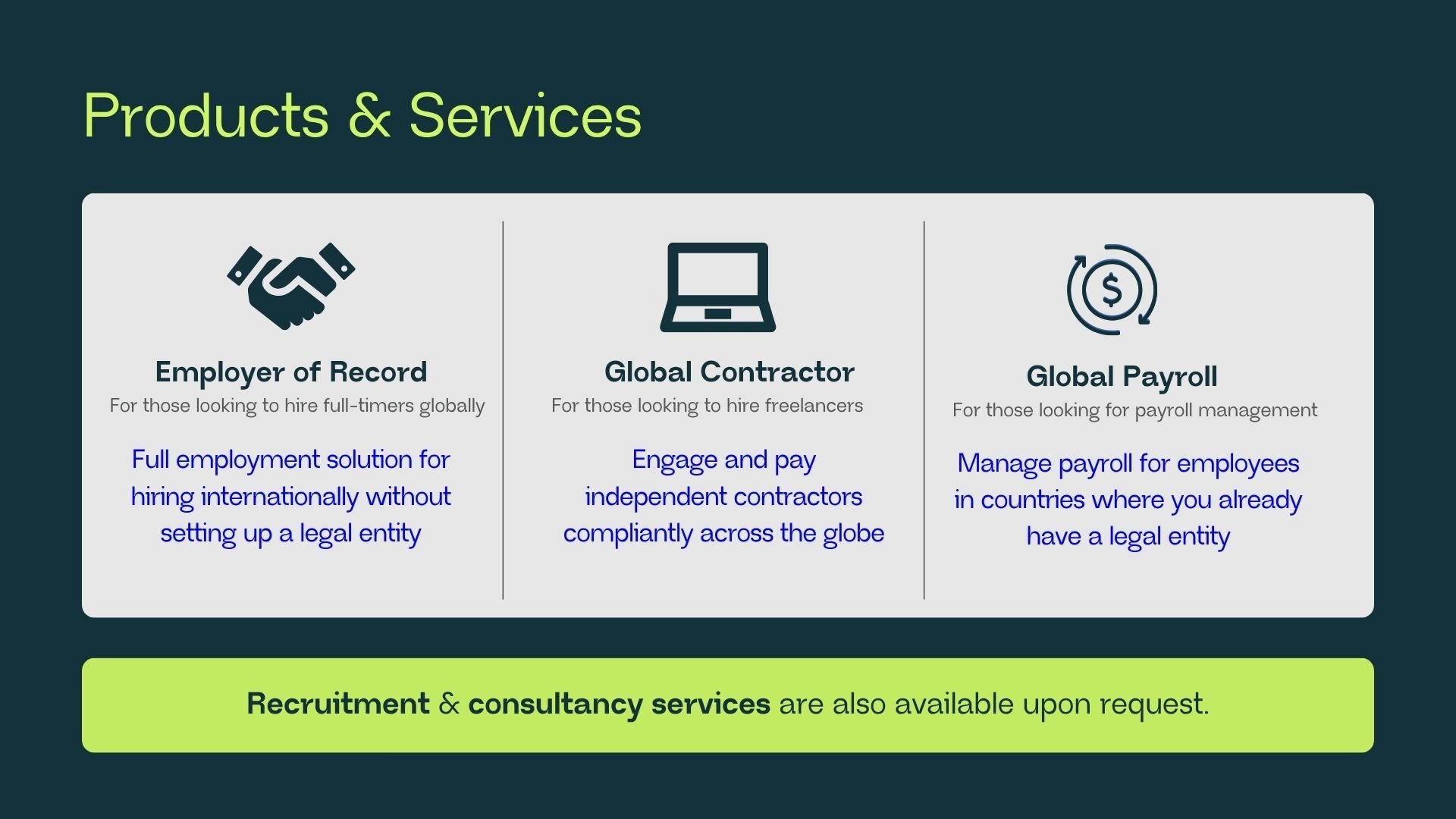
An Employer of Record (EOR) is a third-party organization that legally employs workers on behalf of another company. It manages employment responsibilities such as payroll, tax filings, and compliance with local labor laws—allowing businesses to hire talent in foreign markets without establishing a legal entity.
With Slasify as your EOR, you can tap into a global talent pool and onboard U.S. employees without the need to set up a local entity. Slasify handles all Social Security (6.2%) and Medicare (1.45%) withholdings, as well as the corresponding employer contributions, to ensure legal compliance and mitigate risk. Whether you're a U.S.-based company or a non-U.S. employer hiring American workers, Slasify offers a cost-effective, hassle-free solution for faster market entry and long-term talent retention.
Slasify’s global payroll solutioncentralizes U.S. payroll in one intuitive dashboard for employers to automatically calculate Social Security and Medicare taxes, applying the $176,100 wage cap, and matching employer contributions. With built-in quarterly Form 941 and annual W-2 processing, you stay compliant across states, eliminate manual errors, and streamline payroll for teams of any size.

For 2026, the tax rates remain consistent under FICA (Federal Insurance Contributions Act):
Social Security Tax: 6.2% for the employer and 6.2% for the employee (12.4% total).
Medicare Tax: 1.45% for the employer and 1.45% for the employee (2.9% total). Note: While Medicare tax applies to all earnings, Social Security tax is capped at the annual wage base limit.
The Social Security Wage Base limit is adjusted annually for inflation. For 2026, any earnings above the designated cap (which increases annually from the 2025 baseline of $176,100) are exempt from the 6.2% Social Security tax. However, Medicare tax is still applied to all earnings without a cap.
Yes. The Additional Medicare Tax of 0.9% applies to employees with wages exceeding certain thresholds (e.g., $200,000 for single filers, $250,000 for married filing jointly). Unlike the standard tax, this 0.9% is paid entirely by the employee; employers are required to withhold it but do not match this portion.
Generally, work performed in the U.S. is subject to FICA taxes. However, exemptions may apply if:
The worker is from a country with a Totalization Agreement with the U.S. (avoiding double taxation).
The worker holds a specific non-resident visa (e.g., F-1 or J-1 students/scholars) which allows temporary exemption.
Managing U.S. payroll taxes (FICA, FUTA, SUTA) requires precise calculation and timely filing. As your Employer of Record (EOR), Slasify acts as the legal employer, automatically handling all withholdings, reporting, and updates to 2026 wage base limits, ensuring you stay compliant without navigating the IRS complexities yourself.
Ready to simplify your Social Security tax and payroll compliance?

Partnering with Slasify empowers your company to grow internationally, secure in the knowledge that payroll complexities are expertly managed. Get in touch with our experts today and learn how Slasify’s tailored HR solutions can support your business expansion.

Discover how to pay international employees legally and efficiently in the US. Compare EOR, global payroll, and contractor solutions.
Discover the key differences between EOR and PEO in the U.S. Learn which model fits your global hiring goals in 2026.
Understand Germany’s work visa routes, required documents, and employer obligations. Learn how an Employer of Record can simplify hiring and...