Picture this: you're expanding into APAC and just found the perfect candidate in Singapore, Vietnam, or Japan. You've also done the interviews, the references, and the verbal offer. Then someone on your team asks: "How do we actually hire them?" The answer is far more complex than it sounds; finding talent is merely the first step. The real hurdle lies in legally employing, paying, and managing statutory benefits for individuals in a country where you lack a local legal entity.
When mid-market HR teams search for a cross-border recruitment solution, they typically receive a generic list of staffing agencies and job boards. However, they quickly realize that none of these platforms address their actual cross-border hiring needs: compliance and payroll infrastructure. Sourcing the candidate is a fraction of the problem. Employing them legally, paying them in local currency, covering statutory benefits, and protecting the company from tax exposure in a country you've never operated in: that's where things get complicated, fast.
This guide maps the full category so you can choose the right kind of provider for your situation.
|
Key Takeaways
|
| Cross-border recruitment is a misleading label. The real problem isn't finding talent. It's legally employing, paying, and staying compliant in a country where you have no entity. |
| The market splits into five distinct buyer categories: international staffing agency, EOR, contractor management platform, global recruitment platform, and local entity build-out. Each solves a different problem. |
| For most companies under 500 headcount making their first international hire, an Employer of Record is the lowest-risk and fastest path to legal employment abroad. |
| Country-specific compliance, which spans permanent establishment risk, statutory benefit contributions, and termination law, is where most cross-border hires break down. |
| Slasify operates as a full-stack cross-border employer in 150+ countries through 600+ local partners, with payroll support across 130+ currencies. |
1. What Is a Cross-Border Recruitment Solution?

A cross-border recruitment solution is any service or platform that helps a company hire, onboard, pay, and manage workers in a country where it has no registered legal entity.
The term covers a broad category of providers: international staffing agencies, Employer of Record (EOR) providers, contractor management platforms, global recruitment solutions, and global hiring platforms. There is also the option of building a local entity yourself. Vendors may describe themselves as an "international recruitment solution" or a "global recruitment platform," so knowing the differences matters when you shop for one.
The distinction that matters most: most services marketed as "recruitment solutions" stop after candidate placement. A genuine cross-border employment solution carries the engagement through the full lifecycle: legal employment, locally compliant payroll, statutory benefits (the mandatory employer contributions required by law in each country), and ongoing HR administration. If a vendor hands you a résumé and steps away, they have only solved roughly 20% of your problem.
One thing to be clear about: we are not a recruiter. We step in after you have identified the person you want to hire. Our job is to ensure your cross-border hire is fully compliant, paid on time, and risk-mitigated in their local country. Here is a quick comparison between sourcing and compliant hiring:
|
Sourcing (handled by you or your recruiter)
|
Hiring & Compliance (handled by Slasify)
|
|
Candidate outreach and shortlisting
|
Locally compliant employment contract
|
|
Interviews and skill assessment
|
Multi-currency local payroll
|
|
Reference checks
|
Local statutory benefits and employer obligation administration
|
|
Offer negotiation
|
Permanent establishment (PE) risk mitigation and ongoing labor law compliance monitoring
|
Most cross-border recruitment vendors only handle the left side: cross-border talent acquisition. The right side is where most international hires actually break.
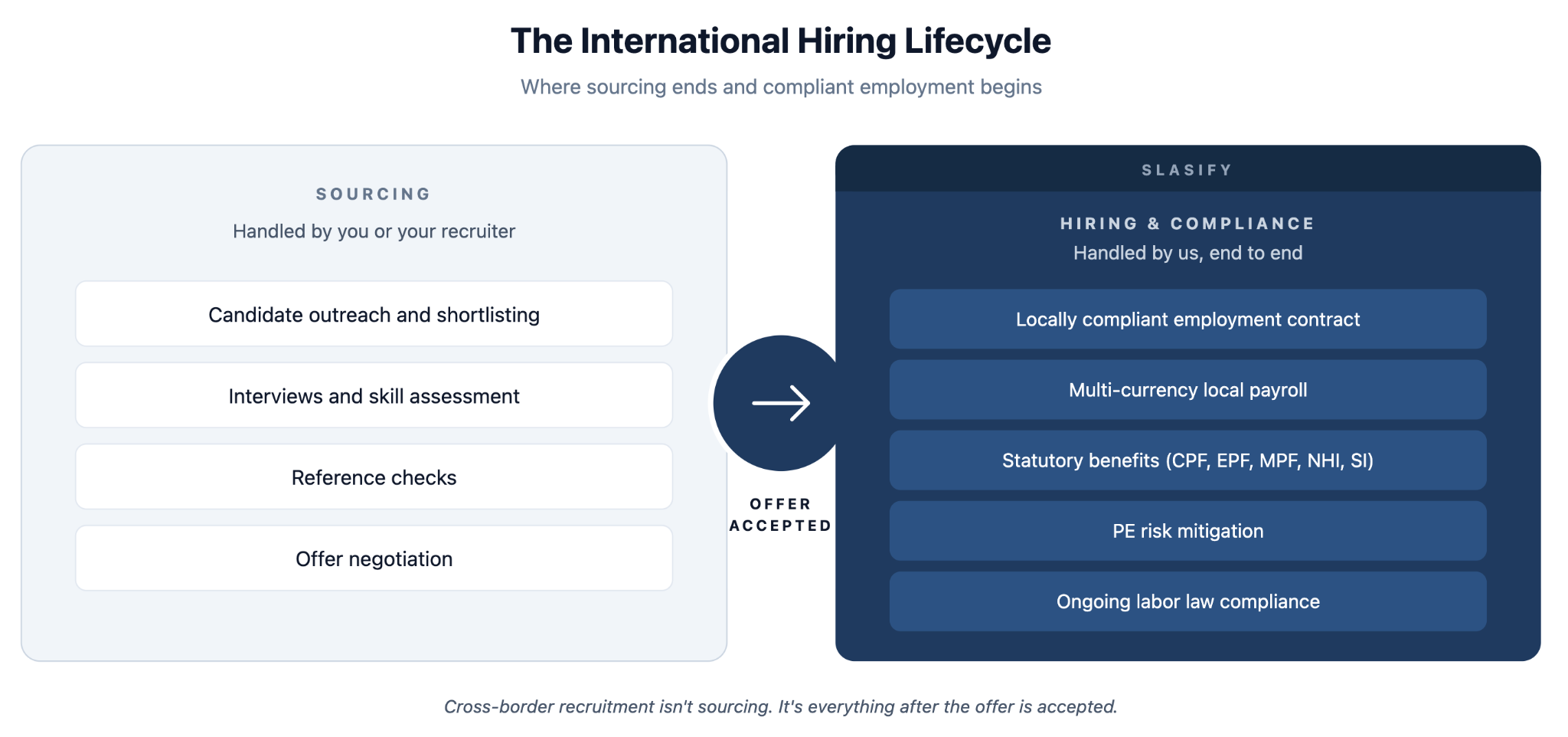 Figure 1. The international hiring lifecycle has a clear handoff at the point of offer acceptance.
2. Why "Recruitment" Is the Wrong Word for What You Actually Need
Cross-border hiring is not recruitment in the conventional sense, even though the market keeps calling it that. The label has stuck, but it obscures the real buying decision. When an HR Director says they need a "cross-border recruitment solution," what they typically need is a way to legally employ someone without a local entity, a mechanism to run compliant multi-currency payroll, coverage of mandatory statutory benefits, and protection against two categories of legal risks:
First: Permanent establishment (PE) risk

Permanent establishment (PE) risk is the legal exposure a company faces when its activities in a foreign country, including having an employee work there on its behalf, can be sufficient to trigger corporate income tax obligations in that jurisdiction, even without a registered entity. Under the OECD Model Tax Convention, certain activities by a dependent employee, such as habitually concluding contracts on the company's behalf, may be sufficient to constitute a PE under Article 5.
The rules tightened in late 2025. On November 19, 2025, the OECD published the first major update to its Model Tax Convention since 2017, with clearer guidance on when a home office abroad creates PE risk. The headline threshold: if a remote employee works from another country for less than 50% of their time over 12 months, the home office generally does not trigger PE on its own. Above 50%, tax authorities will look at whether there is a genuine commercial reason for the employee being there. Country-level interpretations will still differ.
Worker Misclassification
The second risk is worker misclassification, which is engaging someone as an independent contractor to avoid payroll obligations when the working relationship functions like employment.
In South Korea, courts apply Labor Standards Act principles around control, integration, and economic dependency to determine worker status, while the Ministry of Employment and Labor (MOEL) oversees enforcement. In Japan, the Ministry of Health, Labour and Welfare (MHLW) applies a similar multi-factor test. Failing a misclassification audit triggers devastating back pay claims, unpaid statutory contributions, and severe financial penalties. Traditional staffing agencies generally can’t address these compliance risks.
Read further about our Employment Guides across the 150+ countries that cover hiring, taxes, compliance and in-country knowledge that help you get prepared before expansion.
3. The Five Categories of Cross-Border Solutions
The market is fragmented, and vendors do not always tell you which category they belong to. Here is a plain-language breakdown.
|
Category
|
What It Does
|
Best For
|
Compliance Ownership
|
Example Providers
|
|
International staffing agency
|
Sources, screens, and places candidates
|
Companies that need help finding talent before the employment question arises (including starting out and expanding)
|
Client company (you)
|
Adecco, Manpower, Michael Page
|
|
Employer of Record (EOR)
|
Legally employs your worker in the target country or across different markets; handles payroll, statutory benefits, and labor law compliance.
|
Companies that have found their candidate and need fast, compliant employment without a local entity
|
EOR provider
|
Slasify, Deel, Remote
|
|
Contractor management platform
|
Issues contracts, processes cross-border payments, and manages tax documentation for independent contractors
|
Short-term, project-based, or clearly defined freelance work
|
Shared between provider and contractor
|
Slasify, Deel Contractors
|
|
Global recruitment platform
|
Sources candidates internationally; may offer light EOR-adjacent services
|
Companies that need sourcing plus some hiring infrastructure bundled
|
Varies by vendor
|
LinkedIn, Indeed, ZipRecruiter, and more
|
|
Local entity build-out
|
Incorporates a subsidiary in the target country; you hire directly under local law
|
Companies committing 10 or more long-term hires to a single market
|
You, entirely
|
Local HR, Finance, and Legal team
|
A staffing agency is the right call before you have found your candidate. An EOR is the right call once you have. A contractor platform fits project-based work, but it carries misclassification risk the moment the engagement starts to resemble ongoing, directed employment. Entity build-out is rarely the right answer for a first hire. The setup cost and timeline are rarely justified until you have sustained, concentrated hiring volume in that market.
4. What to Look for in a Cross-Border Solution
Not all EOR and contractor management providers are built the same. Here is the capability checklist we recommend going through before signing with any vendor:
|
Capability
|
Why It Matters
|
Slasify
|
Generic Staffing Agency
|
Generic EOR
|
|
Country coverage (150+ countries)
|
Hiring needs often span multiple markets simultaneously
|
✓
|
Limited
|
Varies
|
|
Multi-currency payroll (130+ currencies)
|
Paying in local currency is a legal requirement in most markets
|
✓
|
Rarely
|
Varies
|
|
Statutory benefits administration in major markets (US, EU, APAC)
|
These are mandatory; missing them creates retroactive liability
|
✓
|
No
|
Varies
|
|
Both employee and contractor support on one platform
|
Workforce models evolve; vendor sprawl is a real cost
|
✓
|
No
|
Rarely
|
|
ISO 27001 certification
|
Employment and compensation data require enterprise-grade protection
|
✓
|
No
|
Varies
|
|
In-country legal partners (600+ partners)
|
Local labor law, payroll, and employment expertise, plus best practice advisory specific to each market
|
✓
|
Varies
|
Rarely
|
|
Dedicated account management
|
One point of contact across every market you hire in
|
✓
|
Varies
|
Varies
|
Working through a checklist like this for your own vendor short-list? We can walk through how our coverage maps to your specific markets and roles in a 30-minute call. Book a free demo.
5. The Compliance Traps That Break Cross-Border Hires

Most cross-border employment engagements do not fail because a company picked the wrong recruiter. They fail because no one accounted for what happens after the offer letter.
Misclassifying an employee as a contractor
Japan's MHLW applies a multi-factor test that looks at supervision, exclusivity, and whether work schedules are set by the engaging company. If those factors point toward employment, the relationship is treated as employment under Japanese law, regardless of what the contract says.
South Korea's Labor Standards Act applies similar logic, emphasizing economic dependency and substantive control over the form of the contract. When those factors point to employment, the engagement can be reclassified regardless of how it was originally framed.
Our guide on how to convert a contractor to an employee covers the compliant path if that transition is already underway.
Triggering permanent establishment (PE risk) through an employee
A single employee in a foreign country can create a taxable presence without a registered entity. Taiwan's Ministry of Finance has increased scrutiny of foreign tech companies with locally based sales or account management roles. An EOR arrangement resolves this: your worker is on the EOR's local payroll, not yours.
Missing statutory benefit contributions
Every APAC market mandates employer contributions that extend well beyond base salary. Missing or underpaying them is not just a compliance issue; it is a direct liability to the employee and to the business. Below is a quick snapshot of each country's main statutory benefit scheme, reflecting the latest 2026 regulations:
💡 Slasify Pro Tips
- Taiwan NHI Premiums: Calculated based on the insured's salary, with contributions split 60% employer / 30% employee / 10% government for employees of public or private enterprises and organizations.
- Vietnam Mandatory Insurance Rates: Total mandatory contributions (Social Insurance + Health Insurance + Unemployment Insurance) are generally around 21.5% for employers and 10.5% for employees.
Mishandling termination
Vietnam, South Korea, and Japan each impose specific notice periods and severance calculations that differ substantially from US or UK norms. Get them wrong, and the consequences range from back-pay claims and statutory penalties to wrongful termination lawsuits, and in some jurisdictions, personal or even criminal liability for company directors. Japan's Labor Standards Act, for example, presumes that a dismissal without "just cause" is invalid. Our breakdown of termination laws by country covers the procedural requirements for the major APAC markets.
Mismanaging employee data
Cross-border employment means employee data crosses borders. Compensation records, contracts, government IDs, and performance data are subject to separate data protection regimes: the GDPR in the EU, Singapore's PDPA, Japan's APPI, South Korea's PIPA, and others. Each has its own consent, transfer, and breach-notification rules, and penalties can scale into the millions. This is a distinct compliance category, and it is one of the reasons we operate under ISO 27001 controls for employment data.
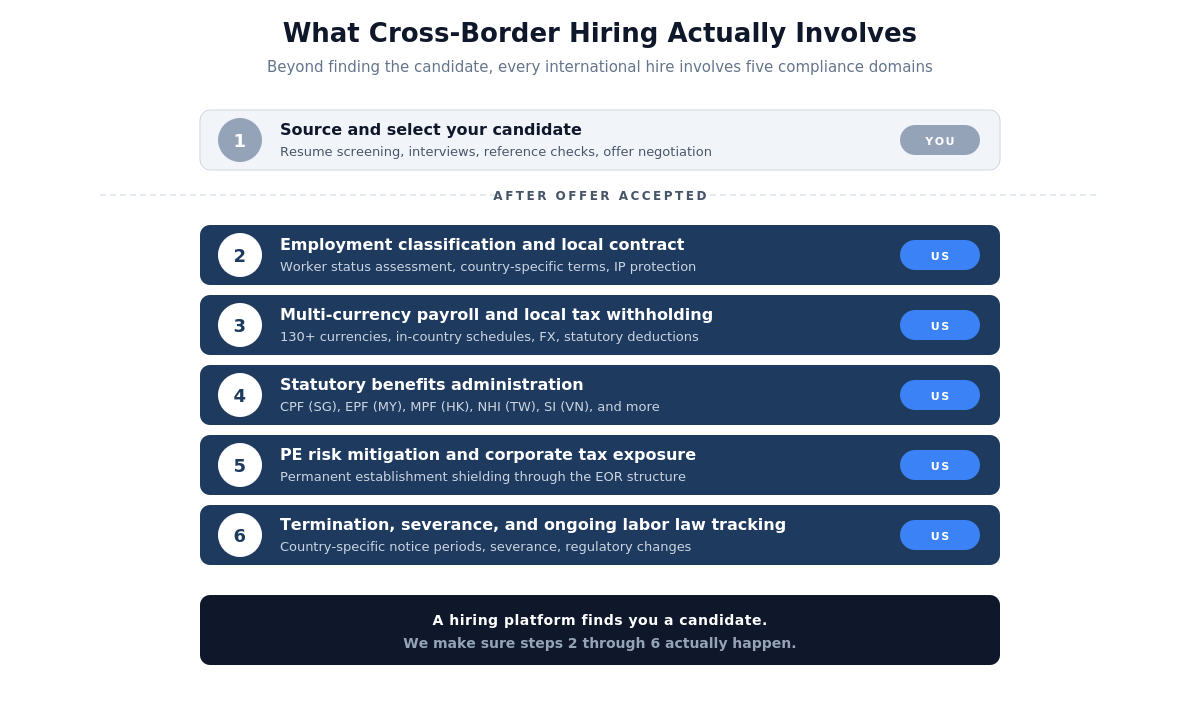
Figure 2. Beyond sourcing, every cross-border hire involves five compliance domains.
Have you already found your ideal overseas candidate but feel uncertain about the local employment laws? Our team can audit the compliance landscape in your target country before you finalize the offer. Talk to our compliance team to get started.
6. How We Handle Cross-Border Hiring End to End
When a client brings us a hire in a new market, the engagement follows a defined sequence: requirement confirmation, feasibility check in the target country, quotation, and a signed Master Service Agreement and Work Order. From there, a dedicated Account Manager takes over for the operational phase, which breaks into three parts:
Part 1 - Setup (Day 1–14)
- Day 1: The Master Service Agreement (MSA) and Work Order (WO) for the specific hire are signed.
- Day 2 to 4: The Account Manager runs a kickoff to walk through monthly timelines and any open questions.
- Day 5 to 9: The locally compliant employment contract (or independent contractor agreement, depending on classification) is drafted, reviewed by the client, and signed by the employee.
- Day 10 to 14: the welcome email, platform invitation, and any local government registrations required to put the employee on payroll are complete.
Part 2 - Payroll (monthly cycle)
Payroll follows a defined monthly rhythm: client updates by the 10th, payroll report by the 15th, client approval by the 18th, invoicing by the 20th, paychecks finalized by the 25th.
Salary is paid in the employee's local currency, with Social Security Contributions (SSC) and income tax withholding remitted on the local schedule across 130+ currencies.
Part 3 - Ongoing compliance
Labor law changes, and so do statutory contribution rates and tax thresholds. Our in-country partners track regulatory shifts and notify you before they take effect. If a termination is needed, we can also handle the country-specific notice and severance procedure.
This is why hiring on a global platform is not the same as hiring abroad. The path from a signed offer to a legally protected, fully paid employee runs through classification, contracts, payroll, statutory benefits, PE exposure, and labor law tracking.
"They come to us after the first hire goes wrong. The staffing agency found the right person, but the contract was generic, payroll wasn't set up locally, and nobody had flagged the PE exposure. We usually get the call about 90 days in. By then, the cost of correcting is always higher than setting it up right would have been." — Slasify Account Manager
All three phases run on the same underlying platform. If you need someone to be the legal employer abroad, that is our Employer of Record service. If you already have a local entity and just need the multi-currency payroll handled, that is Global Payroll. For independent contractor arrangements, Global Contractor Management. All three sit behind ISO 27001 data controls and KPMG-validated operational processes.
7. How to Choose the Right Solution for Your Company

When choosing the right solution for your company, start by asking these three critical questions:
Do you need help finding the candidate, or do you already have one?
A staffing agency or global recruitment platform is the right starting point if you have not found your person yet. Once you have a candidate in mind, the employment infrastructure question begins.
How many people are you hiring, and across how many markets?
|
Scenario
|
Recommended Approach
|
|
1–3 hires in one country with no local entity
|
EOR: fastest path, lowest setup cost, compliance transferred to provider
|
|
4–9 hires in one country with long-term plans
|
EOR now, with an entity feasibility assessment on the horizon (typically around the 12-month mark)
|
|
10+ hires concentrated in one country
|
Model EOR vs. entity cost over a longer horizon (often a 24-month window) before deciding
|
|
Employees in some markets and contractors in others (hybrid workforce)
|
EOR plus contractor management on a unified platform
|
|
Project-based work with a clearly defined scope for a particular timeframe
|
Contractor management, with a misclassification review first
|
What is your risk tolerance?
An EOR arrangement transfers legal employment liability from your company to the EOR provider. A contractor management platform leaves more compliance ownership with you and the worker. Entity build-out gives you full control, along with the full weight of local regulatory obligations from day one.
Take a typical case: a Series A or B startup making its first international hire. An EOR is almost always the cleaner answer. It avoids the 3–6 month distraction of entity setup, removes direct exposure in an unfamiliar jurisdiction, and preserves exit flexibility if the hire or the market does not work out.
FAQs: What HR Teams Actually Ask Us About Cross-Border Hiring

What is a cross-border recruitment solution?
A cross-border recruitment solution is a comprehensive service or platform that enables businesses to hire, pay, and compliantly manage international workers without establishing a local legal entity. While the term historically referred to traditional staffing, modern solutions combine global payroll, Employer of Record (EOR) services, and contractor management into a unified platform.
Is a cross-border recruitment solution the same as an EOR?
No. An EOR is one type of cross-border solution, not a synonym for the whole category. An Employer of Record legally employs a worker on your behalf in a target country, taking on payroll, benefits, and compliance obligations. A staffing agency sources and places candidates without taking on employment obligations. A contractor management platform handles payments for independent workers without formally employing them.
Can I hire someone in another country without setting up a local entity?
Yes. This is exactly the problem an EOR is designed to solve. When you work with an EOR, the provider becomes the legal employer in the target country. Your worker appears on the EOR's local payroll and receives statutory benefits under local law, while reporting to you day-to-day.
How long does it take to hire a cross-border employee through an EOR?
Through a well-structured EOR, a compliant employment contract can typically be in place within one to two weeks (the Slasify timeline is Day 1 to 14, detailed in Section 6). However, the actual timeline may vary depending on the country. For example, Singapore and Hong Kong tend to move quickly. Vietnam and Japan involve additional registration steps with local authorities.
What's the difference between hiring through a staffing agency and using an EOR?
A staffing agency focuses on finding talent, while an EOR handles the legal aspect of hiring. A staffing agency's mandate ends at talent placement. An EOR's mandate picks it up to streamline employment contracts, local payroll, statutory contribution remittance, and ongoing labor law compliance. Treating them as interchangeable is one of the most common (and costly) assumptions companies make when expanding internationally for the first time.
What countries does Slasify cover?
We operate in 150+ countries through a proprietary network of 600+ in-country legal and payroll partners, offering deep localized expertise across APAC, Southeast Asia, and North America. Book a free demo with our consultant to discuss your expansion plan.
How does Slasify handle payroll across multiple currencies?
We process payroll in 130+ currencies, with local tax withholding and statutory remittances handled in-country on the local schedule. Employees receive their salary in local currency on time, and employer obligations are remitted directly to the relevant government agencies. You receive consolidated payroll reporting across all markets in a single view through our Global Payroll platform.
Hire Anywhere. Stay Compliant.
Mitigate your global compliance risks today. Book a free consultation with our team to implement the right cross-border recruitment solution for your business. We will walk through your target market, outline your exact statutory obligations, and deploy our Employer of Record (EOR) infrastructure to support a compliant hire from day one.
Eliminate your global compliance risks today. Book a free consultation with our team, and we will walk through your target market, outline your exact statutory obligations, and deploy our Employer of Record (EOR) infrastructure to support a compliant hire from day one.