| 4 Key Takeaways |
- Cross-border payments often rely on a chain of intermediary banks, so businesses need to evaluate their options carefully and ensure the recipient receives the full amount to avoid disputes.
|
- Exchange rate volatility and hidden FX spreads can quietly eat into your margins, so implementing strategies such as forward contracts, currency matching, and FX adjustment clauses becomes crucial.
|
- International tax rules vary significantly by country, and tax obligations are often triggered by tax residency and the 183-day rule, making proactive planning and documentation essential to avoid double taxation.
|
- Understanding global finance basics and maintaining a clear digital record trail helps reduce compliance risks and support long-term stability.
|
1. Introduction
According to the 2025 McKinsey Global Payments Report, the global payments industry generated $2.5 trillion in revenue, supported by $2 quadrillion in payment flows and approximately 3.6 trillion transactions worldwide. In this increasingly interconnected global economy, understanding international finance basics is no longer optional. Layered fees, FX spreads, compliance checks, and tax documentation requirements can significantly increase both costs and risk.

If you're an employer frequently moving money cross-border, your priority should be building a well-governed process. The goal is to streamline payment rails, standardize FX policies, and ensure airtight record-keeping.
“How money moves is becoming as critical as how much. Whether it’s wage payments in Southeast Asia, B2B settlements in Europe, or retail checkouts in Latin America, the design choices being made today are shaping the next decade of payments and will determine who leads, who follows, and who falls behind.”
The 2025 McKinsey Global Payments Report
What This Guide Covers
To provide a clear roadmap for your global expansion, this article serves as an international finance basics resource, addressing:
- Cross-border payments FAQ: Understanding mechanisms, fees, and speed.
- Global taxes explained: Demystifying residency and withholding tax obligations.
- Exchange rates explained: How to manage FX risks and protect profit margins.
- International business payments: Best practices for global tax compliance and documentation.
💡 Quick Definitions & Risks at a Glance
- Cross-Border Payment: A transaction between a sender and receiver in different countries.
- FX Margin Leakage: Exchange rate volatility can quietly eat your profits. Scenario: You budget $10,800 USD to pay a €10,000 EUR invoice. Due to floating exchange rates over 60 days, that same invoice costs you $11,500 USD by settlement day—an unbudgeted loss.
- The 183-Day Rule: A common standard determining tax residency. Scenario: If your remote contractor or employee works from Spain for over 183 days, they (and potentially your company) may unexpectedly trigger Spanish tax liabilities and permanent establishment (PE) risks.
2. Cross-Border Payments FAQs

What are cross-border payments?
At its simplest, cross-border payments are money transfers between parties in different countries. Whether you're paying overseas employees, settling vendor invoices, or moving funds between entities, these transactions require navigating different currencies, banking systems, and regulations.
How do international payments work?
Since banks in different countries often do not maintain direct correspondent relationships, requiring intermediary banks, most international money transfers move through a chain of Intermediary (Correspondent) Banks that pass along payment instructions, run compliance checks (e.g. AML), and clear the funds into the recipient’s account. Some companies also use a peer-to-peer platforms such as Wise to transfer a batch of smaller funds for speed and efficiency.
What payment methods are commonly used?
- Bank transfers: The traditional wire transfer method using SWIFT or SEPA (for Europe); best for larger, higher-value payments, but can be slower and more expensive due to intermediary banks and bank fees.
- Digital payment platforms: Modern FinTech solutions like Wise; often easier to initiate and track, with predictable and transparent fees, and faster delivery in some corridors, but coverage and pricing vary by country and local regulations.
- International clearing systems: Regional or network-based clearing routes (e.g., certain bank-to-bank schemes) can reduce friction and improve speed compared to traditional correspondent banking, depending on the corridor.
Why do cross-border payments take longer than domestic ones?
Cross-border payments take longer because funds must pass through multiple institutions across different time zone, each with its own cut-off times, compliance checks, and settlement timelines. Keep in mind that any mismatch in documentation can trigger a manual review and stall the process for days.
💡 What fees are typically involved in international transfers?
-
Transaction fees: Fixed fees charged by the sending and receiving banks.
-
Intermediary (correspondent) bank fees: Fees deducted by the middleman banks along the route when payment passes through them.
-
Exchange rate spread: The difference between the market rate and the rate provided by the bank (often adding a 1–5% markup depending on the bank and corridor).
💡 Slasify Insight: The OUR, SHA, BEN Rule
You will encounter these codes when setting up an International transfer. For trade payments, international payroll, or fixed-price contracts, we suggest always using OUR to ensure the recipient receives the agreed-upon full amount to avoid disputes.
|
Mode
|
Fee Responsiblity
|
Amount Received
|
|
OUR
|
Sender pays all
|
Full amount
|
|
SHA
|
Shared fees
|
Net amount after deducting shared fees
|
|
BEN
|
Beneficiary pays all
|
Net amount (reduced) after deducting all fees
|
3. International Taxes FAQs: Global Taxes Explained

What types of taxes apply to cross-border transactions?
Most cross-border activities can trigger Corporate Income Tax, VAT/GST, or Withholding Tax. The specifics come down to what you’re paying for as physical goods, digital services, or international contractors all have different rules.
How do countries determine tax obligations?
Tax obligations are typically based on a mix of where the income is sourced and where the person/company is considered tax-resident. That’s why the same transaction can create obligations in more than one country.
What is tax residency and why does it matter?
Tax residency is how a country decides whether your company is taxable there, and it often determines what income is taxable and what reporting is required. For global employers, long employee stays can become a risk. In some jurisdictions, “183 days” is a common threshold that may trigger local tax residency considerations and additional compliance work.
What is withholding tax?
This is a “pre-payment” tax withheld and remitted at the source before a payment is sent to a recipient in another country, often applying to royalties, dividends, or service fees. To avoid surprises, specify in your contracts whether the gross or net amount is being paid.
How do double taxation treaties work?
These are bilateral agreements between two countries to make sure you aren’t taxed twice. In practice, leveraging double taxation agreements is one of the best ways to reduce or minimize withholding tax, provided you have the supporting documents.
For specific DTA rates, always consult the OECD Multilateral Instrument or your local tax bureau.
4. Foreign Currency FAQs: Exchange Rates Explained
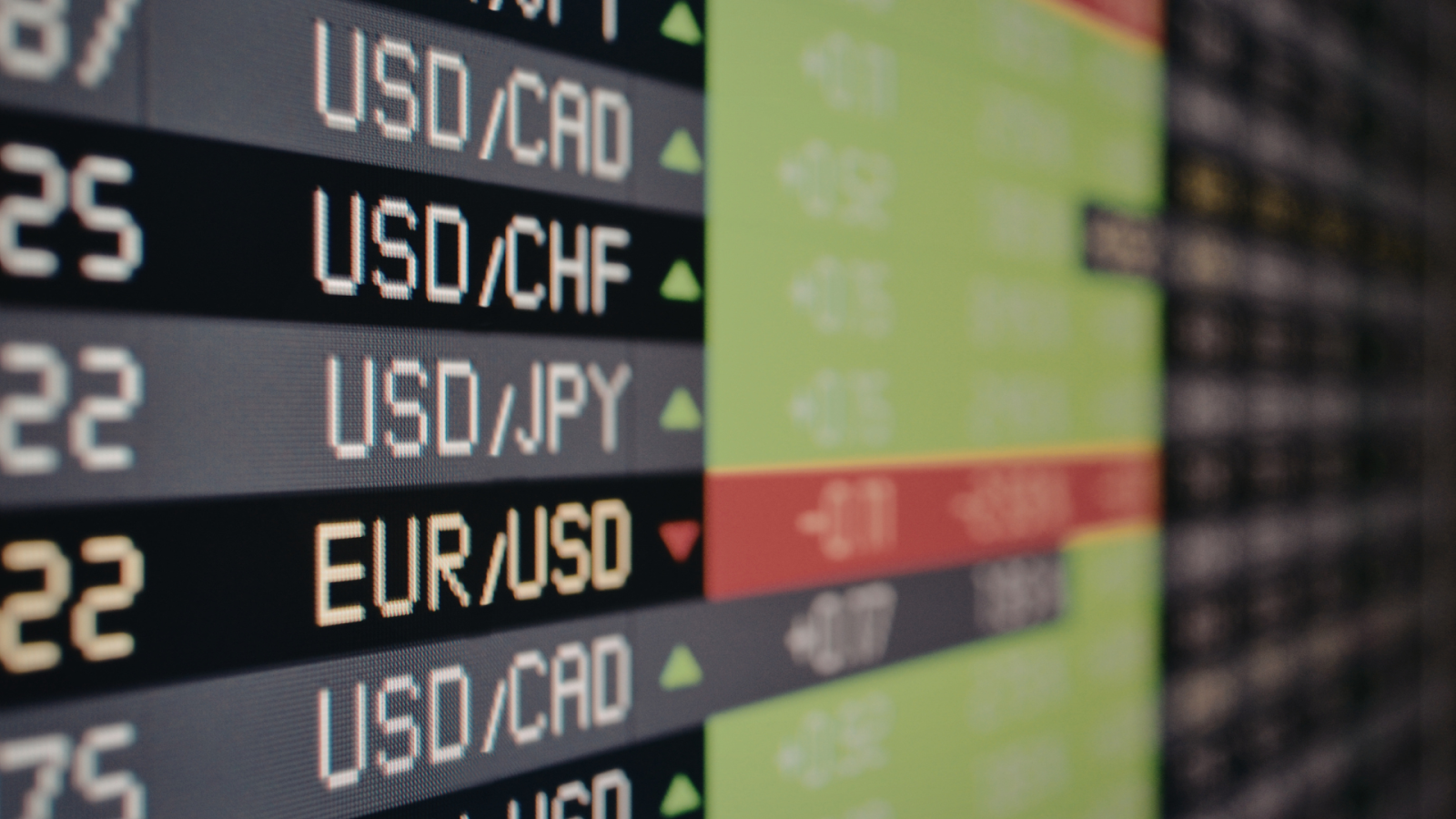
What are foreign exchange rates?
Simply put, an exchange rate is the price of one currency relative to another. It essentially tells you how much of one currency you can buy with another once spreads and fees are factored in.
Why do exchange rates fluctuate?
Exchange rates constantly fluctuate based on market demand, and are influenced by interest rates, inflation, and political stability. In 2026, even a small shift in trade policy or economic data can trigger sudden swings in currency values.
What is the difference between fixed and floating exchange rates?
A fixed (pegged) exchange rate is typically anchored to another major currency to maintain stability. A floating exchange rate, on the other hand, is determined by the open market. Most major currencies float, meaning their value can shift against your home currency throughout the day.
How do exchange rates affect international pricing and costs?
When your home currency weakens, your bills for international vendors or employees become more expensive, even if the invoice amount hasn't changed. Conversely, a stronger home currency lowers your costs but can make your pricing less competitive for customers in foreign markets.
5. Managing Exchange Rate Risk

What is FX risk?
FX risk is the risk that foreign exchange rates move between pricing, invoicing, and settlement, which can shrink margins or increase costs. In other words, you could end up paying more than expected or receiving less than expected.
Who is exposed to exchange rate risk?
Any business that pays or collects in foreign currencies is exposed, especially those paying international vendors, contractors, remote teams, or those dealing with a long time gap between pricing and settlement.
Common ways businesses can manage FX risk exposure
- Pricing strategies: Add FX adjustment clauses to long-term contracts or build a small buffer into your quotes to absorb minor currency swings.
- Currency matching (Natural Hedging): This involves keeping your income and expenses in the same currency. For example, if you earn USD from clients, you use that same USD to pay your international contractors, which helps reduce conversion costs.
- Hedging basics: This means using tools like forward contracts to lock in a rate for a future date or options to cap downside while keeping some upside for predictable cash flows. The goal is to make budgets more predictable, not to eliminate every market risk.
6. Compliance & Documentation

What documentation is required for cross-border transactions?
To ensure global tax compliance, standard documentation usually includes a formal commercial invoice, a signed service agreement or contract, and ideally, a tax residency certificate from the recipient. These documents help show banks and regulators that the transfer serves a legitimate business purpose.
Why record-keeping is critical in international finance
Think of precise record-keeping as your primary defense during tax audits. It’s also a must for satisfying Anti-Money Laundering (AML) and Know Your Customer (KYC) regulations. With global transparency at an all-time high in 2026, having a clear digital trail for every dollar leaving your account is no longer optional.
3 Common Compliance Mistakes to Avoid (And Their Consequences)
-
Incomplete or Inconsistent Payment Details: A slight mismatch in a recipient's name, an incorrect SWIFT/BIC code, or a vague payment purpose will trigger manual bank compliance checks.
The Risk: This can freeze contractor payouts for weeks, severely damaging trust and resulting in expensive bank tracing fees.
-
Treating AML (Anti-Money Laundering) as a One-Off: Many companies fail to implement an SOP for continuous screening. They ignore unusual transaction spikes or batch payments.
The Risk: Financial regulators expect continuous monitoring. Treating it as a one-time checklist can lead to frozen corporate accounts, disrupted operations, and massive regulatory fines.
-
Weak Vendor Change Controls: Processing payments after accepting updated bank details via email—without independent, secondary verification.
The Risk: This is the #1 path for Business Email Compromise (BEC) scams. You could unknowingly wire a $20,000 global payroll batch directly to a fraudulent account, resulting in an unrecoverable total loss.
7. Conclusion: Your 2026 Action Plan for Global Finance

Cross-border payments, international taxes, and exchange rates can seem daunting at first, but they become highly manageable once you understand the fundamentals. By mastering these international finance basics, you can turn financial risk into a structured process that supports sustainable global growth.
To maintain a competitive edge in 2026, businesses must build a finance structure with clear payment trails, robust documentation, and tight internal controls. Here is your proactive checklist to achieve compliance from day one:
- Understand Local Rules: Do your homework on regional tax laws and regulations before entering a new market.
- Track Costs & Payments: Maintain detailed records of all international business transactions, including bank fees and FX spreads, to identify and reduce hidden margin leakage.
- Review Processes Regularly: Schedule quarterly audits of your international payment workflows to improve speed, reduce bank fees, and adapt to changing global regulations.
- Leverage an Employer of Record (EOR): Partner with Slasify to centralize Global Payroll, eliminate manual compliance, and seamlessly manage cross-border payments, FX volatility, and local taxes.
You don't have to navigate global financial complexities alone. With the right mix of payment methods and a trusted EOR partner, you can scale your distributed team with absolute confidence.
FAQ for Cross-Border Payments

Q1. What is a cross-border payment?
A cross-border payment is a financial transaction where the sender and recipient are located in different countries. These payments typically require currency conversion and must pass through multiple intermediary banks or clearing networks (like SWIFT), which often adds processing time and hidden routing fees.
Q2. Why are international payments expensive?
International payments are often expensive because costs stack up across transaction fees, intermediary bank deductions, FX spreads, and markups added to the market exchange rate, drastically reducing the final payout amount for the recipient
Q3. How do exchange rates affect profits?
Exchange rates affect your bottom line by changing the real value of foreign revenue and the cost of international expenses, especially when you receive in one currency and pay in another.
Q4. Do all countries tax international income the same way?
No. Tax obligations vary by country based on local rules around residency and income source, although bilateral double taxation treaties can often reduce the tax burden.
Q5. What are the biggest risks in global finance?
The biggest risks include hidden fees and FX leakage, payment delays, fraud, compliance blocks, poor documentation, and withholding tax exposure. Understanding these international finance basics is key to supporting secure global growth.