Latest updated: May 2026
By 2026, the 'distributed workforce' moved from a trend to a core business strategy. But as global tax authorities tighten their grip, the choice of how you hire abroad determines whether you scale—or face crippling misclassification fines.
This is where an Employer of Record (EOR) delivers significant value. By acting as the legal employer in foreign jurisdictions, an EOR enables companies to hire compliantly without establishing a local legal entity.
At Slasify, we believe in transparent guidance. This comprehensive guide examines the genuine pros and cons of using an EOR in 2026, outlines when the model makes strategic sense, and provides an up-to-date comparison of leading providers. Our goal is to equip HR, finance, and business leaders with clear insights to make confident, informed decisions.

1. Understanding the Employer of Record Model
An Employer of Record (EOR) is a specialized third-party service that assumes legal employer responsibilities for your international hires. While your organization retains full control over daily management, performance, and work direction, the EOR manages employment contracts, payroll processing, tax withholding, social contributions, benefits administration, and ongoing compliance with local regulations.
In Employer of Record 2026, the EOR market continues to mature rapidly, with the global market valued at approximately $7.45 billion and strong projected growth driven by the normalization of remote and hybrid work. Leading providers among the best EOR providers 2026 now support hiring in 150+ countries, offering sophisticated platforms that integrate seamlessly with existing HRIS and payroll systems.
The EOR model isn't just about payroll; it's a strategic shield against the complexities of foreign entity establishment. It eliminates the need for lengthy entity setup processes while effectively mitigating compliance risks that could otherwise result in significant fines or operational disruptions.
2. What Are the Main Pros of Using an EOR for Global Expansion?
When implemented thoughtfully, an EOR solution offers compelling strategic benefits:
Accelerated Market Entry and Global Expansion
Traditional entity establishment is time-intensive and capital-heavy. An EOR allows organizations to onboard talent in new markets within days rather than months. This agility is particularly valuable for companies testing demand in high-growth regions such as Southeast Asia, where speed to talent can determine competitive advantage.
Enhanced Compliance and Risk Mitigation
Local labor regulations evolve frequently, encompassing minimum wages, overtime rules, leave entitlements, termination procedures, and data privacy requirements. A reputable EOR maintains in-country expertise to ensure full adherence, significantly reducing legal and financial exposure for your organization.
Cost Efficiency in the Early Stages
Avoiding the upfront and ongoing expenses of local subsidiaries—including legal fees, accounting infrastructure, and dedicated HR resources—delivers substantial savings. For many mid-market and scaling companies, these efficiencies free up capital for core business priorities.
Streamlined Payroll and Administrative Operations
Modern EOR platforms centralize multi-currency payroll, tax filings, benefits enrollment, and employee lifecycle processes. This consolidation reduces administrative burden on internal teams, allowing HR and finance professionals to focus on strategic initiatives rather than transactional tasks.
Access to Broader Talent Pools
EOR solutions remove geographic barriers, enabling organizations to source specialized skills wherever they exist. This is especially relevant in competitive talent markets across Asia-Pacific, where demand for technology, engineering, and digital expertise continues to outpace local supply.
Operational Flexibility and Scalability
Whether scaling for a specific project, responding to seasonal demands, or adjusting team size based on budget realities, an EOR provides the agility to expand or contract without long-term legal commitments or costly wind-down processes.
Improved Employee Experience and Protections
Workers benefit from locally compliant contracts, appropriate benefits, and clear employment protections. When paired with strong internal culture initiatives, this foundation supports higher engagement and retention across distributed teams.
These advantages explain why thousands of organizations now rely on EOR partners to support sustainable global growth.
3. The Realistic Limitations and Considerations
A balanced evaluation requires acknowledging the potential drawbacks:
Cumulative Service Fees at Scale
EOR providers typically charge a monthly fee per employee, often ranging from $250 to $700+, depending on the provider, country complexity, and included services. While cost-effective initially, these fees can become significant for large, long-term teams. In such cases, establishing owned entities may prove more economical over time.
Reduced Customization in Certain Areas
Because the EOR serves as the legal employer, full customization of contracts, benefits packages, equity structures, or termination processes may be constrained. Creative structuring is often possible, but organizations with highly unique compensation philosophies should evaluate compatibility early.
Reliance on Provider Expertise and Reliability
The quality of payroll accuracy, support responsiveness, and local compliance ultimately depends on the chosen partner. Subpar service can lead to delays, employee dissatisfaction, or compliance gaps. Thorough due diligence—including demos, references, and contract reviews—is essential.
Potential Impact on Employer Branding and Culture
Employees are technically employed by the EOR, which can occasionally create a subtle sense of distance from the client organization. Proactive communication, inclusive onboarding, and cultural integration efforts are necessary to maintain strong alignment and belonging.
Suitability for Very Large or Mature Operations
For organizations planning hundreds of employees in a single market over many years, a dedicated legal entity may eventually offer greater control and cost optimization. The EOR model excels primarily for small-to-medium teams or exploratory market entries.
Variations in Platform Maturity and Support
Not all solutions offer the same level of user experience, integration capabilities, or regional depth. Providers differ in dashboard sophistication, reporting tools, and the quality of local account management.
By understanding these realities upfront, leadership teams can select partners and implementation strategies that align with long-term objectives.
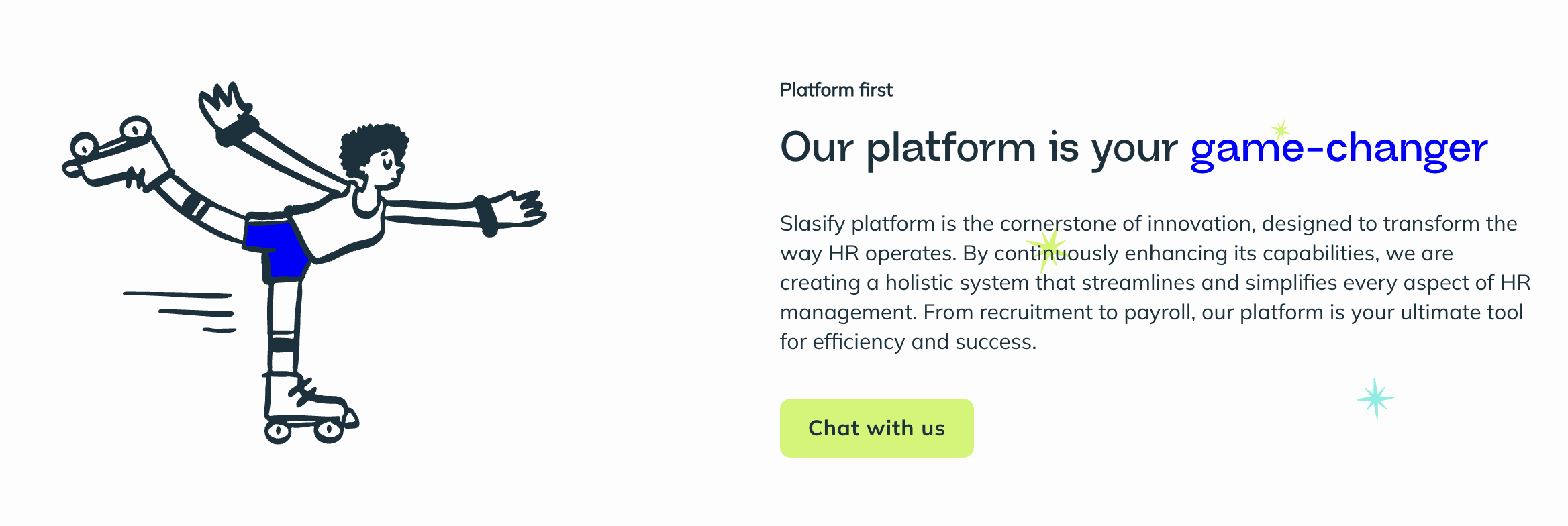
Slasify Remote Office - Everything you need to manage your international workforce in one place
In 2026, the EOR approach continues to serve as a powerful enabler for organizations seeking agile, compliant international expansion.
4. Comparing Leading EOR Providers in 2026
The EOR landscape features a range of established and specialized players. Below is a concise comparison based on current market positioning:
|
Provider |
Countries Covered |
Starting EOR Price (per employee/month) |
Best Suited For |
Key Strengths |
Notable Considerations |
|---|---|---|---|---|---|
|
Deel |
150+ |
~$599 |
Fast-scaling tech companies |
Comprehensive platform, seamless contractor integration |
Higher costs at larger scale |
|
Remote |
~100+ |
$599–$699 |
Compliance-focused organizations |
Strong owned-entity model, transparency |
More limited geographic reach |
|
Slasify |
150+ |
Starting at $250 (flexible models) |
Cost-efficient, Asia-focused growth |
Competitive pricing, 10+ years regional expertise, single-hire flexibility |
Building broader global brand recognition |
|
Oyster |
180+ |
$499–$699 |
Teams prioritizing employee experience |
Broad coverage, engagement-focused tools |
Variable performance in certain markets |
|
Multiplier |
150+ |
~$199–$400 |
Budget-conscious SMEs |
Competitive flat-rate pricing |
Platform maturity varies |
|
Globalization Partners (G-P) |
180+ |
Custom (~$699+) |
Large enterprises |
Deep compliance and advisory expertise |
Premium positioning |
|
Papaya Global |
160+ |
~$499–$650 |
Complex, analytics-driven operations |
Advanced payroll intelligence |
Geared toward larger organizations |
Slasify’s Distinctive Value
Founded in 2016 and headquartered in Singapore, Slasify brings over a decade of specialized experience in Asia-Pacific markets. We combine a robust network of 600+ premium local partners with an intuitive, Remote Office platform supporting 130+ currencies. Our flexible pricing model—starting at $250 per month—makes high-quality EOR services accessible to organizations of varying sizes, while our local Account Managers provide responsive, culturally attuned support.
Whether your priority is cost optimization for SMB expansion or comprehensive solutions for enterprise-scale deployment across Asia and beyond, Slasify delivers tailored support grounded in deep regional knowledge.
Choosing the Right EOR Partner: Practical Considerations
Successful EOR adoption depends on alignment across several dimensions:
- Geographic Priorities: Evaluate owned-entity depth versus partner networks in your target markets.
- Team Size and Growth Trajectory: Smaller or variable teams often benefit most from flexible, cost-effective providers.
- Integration Needs: Ensure compatibility with your existing HR, finance, and payroll systems.
- Support Quality: Prioritize providers offering dedicated account management and regional expertise.
- Total Cost of Ownership: Look beyond base fees to include benefits administration, onboarding speed, and potential add-ons.
At Slasify, we encourage prospective partners to engage in detailed discovery conversations. Our team works collaboratively to design solutions that match your specific operational context, risk tolerance, and growth ambitions.
5. When an EOR Delivers the Greatest Strategic Value
The Employer of Record model is particularly well-suited in the following scenarios:
- Rapid entry into new geographic markets with minimal upfront investment.
- Building small-to-medium distributed teams, including single-hire or pilot initiatives.
- Maintaining budgetary flexibility for project-based or variable workforce needs.
- Operating in complex regulatory environments where local expertise provides a clear advantage.
- Prioritizing speed and compliance over full ownership of employment infrastructure.
For Enterprise Organizations
Slasify supports rapid deployment of global teams through comprehensive, scalable solutions that preserve budgetary and project flexibility while ensuring full compliance.
For SMBs and Growth-Stage Companies
Our model emphasizes cost-efficiency and accessibility. We accommodate single-headcount engagements—an option many larger providers restrict or price prohibitively—making global talent acquisition viable even for smaller teams.
6. Moving Forward with Confidence
The pros and cons of using an EOR ultimately reflect a trade-off between speed, compliance, and flexibility versus long-term control and potential cost optimization at massive scale. For the majority of organizations in 2026—particularly those expanding thoughtfully across Asia and other dynamic regions—the advantages frequently outweigh the limitations.
At Slasify, we view ourselves as more than a service provider; we are a strategic partner committed to your sustainable global success. Our combination of competitive pricing, regional depth, and genuine flexibility helps organizations—from ambitious startups to established enterprises—build high-performing teams without unnecessary complexity.
Don't let 2026 compliance hurdles stall your growth. Eliminate your global hiring risks today.
Frequently Asked Questions About Employer of Record (EOR)
Q1: What is an Employer of Record (EOR) and how does it work?
An Employer of Record (EOR) is a third-party organization that becomes the legal employer of your workers in countries where your company does not have a local entity. The EOR handles all employment compliance responsibilities — including contracts, payroll processing, tax withholding, social contributions, benefits administration, and adherence to local labor laws — while your organization retains full control over day-to-day management, performance, and work direction. This model enables fast, compliant global hiring without the time and expense of setting up foreign subsidiaries.
Q2: How is an EOR different from a Professional Employer Organization (PEO)?
The key difference lies in the employment model and geographic scope. An EOR acts as the sole legal employer, making it ideal for international hiring in countries where you have no entity. A PEO operates on a co-employment basis, sharing responsibilities with your company, and typically requires you to already have a legal entity in that jurisdiction. PEOs are more commonly used for domestic (often U.S.-focused) HR outsourcing, whereas EORs excel in cross-border expansion.
Q3: What are the main pros and cons of using an EOR?
Pros include rapid market entry (often within days), reduced compliance risk, lower upfront costs compared to entity setup, simplified payroll and HR administration, access to global talent, and operational flexibility for scaling teams. Cons can include ongoing per-employee service fees (which may accumulate at large scale), some limitations on contract customization, and dependency on the provider’s quality and local expertise. When chosen thoughtfully, the advantages usually far outweigh the limitations for small-to-medium or exploratory teams.
Q4: How much does an EOR cost in 2026?
Pricing typically consists of three components: the employee’s gross salary, local statutory employer contributions (which vary by country), and the EOR service fee. Instead of locking you into rigid flat fees, Slasify uses a highly transparent, percentage-based pricing model that scales with your specific hiring needs and the target country's complexity. With no minimum headcount requirements, our structure is incredibly flexible and accessible—making it the perfect fit whether you are an SMB testing a new market or hiring a single specialized professional.
Q5: Can I use an EOR for just one employee?
Yes — and this is one area where Slasify stands out. Many providers discourage or charge premiums for small teams, but we gladly support single-headcount EOR engagements. This flexibility makes global hiring viable even for pilot projects, testing new markets, or adding specialized talent without heavy commitment.