| 5 Key Takeaways |
- Rising tariffs and operating costs are prompting U.S. businesses to expand into Southeast Asia in pursuit of growth and resilience.
|
- Southeast Asia offers U.S. companies a powerful combination of fast-growing consumer markets, cost-efficient talent, and high digital adoption.
|
- Countries like Singapore, Vietnam, Indonesia, Thailand, and the Philippines each play distinct roles in regional expansion strategies.
|
- Navigating diverse labor laws and payroll compliance remains the biggest challenge for U.S. companies entering Southeast Asia.
|
- Employer of Record (EOR) solutions enable U.S. businesses to hire quickly and compliantly in Southeast Asia without setting up local entities.
|
As rising tariffs, labor shortages, and operating costs reshape global expansion strategies, more U.S. businesses are turning their attention to Southeast Asia. Once viewed primarily as an outsourcing destination, the region has evolved into a strategic growth engine, offering fast-growing consumer markets, cost-efficient talent, and digitally ready economies. In this article, we explore effective entry strategies for international markets, focusing on Southeast Asia's high-growth potential, identifying which countries are leading the way, and demonstrating how businesses can enter the region quickly and compliantly without setting up a local entity.
Top Reasons for Business Expansion into Southeast Asia
Large, Skilled, and Cost-Effective Talent Pools
One of the most decisive factors driving U.S. companies toward Southeast Asia is the region’s demographic advantage. Countries such as Vietnam, Indonesia, and the Philippines offer large, youthful populations with strong digital literacy and growing professional skill sets. This “demographic dividend” has become especially attractive to U.S. firms facing tight labor markets and rising wage pressures at home.
Unlike the saturated hiring environment in Silicon Valley, Southeast Asia provides access to engineers, marketers, finance professionals, and customer success teams who are eager for career mobility and long-term growth. For U.S. companies evaluating entry strategies for international markets, this workforce depth allows faster team scaling without sacrificing quality.
Cost Efficiency Beyond Just Salaries
While competitive wages remain a draw, the real advantage lies in total operating cost efficiency. Office space, benefits administration, and regional hiring costs are significantly lower than in the U.S., allowing companies to reinvest savings into product development and customer acquisition.
As highlighted in recent Nikkei Asia coverage, many U.S. small and mid-sized businesses are expanding into Asia not only to access consumers but also to rebalance cost structures affected by tariffs and supply chain disruptions. Southeast Asia offers a way to maintain margins while staying globally competitive, an increasingly critical factor in market entry Asia planning.
Organic Growth from Expanding Consumer Markets
Southeast Asia is no longer a single “emerging market” but a collection of fast-maturing economies with rising disposable incomes. From Indonesia’s booming middle class to Vietnam’s rapidly urbanising population, demand for digital services, consumer goods, and premium brands is accelerating.
For U.S. brands seeking sustainable expansion, this creates fertile ground for organic growth, particularly when offerings are localised to cultural preferences and price sensitivity. This diversity enables more nuanced entry strategies for international markets, rather than a one-size-fits-all Asia approach.
Rapid Digital Adoption and Platform Readiness
Southeast Asia is one of the world’s most mobile-first regions. High smartphone penetration, strong social commerce adoption, and deep engagement on platforms like TikTok, Shopee, and Grab make the region ideal for digital-first expansion.
For U.S. companies undergoing global digital transformation, Southeast Asia offers not just customers but operational innovation opportunities, from regional product testing to distributed remote teams. This digital readiness further strengthens the case for market entry Asia initiatives that prioritise speed and scalability.
Strategic Location and Long-Term Resilience
Geographically, Southeast Asia serves as a gateway between China, South Asia, and the broader Asia-Pacific region. Many U.S. businesses, particularly manufacturers and e-commerce brands, are diversifying operations here to reduce overreliance on single markets amid ongoing trade tensions.
At the same time, governments across the region are increasing investments in sustainability, green manufacturing, and infrastructure. This alignment with global ESG priorities helps U.S. companies build resilient, future-proof operations while expanding internationally.

Challenges When Expanding into Southeast Asia (And How to Avoid Them)
Despite its upside, Southeast Asia presents structural and regulatory complexities that U.S. companies often underestimate.
💡Slasify Expert Insight: The “Entity-First” Myth
- Myth: We must incorporate a local branch immediately.
- Reality: Use an EOR (Talent-First approach) to test the market for 6-12 months before committing capital.
A common misconception is that expansion requires immediate local incorporation. In reality, many successful U.S. brands now follow a “Talent First, Entity Later” approach. By hiring local teams through an EOR provider like Slasify, companies can validate demand, build partnerships, and operate legally within weeks, without committing to long-term entity costs. This approach significantly lowers risk during early-stage market entry in Asia initiatives.
Fragmented Compliance Landscapes
Southeast Asia is not a single regulatory environment. Labor laws in Indonesia, where termination protections are strict, differ drastically from employer-friendly frameworks in Singapore. Treating ASEAN as a unified compliance zone is one of the most expensive mistakes foreign companies make.
Ensuring payroll compliance across multiple jurisdictions requires local expertise, especially when managing benefits, taxes, and statutory contributions. This is where experienced employee of record companies become operationally critical rather than optional.
Talent Management Across Cultures
While the workforce is digitally fluent, differences in communication styles, performance expectations, and workplace norms can lead to misalignment. However, companies that invest in local leadership and culturally aware management often experience higher retention rates than in the U.S., particularly in Vietnam and the Philippines, where loyalty and growth motivation are strong.

Cost Expectations vs. Long-Term Value
Although Southeast Asia is cost-effective, the real value is not cheap labor. U.S. tech firms find that regional teams’ scalable, committed talent are delivering stronger long-term ROI than constantly rehiring in competitive U.S. hubs.
Popular Southeast Asian Countries for U.S. Brands Expanding to Asia
|
Country
|
Best For (Industry)
|
Key Advantage
|
Top Challenge
|
Employment Guide
|
|
Singapore
|
Fintech, SaaS, Regional HQ
|
Legal transparency, stability, and high English proficiency.
|
High operating costs & talent competition.
|
How to hire and pay employees in Singapore
|
|
Indonesia
|
FMCG, E-commerce, Apps
|
Massive market scale (280M population) & digital adoption.
|
Regulatory complexity & language diversity.
|
How to hire and pay employees in Indonesia
|
|
Vietnam
|
Tech, Manufacturing, Startups
|
Low operating costs & high-quality, digital-native talent.
|
Compliance hurdles (SHUI) & language barriers.
|
How to hire and pay employees in Vietnam
|
|
Thailand
|
Travel, F&B, Wellness, Lifestyle
|
Strong tourism sector & developed infrastructure.
|
Aging population & complex bureaucracy.
|
How to hire and pay employees in Thailand
|
|
Philippines
|
SaaS Support, BPO, Edtech
|
Strong cultural alignment with the U.S. & English proficiency.
|
Infrastructure gaps & internet reliability.
|
How to hire and pay employees in Philippines
|
Singapore

- Why U.S. companies choose it: Singapore is often the first stop for Asia expansion due to its legal transparency, political stability, and English-speaking workforce. It serves as a regional HQ for finance, SaaS, and B2B services, making it ideal for companies refining entry strategies for international markets. Read the hiring guide for Singapore to learn more about the process.
- Best for: Fintech, SaaS, healthcare, regional headquarters
Indonesia

- Why U.S. companies choose it: With nearly 280 million people, Indonesia offers unmatched scale. E-commerce adoption and mobile-first consumption are booming, attracting U.S. consumer brands seeking volume growth. Though there is some regulatory complexity and language diversity to overcome first when hiring in Indonesia.
- Best for: FMCG, consumer apps, e-commerce platforms
Vietnam

- Why U.S. companies choose it: Vietnam combines low operating costs with high-quality talent and strong government support for foreign investment. It is also a major beneficiary of global supply chain diversification. Many companies entering via an employer of record in Vietnam model are able to hire engineers and operations teams quickly while maintaining full payroll compliance.
- Best for: Manufacturing, tech, startups, apparel
Thailand

- Why U.S. companies choose it: Thailand’s strong tourism sector, developed infrastructure, and vibrant SME ecosystem make it ideal for lifestyle, wellness, and consumer-facing brands. Understanding tax breaks and special economic zones is integral to your global business expansion.
- Best for: Travel, F&B, beauty, wellness, lifestyle products
Philippines

- Why U.S. companies choose it:
With high English proficiency and strong cultural alignment with the U.S., the Philippines excels in customer-facing roles. Many SaaS and service companies expand here for support and success teams before deeper regional expansion. Read the latest hiring guide for the Philippines for more details.
- Best for: SaaS, edtech, BPO, media, and entertainment
5-Step Checklist for U.S. Companies Expanding to SEA
|
Step
|
Actions
|
Key Considerations
|
|
1
|
Define Objective
|
Determine your primary goal (e.g., Singapore for a Sales/Regional Hub vs. Vietnam for a Tech/Dev Hub).
|
|
2
|
Choose Location
|
Align your destination with the specific talent pool availability and business cost structure.
|
|
3
|
Assess Compliance
|
Conduct a deep dive into local labor laws and mandatory contributions (e.g., BPJS in Indonesia, CPF in Singapore, SHUI in Vietnam).
|
|
4
|
Select Model
|
Decide between establishing a full Legal Entity (time-consuming) or using an Employer of Record (EOR) for speed and flexibility.
|
|
5
|
Onboard & Pay
|
Configure a compliant payroll system that handles USD to Local Currency conversions and tax withholdings seamlessly.
|
Hiring in Southeast Asia: Choosing the Right Hub (SG vs. VN) and Mastering Local Compliance

Expanding your team in Southeast Asia starts with clarity of intent. U.S. companies that succeed in the region typically define their hiring objective before choosing a country. For example, Singapore is often selected as a regional sales or commercial hub due to its strong English proficiency, regulatory transparency, and proximity to enterprise clients. In contrast, Vietnam, particularly Ho Chi Minh City, has emerged as a preferred destination for building engineering, product, and operations teams thanks to its young, digital-native workforce and competitive operating costs. Aligning your location choice with your business goal is a foundational step in effective entry strategies for international markets.
Once the destination is chosen, the next hurdle is local labor compliance, which is frequently underestimated by U.S. founders. Southeast Asia is not a unified regulatory environment. Each country enforces its own mandatory social security systems and employment rules. In Indonesia, employers must contribute to BPJS, a multi-layered social security framework covering healthcare and employment insurance.
In Singapore, CPF contributions apply to citizens and permanent residents, with strict reporting and payment timelines. Vietnam requires SHUI contributions, covering social, health, and unemployment insurance, which involve detailed payroll calculations and frequent regulatory updates. Navigating these requirements incorrectly can result in penalties, back payments, or even forced exits from the market, making payroll compliance a critical success factor for market entry Asia strategies.
Slasify EOR: Your Compliant Shortcut to Hiring in Southeast Asia
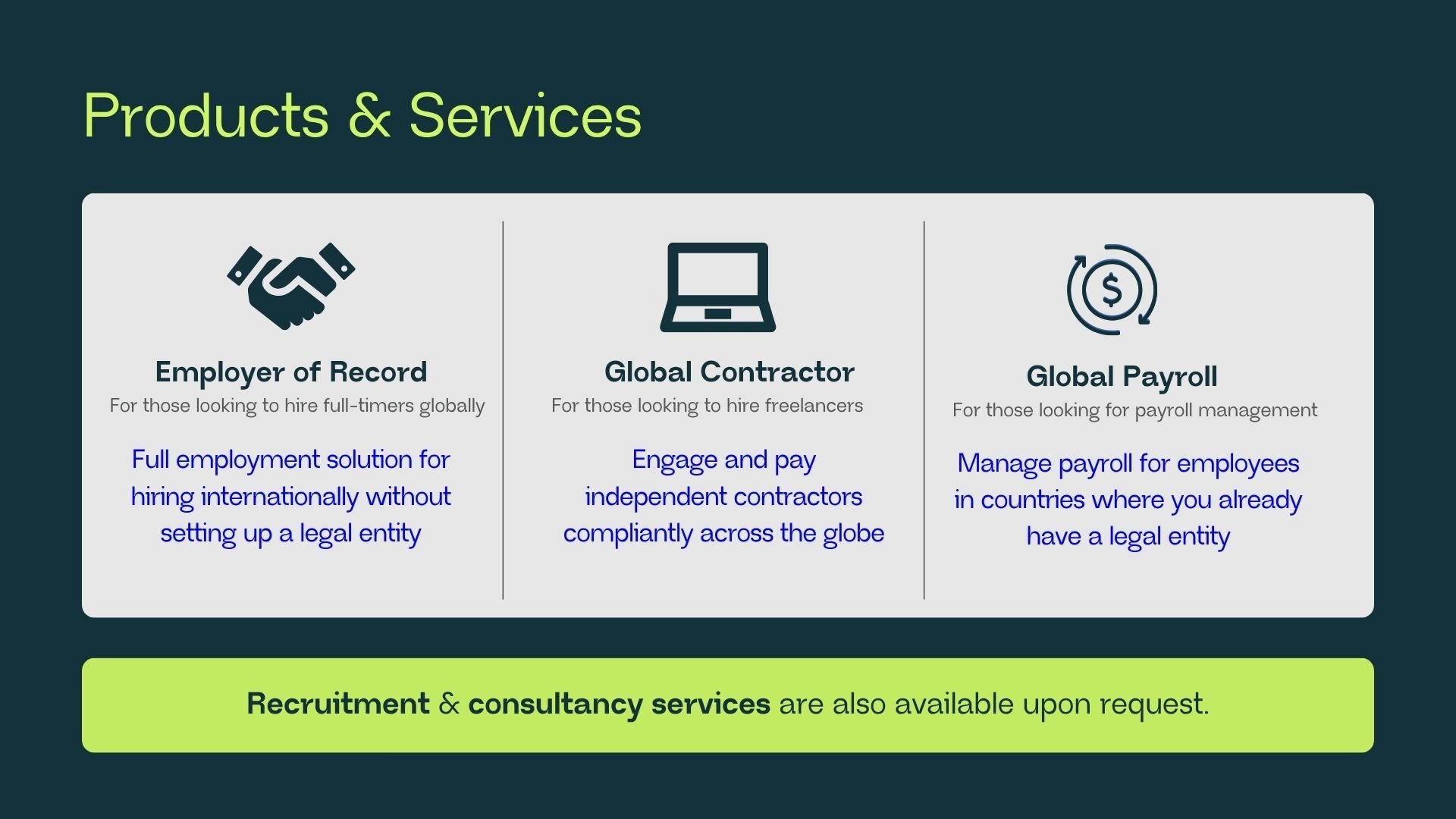
This is where the Employer of Record (EOR) model becomes a strategic advantage. For most U.S. companies hiring their first 1 to 10 employees in Southeast Asia, setting up a local subsidiary is costly, slow, and risky. An EOR allows you to legally hire local talent without establishing an entity, while ensuring full compliance with local labor laws, tax filings, and statutory benefits. Whether you are engaging an employer of record Vietnam to build a tech team or working with employees of record companies to test multiple markets simultaneously, the EOR approach enables faster market validation, lower upfront investment, and greater flexibility—key benefits during early expansion phases.

Ready to tap into Southeast Asia’s growth but worried about complex labor laws? Slasify handles payroll, taxes, and compliance across Singapore, Indonesia, Vietnam, Thailand, and the Philippines, so you can focus on building high-performing teams instead of navigating regulations. Book a free consultation today to plan your Southeast Asia market entry with confidence.
FAQs: Expanding into Southeast Asia

Q1: Which Southeast Asian country is best for tech outsourcing?
For U.S. companies, the choice depends on the role:
-
Vietnam: Best for software development and engineering. Ho Chi Minh City and Hanoi are major tech hubs with highly skilled developers and competitive costs.
-
Philippines: Best for customer support and QA. Known for high English proficiency and cultural alignment with the U.S. Many companies adopt a hybrid approach, placing engineering in Vietnam and support in the Philippines.
Q2: Can a U.S. company hire employees in Southeast Asia without a local entity?
Yes. U.S. companies can legally hire employees in Southeast Asia without setting up a local entity by using an Employer of Record (EOR). An EOR like Slasify becomes the legal employer on paper while you retain full operational control over the employee’s day-to-day work. This model allows companies to hire quickly, stay compliant with local labor laws, and avoid the high cost and complexity of incorporation. For early-stage market entry Asia initiatives or for hiring the first 1–10 employees, using an EOR is often the fastest and lowest-risk expansion method.
Q3: What are the main challenges of expanding to Southeast Asia?
The biggest challenges stem from regulatory fragmentation:
-
Compliance: Each country has unique labor laws and social security systems (e.g., Indonesia’s BPJS vs. Singapore’s CPF).
-
Payroll: Managing diverse tax rules and currencies is complex.
-
Culture: Language barriers and cultural differences can impact management. Underestimating these differences often leads to compliance risks.
Q4: Is Singapore the best headquarters for expansion into Asia?
Yes, Singapore is widely regarded as the best location for a regional headquarters in Asia due to its political stability, transparent legal system, strong financial infrastructure, and business-friendly regulations. It is particularly well-suited for executive leadership, finance, legal, and regional sales functions. However, many U.S. companies distribute operational teams to other Southeast Asian countries, such as Vietnam or Indonesia, to optimize costs and access larger talent pools. This hub-and-spoke model allows businesses to balance stability with scalability as part of long-term entry strategies for international markets.
Q5: How do U.S. companies handle payroll and tax compliance across multiple Southeast Asian countries?
Most U.S. companies rely on a Global Payroll or EOR provider to manage payroll and tax compliance across Southeast Asia efficiently. Providers like Slasify allow you to pay your entire distributed team through a single monthly invoice in USD, while they handle currency conversion, local tax deductions, statutory contributions, and filings in each country. This ensures full compliance with local labor laws and eliminates the need to manage multiple vendors, currencies, and regulatory frameworks, making cross-border team expansion significantly simpler and more scalable.