Key Takeaways
- Indonesia has 17 national public holidays in 2026: January 1 and 16; February 17; March 19, 21, and 22; April 3 and 5; May 1, 14, 27, and 31; June 1 and 16; August 17 and 25; and December 25. Employees are not obliged to work on any of them.
- The same decree sets 8 collective leave days (cuti bersama): February 16; March 18, 20, 23, and 24; May 15 and 28; and December 24. They are optional for private employers, and each day taken comes out of the employee’s annual leave unless company rules grant it as extra paid leave.
- Every hour worked on a public holiday is overtime. On a five-day week, the first 8 hours pay 2 times the hourly wage, the 9th hour pays 3 times, and the 10th to 12th hours pay 4 times, with the hourly wage set at 1/173 of the monthly wage.
- Tunjangan Hari Raya (THR), the religious holiday allowance, is one month’s wage after 12 months of continuous service and is due no later than 7 days before the employee’s religious holiday. For Christian employees whose THR follows Christmas, that is Friday, December 18, 2026.
- No national holiday or collective leave day falls between Prophet Muhammad’s Birthday on Tuesday, August 25, and Thursday, December 24, a collective leave day that runs into Christmas Day on Friday, December 25.
Updated: September 2026
Indonesia Public Holidays in 2026: The Short Answer
Indonesia has 17 national public holidays in 2026 and 8 collective leave days, 25 dates in all. Every one of them comes from a single joint decree, signed on September 19, 2025, by the Minister of Religious Affairs, the Minister of Manpower, and the Minister of State Apparatus Empowerment and Bureaucratic Reform.
The two kinds of day carry different obligations. On a national holiday, employees are not obliged to work, and an employer that needs them pays overtime for every hour. Collective leave is optional for a private employer: a collective leave day taken comes out of annual leave, and a collective leave day worked is an ordinary working day at ordinary pay.
The dates are set in Joint Decree No. 1497, No. 2, and No. 5 of 2025, known as the SKB (Surat Keputusan Bersama). The decree left the dates of Eid al-Fitr and Eid al-Adha to the Minister of Religious Affairs, and both were confirmed on the scheduled days: Eid al-Fitr on March 21 and Eid al-Adha on May 27. The Ministry of Manpower’s legal database lists the decree as in force and records no amendment to it.
We act as the legal employer for companies hiring in Indonesia and run their payroll. Every date, rate, and deadline on this page comes from, or is counted from, the official source cited beside it.
💡 Quick Definitions for Global Employers
-
Libur nasional: A national public holiday. Employees are not obliged to work, and any hour worked is paid as overtime.
-
Cuti bersama: Collective leave, the bridge days set in the same decree as the holidays. Optional for private employers, and deducted from annual leave when taken.
-
Tanggal merah: Literally “red date,” the everyday term for a public holiday, printed in red on Indonesian calendars.
-
Cuti tahunan: Annual leave, at least 12 working days after 12 months of continuous service.
-
Lembur: Overtime. Every hour worked on a public holiday counts as overtime.
-
THR: Tunjangan Hari Raya, the religious holiday allowance, a non-wage payment employers must make before each employee’s religious holiday.
-
SKB: Surat Keputusan Bersama, the joint decree of three ministers that sets each year’s national holidays and collective leave.
The Full 2026 Indonesia Holiday Calendar
National Public Holidays 2026 (17 dates)
National public holidays apply across the whole country. Under Article 85 of the Manpower Law, Law No. 13 of 2003, employees are not obliged to work on them. An employer may require work only where the job has to run continuously, or in other circumstances agreed with the employee, and must then pay overtime.
Date |
Day |
Holiday |
Name in the decree |
January 1 |
Thursday |
New Year’s Day |
Tahun Baru 2026 Masehi |
January 16 |
Friday |
Isra Mi’raj of the Prophet Muhammad |
Isra Mikraj Nabi Muhammad S.A.W. |
February 17 |
Tuesday |
Chinese New Year |
Tahun Baru Imlek 2577 Kongzili |
March 19 |
Thursday |
Nyepi, the Hindu Day of Silence |
Hari Suci Nyepi (Tahun Baru Saka 1948) |
March 21 |
Saturday |
Eid al-Fitr, day 1 |
Idul Fitri 1447 Hijriah |
March 22 |
Sunday |
Eid al-Fitr, day 2 |
Idul Fitri 1447 Hijriah |
April 3 |
Friday |
Good Friday |
Wafat Yesus Kristus |
April 5 |
Sunday |
Easter Sunday |
Kebangkitan Yesus Kristus (Paskah) |
May 1 |
Friday |
International Labor Day |
Hari Buruh Internasional |
May 14 |
Thursday |
Ascension Day |
Kenaikan Yesus Kristus |
May 27 |
Wednesday |
Eid al-Adha |
Idul Adha 1447 Hijriah |
May 31 |
Sunday |
Vesak |
Hari Raya Waisak 2570 BE |
June 1 |
Monday |
Pancasila Day |
Hari Lahir Pancasila |
June 16 |
Tuesday |
Islamic New Year |
1 Muharam Tahun Baru Islam 1448 Hijriah |
August 17 |
Monday |
Independence Day |
Proklamasi Kemerdekaan |
August 25 |
Tuesday |
Prophet Muhammad’s Birthday |
Maulid Nabi Muhammad S.A.W. |
December 25 |
Friday |
Christmas Day |
Kelahiran Yesus Kristus |
Source: Annex A of Joint Decree No. 1497, No. 2, and No. 5 of 2025, signed September 19, 2025. Eid al-Fitr was confirmed at the Ministry of Religious Affairs’ isbat session, its formal ruling on the start of the Islamic month, on March 19, 2026, and Eid al-Adha at the isbat session of May 17, 2026. The weekdays are the ones the decree prints, checked by calendar arithmetic.
Collective Leave (Cuti Bersama) 2026 (8 dates)
Collective leave days turn a single holiday into a longer break. The decree lists them separately from the national holidays because they are a form of leave: a collective leave day taken reduces annual leave, and a collective leave day worked is an ordinary working day.
Date |
Day |
Collective leave for |
February 16 |
Monday |
Chinese New Year |
March 18 |
Wednesday |
Nyepi |
March 20 |
Friday |
Eid al-Fitr |
March 23 |
Monday |
Eid al-Fitr |
March 24 |
Tuesday |
Eid al-Fitr |
May 15 |
Friday |
Ascension Day |
May 28 |
Thursday |
Eid al-Adha |
December 24 |
Thursday |
Christmas Day |
Source: Annex B of Joint Decree No. 1497, No. 2, and No. 5 of 2025.
Four national holidays fall on a weekend: Eid al-Fitr on Saturday, March 21, and Sunday, March 22; Easter on Sunday, April 5; and Vesak on Sunday, May 31. The decree lists them on those days and adds no substitute weekday for any of them.
💡 2026 Indonesia Holiday Planning: 4 Rules for Global Employers
-
The SKB baseline: The joint decree sets the 17 holidays and 8 collective leave days for the whole country. Build your 2026 payroll, rosters, and leave calendars from it.
-
Floating Islamic holidays: The decree leaves Eid al-Fitr and Eid al-Adha to the Minister of Religious Affairs, who confirms each one at an isbat session held shortly before it. In 2026, both landed on the scheduled dates, but keep a buffer in the payroll calendar for the confirmation.
-
National and regional holidays: The national dates apply in every province, from Jakarta to Bali. A regional government can add a holiday for its own area, and Government Regulation (PP) No. 35 of 2021 treats that day as an official holiday for overtime pay.
-
Collective leave and the banks: Collective leave is optional for private companies, but Bank Indonesia observes all 25 dates and keeps its Bank Indonesia Fast Payment (BI-FAST) system running throughout. Around Eid al-Fitr, it went further and closed its Real Time Gross Settlement (BI-RTGS) system and the Bank Indonesia National Clearing System (SKNBI) from March 18 to 24. For every other holiday and collective leave day, settle transfers on the working day before.
Cuti Bersama in 2026: What Private Employers Decide
Cuti bersama, usually translated as collective leave or joint leave, is a set of leave days the government publishes in the same decree as the national holidays. Each of the eight 2026 dates is a bridge day that extends a holiday into a longer break.
The decree sets two rules for employers. Its fourth operative clause says collective leave taken reduces the employee’s annual leave entitlement, in line with the regulations and each company’s own rules. Its sixth says that for private institutions, how collective leave is applied is decided by the leadership of each organization.
What the Ministry of Manpower Says
The Ministry of Manpower’s guidance to provincial governors, letter No. B.70/M.NAKER/PHIJSK-SES/V/2018 of May 8, 2018, which the ministry’s legal database lists as in force, adds four points:
- Collective leave is part of annual leave.
- Observing it is optional. It follows the agreement between the employer and the employees or their union, the employment contract, the company regulation, or the collective agreement, with the company’s operating needs taken into account.
- An employee who takes a collective leave day has it deducted from annual leave.
- An employee who works on a collective leave day keeps the annual leave and is paid as on an ordinary working day.
Annual leave under Article 79 of the Manpower Law, as amended by Law No. 6 of 2023 on Job Creation, is at least 12 working days after 12 months of continuous service. A company that closes on all eight collective leave days therefore uses eight of those 12 days for every eligible employee. Neither the decree nor the ministry’s letter says how to treat an employee who has not yet completed 12 months, so settle that in your company regulation before the dates arrive.
Workforce Planning Around Indonesia’s 2026 Holidays

Indonesia’s holidays come in clusters, and collective leave stretches them. For a Monday to Friday team that observes the collective leave, 2026 has four breaks of four days or more:
- March 18 to 24: seven days in a row, covering Nyepi, both days of Eid al-Fitr, and four collective leave days.
- February 14 to 17: four days for Chinese New Year, with collective leave on Monday, February 16.
- May 14 to 17: four days for Ascension Day, with collective leave on Friday, May 15.
- December 24 to 27: four days for Christmas, with collective leave on Thursday, December 24. This is the one still ahead.
- Holiday clusters and payroll timing: Move payroll cutoffs, approvals, and transfer dates ahead of each cluster, so salaries settle before bank systems close.
- Business continuity: For roles that cannot stop, such as manufacturing, retail, logistics, and customer support, publish the holiday roster early and collect each employee’s written or digital agreement to work, as the overtime rules require.
- Remote team coordination: Share one coverage calendar, name an owner for each handoff, and apply the same holiday and leave rules to remote and on-site staff.
- Shift work and payslips: Make sure timesheets and payslips show holiday hours separately, because holiday hours follow their own multipliers, separate from ordinary overtime.
Employer Obligations in Indonesia

In Indonesia, the Manpower Law, Law No. 13 of 2003, as amended by the Job Creation Law, Law No. 6 of 2023, sets the entitlements. Government Regulation No. 35 of 2021 (PP 35/2021) sets working time and the overtime rates, and Minister of Manpower Regulation (Permenaker) No. 6 of 2016 sets the religious holiday allowance.
Working on a Public Holiday
- Employees are not obliged to work on an official holiday. An employer may require it only where the job has to run continuously, or in other circumstances agreed with the employee (Manpower Law, Article 85).
- Every hour worked on a weekly rest day or an official holiday counts as overtime, from the first hour (PP 35/2021, Article 1). The employee must agree in writing or through a digital channel, and the employer must keep a list of who worked and for how long (Article 28).
- The ordinary cap of 4 overtime hours a day and 18 a week does not count hours worked on a weekly rest day or an official holiday (Article 26).
- “Official holiday” is wider than the national list. The official elucidation of Article 26 defines it as a national holiday, a day declared a holiday nationally, or a holiday set by a regional government.
Holiday Overtime Rates in 2026
The rate depends on the employer’s working-time pattern: six 7-hour days or five 8-hour days a week, 40 hours either way. The same rates apply to work on the weekly rest day.
Hourly wage multiplier |
Six-day week (7-hour days) |
Six-day week, holiday on the shortest working day |
Five-day week (8-hour days) |
2 times |
Hours 1 to 7 |
Hours 1 to 5 |
Hours 1 to 8 |
3 times |
Hour 8 |
Hour 6 |
Hour 9 |
4 times |
Hours 9 to 11 |
Hours 7 to 9 |
Hours 10 to 12 |
Source: PP 35/2021, Article 31(2) and (3), and Article 21(2) for the two working-time patterns. In force since February 2, 2021.
The hourly wage is 1/173 of the monthly wage (Article 32). Where pay is made up of basic wage and fixed allowances, overtime is calculated on 100% of it. Where variable allowances are added and basic wage plus fixed allowances comes to less than 75% of the total, overtime is calculated on 75% of the total. For an employee paid by the day, the monthly wage is the daily wage times 25 on a six-day week, or times 21 on a five-day week (Article 33).
For example, take an employee on a five-day week with a monthly wage of 10,000,000 Indonesian rupiah (IDR) in basic pay and fixed allowances. The hourly wage is IDR 10,000,000 ÷ 173, about IDR 57,803. Eight hours on a public holiday at 2 times the hourly wage come to IDR 10,000,000 × 16 ÷ 173, about IDR 924,855 in overtime.
Two more rules apply on the day. If the overtime runs to 4 hours or more, the employer must provide food and drink of at least 1,400 kilocalories and cannot pay cash instead (Article 29). Staff in certain senior positions, whose working time cannot be limited and who are paid more for it, can be excluded from overtime pay only if the employment contract, company regulation, or collective agreement defines those positions; otherwise overtime is owed (Article 27).
Holiday overtime is one layer of the employer cost. Social insurance through Badan Penyelenggara Jaminan Sosial (BPJS), the national social security agencies, is another, and we break those contributions down in our guide to employer contributions in Indonesia.
Part-Time and Shift Workers
The holiday rates follow the hours worked. Part-time and shift staff fall under the same definition, so any time they work on an official holiday is overtime, and a shift that lands on a public holiday is paid at the holiday rates from its first hour. For daily-paid staff, the monthly wage behind the hourly rate comes from the daily wage, as set out above. The overtime rules cover every company except those in specific sectors, such as mining, upstream oil and gas, and fisheries in certain operating areas, that work under separate working-time rules (PP 35/2021, Articles 23 and 30).
Religious Holiday Allowance (THR)
THR is a mandatory non-wage payment made before each employee’s religious holiday. The rules come from Permenaker No. 6 of 2016, restated for this year in Ministry of Manpower Circular No. M/3/HK.04.00/III/2026 of March 2, 2026:
- Who qualifies: every employee with at least one month of continuous service, on a permanent or a fixed-term contract.
- How much: one month’s wage after 12 months of continuous service. Below 12 months, it is pro-rated: months of service divided by 12, times one month’s wage. A contract, company regulation, collective agreement, or established practice that promises more takes precedence.
- Which wage: the clean wage for employees paid without allowances, or basic wage plus fixed allowances.
- When: once a year, for the employee’s own religious holiday, unless the contract, company regulation, or collective agreement sets another date. It is due no later than 7 days before that holiday, paid in rupiah and in full, with no installments. The 2026 circular also asks companies to pay earlier than the deadline.
- Leavers: a permanent employee whose employment ends within the 30 days before the holiday is still entitled. An employee on a fixed-term contract that ends before the holiday is not.
- Late or unpaid: paying late draws a fine of 5% of the total THR due, which goes to employee welfare and does not cancel the THR itself. Not paying at all draws administrative sanctions.
The religious holiday follows the employee’s faith: Eid al-Fitr for Muslims, Christmas for Catholics and Protestants, Nyepi for Hindus, Vesak for Buddhists, and Chinese New Year for Confucians. The 2026 deadlines are in the payroll section below.
Compliance Risks
- Calculating holiday overtime on basic pay alone underpays it whenever the employee also receives fixed allowances, because Article 32 of PP 35/2021 includes them in the base.
- Deducting collective leave from annual leave without a documented rule, or applying different rules to different groups of staff, invites disputes. Put the policy in the company regulation or collective agreement.
- Not paying overtime for work on an official holiday breaches Article 85(3) of the Manpower Law. Under Article 187, as amended by Law No. 6 of 2023, it is a criminal misdemeanor carrying one to 12 months of confinement (kurungan), a fine of IDR 10 million to IDR 100 million, or both.
- Requiring overtime beyond normal working time without the employee’s consent breaches Article 78(1) of the Manpower Law, which carries a fine of IDR 5 million to IDR 50 million under Article 188, and PP 35/2021 requires the same consent for holiday work (Article 28). Late THR draws the 5% fine and unpaid THR draws administrative sanctions, with labor inspectors supervising both.
💡 Slasify Pro Tip: Religious Holiday Allowance (THR)
-
Pay before the deadline: The 2026 circular asks companies to pay THR earlier than the 7-day deadline. Two of this year’s deadlines fell on a weekend: Saturday, March 14, for Eid al-Fitr, and Sunday, May 24, for Vesak. A THR run set a week or more ahead keeps the payment clear of weekend and holiday bank closures.
-
Budget for fixed-term staff: Employees on fixed-term contracts qualify after one month of continuous service, with a pro-rated amount below 12 months. For Christmas, THR is due no later than Friday, December 18, so budget it by the end of November.
Quick Comparison: Public Holidays vs Cuti Bersama in 2026
|
Public holiday |
Cuti bersama |
What it is |
A national public holiday (libur nasional) |
A collective leave day, set in the same decree to bridge a holiday |
Days in 2026 |
17 |
8 |
Must a private employer observe it? |
Yes. Employees are not obliged to work, and work is allowed only where the job must run continuously or by agreement |
No. It is optional, set by agreement, the company regulation, or the collective agreement |
Effect on annual leave |
None |
Each day taken is deducted from annual leave |
Pay if the employee works |
Overtime for every hour, starting at 2 times the hourly wage |
Ordinary pay, and annual leave is not reduced |
Sources: Joint Decree No. 1497, No. 2, and No. 5 of 2025, Article 85 of the Manpower Law, PP 35/2021, and Ministry of Manpower letter No. B.70/M.NAKER/PHIJSK-SES/V/2018.
Payroll and Compliance Considerations

Holiday clusters, optional collective leave, and hour-by-hour holiday rates make Indonesian payroll easy to get wrong, especially around Eid al-Fitr and Christmas. Start with the THR calendar.
2026 THR Deadlines by Religious Holiday
Employee’s faith |
Religious holiday |
Holiday date |
THR due by |
Confucianism |
Chinese New Year |
Tuesday, February 17 |
Tuesday, February 10 |
Hinduism |
Nyepi |
Thursday, March 19 |
Thursday, March 12 |
Islam |
Eid al-Fitr |
Saturday, March 21 |
Saturday, March 14 |
Buddhism |
Vesak |
Sunday, May 31 |
Sunday, May 24 |
Catholic and Protestant Christianity |
Christmas Day |
Friday, December 25 |
Friday, December 18 |
Sources: religious holidays by faith from Article 1 of Permenaker No. 6 of 2016; holiday dates from the 2026 joint decree; each deadline counted back 7 days under Article 5(4). A contract, company regulation, or collective agreement can set one common THR date for all staff instead.
Payroll Checklist
- Move cutoffs, approvals, and bank transfers ahead of each holiday cluster, so salaries and supplier payments settle before bank systems close.
- Apply the holiday multipliers hour by hour, on the correct wage base and the correct working-time pattern, instead of one flat rate.
- Tie approved holiday hours to timesheets and payslip lines, so every holiday hour on a payslip traces back to a written or digital overtime agreement.
- Keep one documentation standard for staff you employ directly and staff employed through an Employer of Record (EOR), and keep the records in one place.
💡 Scenario: The December 2026 Payroll Window
Christmas Day falls on Friday, December 25, and Thursday, December 24, is collective leave. For a Monday to Friday company that observes it, the last working day before Christmas is Wednesday, December 23, and the next is Monday, December 28. A company that pays salaries on the 25th of each month needs that pay run approved and funded by December 23.
The THR deadline: THR for Christian employees whose allowance follows Christmas is due by Friday, December 18. Paying late draws a fine of 5% of the total THR due, and the THR itself is still owed.
We track the decree, the Eid confirmations, and each Ministry of Manpower circular for the companies whose payroll we run.
How We Help Employers in Indonesia
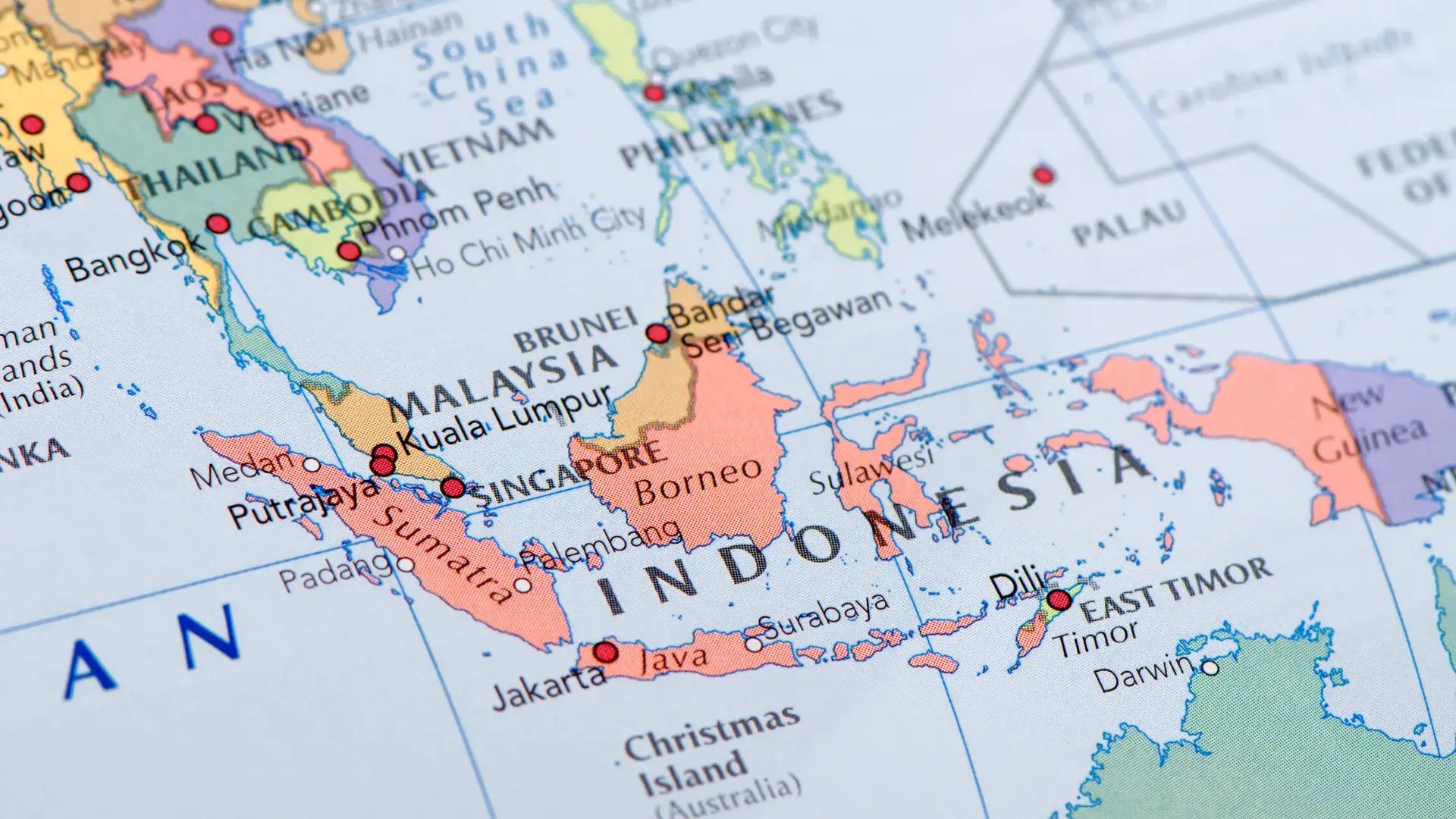
Indonesia’s mix of national holidays and optional collective leave can stretch business downtime, especially around the religious festivals. We help employers manage the effect on shift coverage, payroll accuracy, and compliance:
- Employer of Record services: Hire in Indonesia without setting up a local entity. Through our Employer of Record service, we act as the legal employer in Indonesia and handle contracts, onboarding, and statutory compliance.
- Payroll compliance: Our global payroll service brings holiday entitlements, timesheets, overtime, and THR into one pay run.
- Contractor management: For project-based work, Global Contractor handles contracts and payments. The holiday overtime and THR rules above cover employees, meaning people in an employment relationship of work, wages, and instruction.
- Indonesia expertise: Get guidance on collective leave policy and Indonesian labor regulation updates, and work with a dedicated account manager on your people policies in Indonesia.
- Asia-Pacific (APAC) coverage: With support for 150+ countries, 130+ currencies, and our Asia employment guides, we let you manage Indonesia alongside Malaysia, Vietnam, Singapore, and other APAC markets in one place.

Indonesia’s calendar is reset every year by a new joint decree, and the two Eid dates are confirmed separately. We track both, along with the Ministry of Manpower’s circulars, so holiday classifications and THR dates are set before the pay run. If you are hiring in Indonesia, the Indonesia employment guide sets out the full employer obligation.
Indonesia Public Holidays 2026: Frequently Asked Questions
Q1. How many public holidays does Indonesia have in 2026?
17 national public holidays, on 17 dates, plus 8 collective leave days, for 25 dates in all. The dates, and sometimes the count, change every year, because several holidays follow the Islamic, Chinese, Hindu, and Buddhist calendars and a new joint decree is issued each year.
Four of the 17 fall on a weekend: March 21 and 22 (Eid al-Fitr), April 5 (Easter), and May 31 (Vesak). The decree does not move them to a weekday or add substitute days, so a Monday to Friday team gets 13 weekday holidays in 2026.
Q2. Is today a public holiday in Indonesia?
Check today’s date against the two tables above. After Prophet Muhammad’s Birthday on Tuesday, August 25, 2026, the next date on the national calendar is Thursday, December 24, a collective leave day, followed by Christmas Day on Friday, December 25.
A regional government can also declare a holiday for its own area, so a date that is ordinary nationally can still be a day off in one province or city. For overtime pay, PP 35/2021 treats that day as an official holiday.
Q3. What is cuti bersama in English, and is it mandatory?
Cuti bersama means collective leave, sometimes translated as joint leave. In 2026, the collective leave days are February 16; March 18, 20, 23, and 24; May 15 and 28; and December 24.
It is optional for private companies. The joint decree leaves collective leave to the leadership of each private organization, and the Ministry of Manpower calls it optional, by agreement or company regulation. A collective leave day taken comes out of annual leave, and a collective leave day worked is an ordinary working day at ordinary pay.
Q4. Is May 14, 2026, a public holiday in Indonesia?
Yes. Thursday, May 14, 2026, was Ascension Day (Kenaikan Yesus Kristus), a national public holiday, and Friday, May 15, was a collective leave day. For a Monday to Friday team that observed the collective leave, that made a four-day break from May 14 to 17.
Q5. Is August 25, 2026, a public holiday in Indonesia?
Yes. Tuesday, August 25, 2026, was Prophet Muhammad’s Birthday (Maulid Nabi Muhammad S.A.W.), a national public holiday. The decree set no collective leave beside it, so Monday, August 24, stayed an ordinary working day. It fell eight days after Independence Day on Monday, August 17.
Q6. Does Jakarta have different public holidays from the rest of Indonesia?
The national calendar is the same everywhere. The 17 holidays and 8 collective leave days in the joint decree apply in Jakarta, Bandung, Bali, and every other province.
What can differ is a regional holiday. A regional government can declare one for its own area, and PP 35/2021 counts it as an official holiday, so work on that day is paid at the holiday overtime rates. Check with the regional government where your employees work.
Q7. When is the Eid holiday in Indonesia in 2026?
Eid al-Fitr, also called Lebaran, was a national holiday on Saturday, March 21, and Sunday, March 22, with collective leave on Friday, March 20, Monday, March 23, and Tuesday, March 24. Eid al-Adha fell on Wednesday, May 27, with collective leave on Thursday, May 28.
Both dates were confirmed at the government’s isbat sessions on March 19 and May 17, 2026, and both matched the decree. THR for Muslim employees was due by Saturday, March 14.
Q8. Are banks closed on Indonesian public holidays?
Bank Indonesia observes all 17 national holidays and all 8 collective leave days as its own holidays in 2026, and keeps BI-FAST, its real-time retail transfer system, running throughout. Around Eid al-Fitr, it went further: from March 18 to 24, 2026, it shut BI-RTGS and SKNBI and suspended its cash services, returning to full operations on March 25.
Commercial banks decide their own operating days, which Bank Indonesia leaves to each institution. The joint decree lists banking, alongside hospitals, telecommunications, electricity, water, and transport, among the services that should arrange staff duty on holidays and collective leave days, so plan salary transfers to settle before each cluster.
Q9. Is Friday a working day in Indonesia?
Yes, unless it is a holiday. Indonesian law does not make any day of the week a fixed rest day. It sets working time as either six 7-hour days or five 8-hour days a week, 40 hours either way, with one weekly rest day on the first pattern and two on the second, and leaves the schedule to the employment contract, company regulation, or collective agreement.
In 2026, four Fridays are national holidays: January 16, April 3, May 1, and December 25. Two more, March 20 and May 15, are collective leave days.
Q10. Do employees get paid extra for working on a public holiday?
Yes. Every hour worked on an official holiday is paid as overtime. On a five-day week, the first 8 hours pay 2 times the hourly wage, the 9th hour 3 times, and the 10th to 12th hours 4 times. On a six-day week, the bands are hours 1 to 7, hour 8, and hours 9 to 11, or hours 1 to 5, hour 6, and hours 7 to 9 when the holiday falls on the shortest working day.
The hourly wage is 1/173 of the monthly wage, including fixed allowances. An employer can exclude staff in certain senior positions, whose working time cannot be limited and who are paid more, only by defining those positions in the contract, company regulation, or collective agreement. Without that, the holiday rates apply to everyone, managers included.