COUNTRY FACT SHEET
| Key Takeaways |
| The first eligibility test in Taiwan is not your candidate's. It is your company's: sponsoring a work permit requires the employer to clear a capital or turnover threshold before the hire is even assessed. |
| There are three practical routes to a legal hire: sponsor a permit yourself, hire someone who already holds their own work rights, or employ through a company that is already a qualified local employer. |
| The numbers that matter: NT$47,971 monthly salary floor, NT$500 permit fee, seven working days for an online permit decision, and an Alien Resident Certificate application due within 30 days of entry, not 15. |
| New for 2026: foreign professionals are covered by Taiwan's new labor pension system regardless of residency status, so employers contribute at least 6% of monthly wages from the first day of employment (Bureau of Labor Insurance, MOL). |
| Government fees for a Taiwan hire total well under NT$10,000. The recurring employer contribution stack is what actually prices the hire. |
Hiring a foreign professional in Taiwan is a three-route decision, and it is your company that needs to pass the first eligibility test. Sponsoring a specialized Taiwan work permit requires the employer to clear a capital or turnover threshold, with the role paying at least NT$47,971 per month.
For candidates who already hold an Employment Gold Card, no employer sponsorship is required; however, full payroll, insurance, and pension obligations apply from day one of hiring. If your company has no Taiwan entity, an Employer of Record (EOR) can take on the legal employer role to handle the permit and compliance requirements for you.
1. Who Needs a Taiwan Work Permit

Taiwan runs two separate foreign employment regimes, and conflating them is the first thing most first-time employers get wrong:
- —Foreign professionals: defined by Article 46, Paragraph 1, Subparagraphs 1 to 6 of the Employment Service Act (ESA). This covers specialized or technical work, senior management at foreign-invested companies, teaching, coaching, and performance work.
- —Migrant workers: under Subparagraphs 8 to 11 of the ESA, this covers largely manufacturing, construction, fishing, and caregiving roles.
For employers hiring professionals, there is no quota and no Employment Security Fee. The monthly levy applies only to the migrant-worker categories under Article 55 of the ESA.
Not every foreign worker needs Taiwan work permit sponsorship. As of 2026, employers don't need to apply for permits when hiring the following groups:
- —Holders of a valid Employment Gold Card, which carries open work rights
- —Holders of an Alien Permanent Resident Certificate (APRC)
- —Graduates of the world's top 200 universities within the past five years, who, since January 2026, can apply to the Ministry of Labor for a personal work permit valid for up to two years (Workforce Development Agency, MOL)
- —Foreign graduates of Taiwanese institutions during their post-graduation extended residency period
- —Spouses of foreign special professionals and senior professionals holding dependent residency
One common mistake: a digital nomad visa does not qualify. Taiwan's
digital nomad route is designed for remote work on behalf of an overseas employer, not employment by a Taiwan entity, and this assumption causes more scrambling than any other.
As of the end of June 2026, Taiwan held 56,317 valid professional employment permits, concentrated in manufacturing (15,572) and wholesale and retail (6,692), according to Ministry of Labor statistics table 12-10.
2. The Three Routes to a Legal Hire in Taiwan
Before deciding which route to legally hire a foreign worker, there are two questions that you need to ask:
Question one: Does this person already hold their own work rights?
If they hold a Gold Card, an APRC, or any of the qualifying categories listed in Section 1, no employer application is needed, and hiring can be processed within days.
Question two: If not, does your Taiwan entity qualify to sponsor?
This is where most first-time employers get confused. Incorporating in Taiwan does not make you a qualified sponsor. A newly formed company below the NT$5 million paid-in capital threshold — and without a qualifying turnover or trade record — cannot sponsor a work permit application, no matter how well qualified the candidate is.
These two questions then produce three routes:
| |
Route 1: Sponsor a Permit |
Route 2: Hire Existing Work Rights |
Route 3: Employ Through an EOR |
| Sponsorship needed |
Yes, you apply to the Workforce Development Agency (WDA) |
No |
Yes, but the EOR applies |
| Employer must qualify |
Yes, capital or turnover thresholds |
Not applicable |
The EOR must qualify |
| Taiwan entity needed |
Yes |
Yes, to run payroll |
No |
| Permit application timeline |
7 working days online |
None |
7 working days once contracted |
| Legal employer |
Your Taiwan entity |
Your Taiwan entity |
The EOR |
| You still owe |
Salary, labor insurance, National Health Insurance, 6% pension, withholding |
Same |
Commercial fee to the EOR |
| Best fit |
You have a qualifying entity and a specific hire |
Candidate already holds a card or personal permit |
No entity, or an entity below threshold |
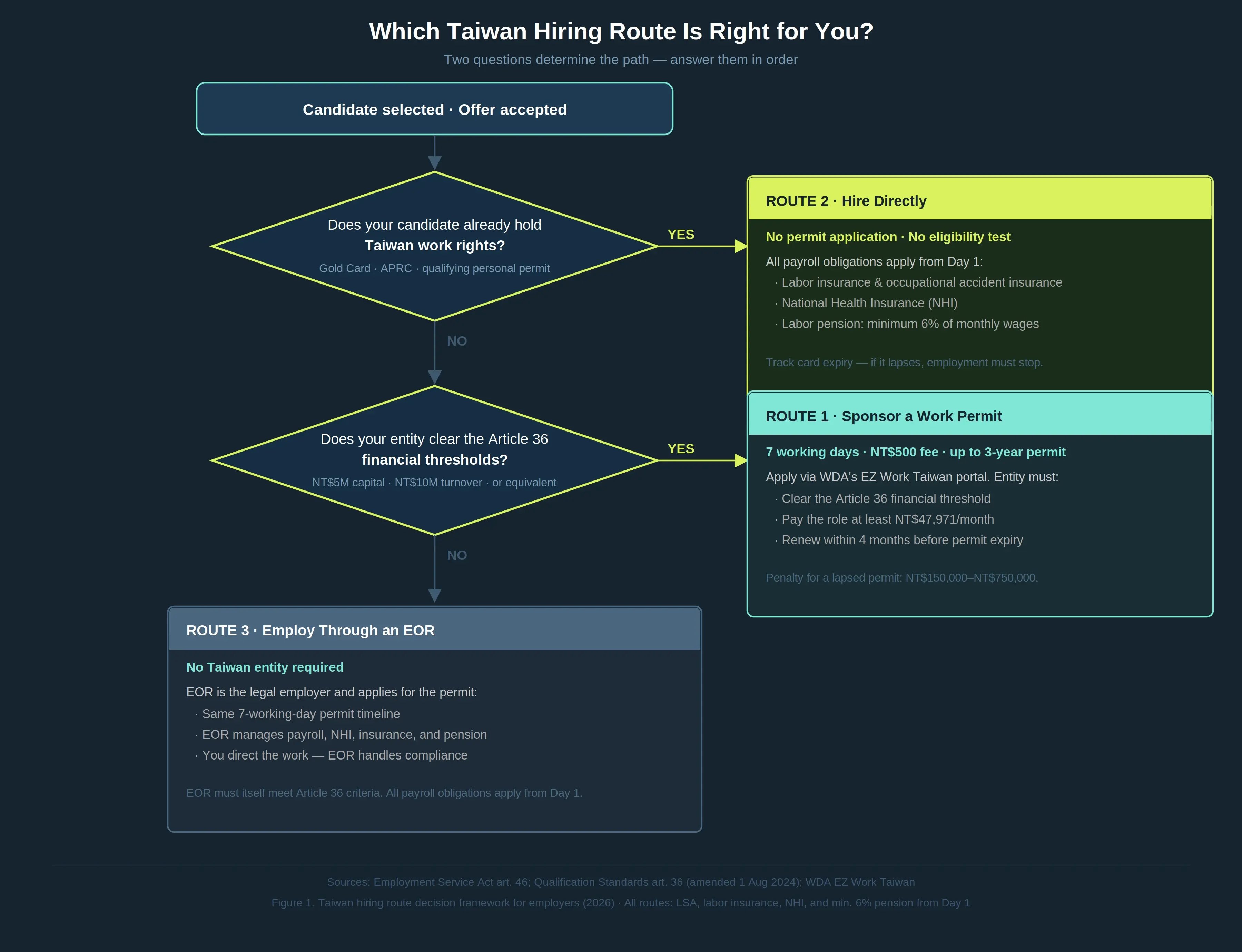
Figure 1. Taiwan hiring route decision framework for employers (2026)
3. Route 1: Sponsoring a Specialized or Technical Work Permit
Taiwan work permit requirements look at both your company and the hire.
The employer side
The financial thresholds are set by Article 36 of the Qualifications and Criteria Standards for foreign work (amended on 1 August 2024). The table below shows different options, as meeting any one will suffice:
| Company Profile |
Any One of These |
Notes |
| Established less than one year |
NT$5,000,000 paid-in capital; or NT$10,000,000 turnover; or US$1,000,000 import-export volume; or US$400,000 in agent commissions |
A foreign branch office under one year old is assessed on working capital rather than paid-in capital |
| Established one year or more |
NT$10,000,000 average annual turnover (most recent year or three-year average); or US$1,000,000 import-export volume; or US$400,000 in agent commissions |
Turnover is the route most established subsidiaries use |
| Non-financial routes |
An approved representative office with a track record of activity, or a recognized research and development center |
Useful for entities that hold no revenue on the Taiwan books |
If none of these apply, sponsorship is closed to you until the entity meets one of the thresholds. For most companies, this is the fork that sends them to Route 3 (Section 5 of this article).
The employee side
The role must pay at least NT$47,971 per month. This figure comes from a Ministry of Labor announcement dated 14 August 2017, issued under Article 8 of the qualification standards. Taiwan's statutory minimum wage, by contrast, has risen every year and reached NT$29,500 per month in 2026.
Two points follow from this:
- —Since the gap between the professional floor and the general minimum has narrowed considerably since 2017, for most genuine specialized and technical roles, the salary threshold is no longer the constraint; the employer thresholds above are.
- —Because the figure is set by announcement rather than by statute, it can be revised without a change in the law in the future. Check the WDA announcement page before each hire rather than relying on a number from a blog or search summary.
Exception: foreign graduates of Taiwan universities (from 2012 onward) may be sponsored at NT$37,619 per month. This is a specific employment category; the general NT$47,971 floor applies to all other professional hires.
The application process
Applications go through the WDA. The review fee is NT$500 per case, whether it's a new hire or an extension. Taiwan work permit processing time is seven working days from the day after the system receives a complete online application, or twelve working days for paper filing, which is permitted only with approved justification.
Permits run up to 3 years, or up to 5 years for designated special professionals across 12 listed fields, and extensions are applied for by the employer.
4. Route 2: Hiring an Employment Gold Card Holder
Candidates who already hold their own work rights are the fastest hires available in Taiwan, particularly the Gold Card holders.
What is a Taiwan Employment Gold Card?
It is a four-in-one document combining a work permit, resident visa, Alien Resident Certificate (ARC), and re-entry permit.
The card is valid for one to three years and carries open work rights with no tie to a specific employer. According to the Gold Card Office monthly data report, as of June 30 2026, there were 8,973 valid cards issued, from 17,365 approvals since launch. The largest fields are Economy, Education, Science and Technology, and Digital.
Taiwan Gold Card requirements apply across twelve fields, each with its own criteria. The one most people get confused about is the salary route: NT$160,000 per month, assessed from an annual tax statement within the past three years divided by twelve and not from a current payslip. It stands alone in Economy, Finance, and Science and Technology; in Education it is coupled with five or more years of institutional experience.
Applications for the card itself can exceed 60 business days. For employers, this matters when a prospective hire is mid-application: the hire cannot start until the card is issued.
What hiring a cardholder actually means for you
You file no permit application and pay no review fee. Everything else is identical to any other employee on your Taiwan payroll from day one, including:
- —Salary at or above the applicable statutory minimum, with Labor Standards Act terms
- —Labor insurance and labor occupational accident insurance enrollment
- —National Health Insurance (NHI) enrollment, which cardholders employed in Taiwan join directly without a residency waiting period
- —Labor pension contributions of at least 6% of monthly wages
- —Income tax withholding and annual reporting
So what is there to plan for?
The card belongs to the individual and not to the employer. If it expires and is not renewed, or renewal is refused, their right to work ends and you can no longer employ them. So track the expiry date the way you would track a contract renewal, and hold the conversation at least four months out.
Found your candidate but unclear on what you owe from day one?
Our Taiwan team can map the payroll, insurance, and pension setup for a specific hire before you sign anything.
Talk to Our Local Expert
5. Route 3: Hiring Without a Taiwan Entity
If you have no Taiwan company, or you have one that sits below the Article 36 thresholds, you have two realistic options:
Option 1: Set up an entity and sponsor the foreign hires
This means incorporating, capitalizing to the threshold, and registering with the tax authority and the labor and health insurance bureaus before offering the sponsorship. This option makes more sense when Taiwan is a real operating market for you: several hires planned, local revenue, a reason to hold a balance sheet there. Before taking this route, review the Taiwan employment guide for the full compliance picture beyond permit sponsorship.
Option 2: Employ through an Employer of Record (EOR)
An EOR is a company that acts as the legal employer of your local hire while the person works to your direction. However, the EOR does not exempt anyone from Taiwan's employment, tax, and other compliance rules. Ensure the EOR that you work with is a legal Taiwan employer that meets the sponsoring criteria, as the permit is applied for by the EOR.
This is the fork the reader arrives at with one or two hires, no local revenue yet, and a candidate who cannot wait three months for a new entity to establish its track record. For a comparison of how the same decision plays out across Singapore, Malaysia, Japan, and other APAC markets, see our guide to EOR work pass sponsorship in Asia.
6. After Approval: the ARC and the First 30 Days
This section applies to Routes 1 and 3. Gold Card holders can skip it, because the card is already an ARC.
Correction worth flagging: once the Taiwan work permit is approved and your hire enters Taiwan on a resident visa, they must apply for an Alien Resident Certificate (ARC) at a National Immigration Agency (NIA) service station within
30 days from the day after entry, not 15, which is the figure still circulating in many guides and AI summaries. The
NIA's current guidelines for foreign professionals state 30 days clearly, and missing the deadline carries a fine.
What the application involves:
- —Processing takes about ten working days, so applying early leaves room for any corrections
- —Fees are NT$1,000 per year of validity, up to NT$3,000 for a three-year certificate
- —An employment-based ARC runs with the permit period, so the two renew together
- —The work permit approval letter is a required document at the NIA counter, which is why the ARC cannot be front-loaded before the permit is issued
Enrollment runs in parallel, not after. Labor insurance and NHI registration must be filed before the first working day, and the labor pension account opened at the same time, while the ARC is still in process. Our Taiwan payroll compliance checklist sets out the full sequence and deadlines.
7. The Taiwan Work Permit Timeline: Offer to First Day
A Taiwan hire moves through six distinct stages between contract and the onboard day, each running on a different actor's clock. The table below maps all of them, with official timeframes and sources at each link:
| Stage |
Who Acts |
Official Time |
Source |
| Contract signed, documents assembled |
Employer and employee |
Varies, typically 1 to 2 weeks |
Practice |
| Work permit review |
WDA |
7 working days online, 12 on paper |
EZ Work Taiwan |
| Resident visa |
Overseas mission (BOCA) |
Varies by post, commonly 2 to 3 weeks |
Bureau of Consular Affairs |
| Entry and relocation |
Employee |
Varies |
Practice |
| ARC application |
Employee, at NIA |
File within 30 days of entry, about 10 working days to issue |
NIA |
| Insurance and pension enrollment |
Employer |
Before the first working day |
Bureau of Labor Insurance |
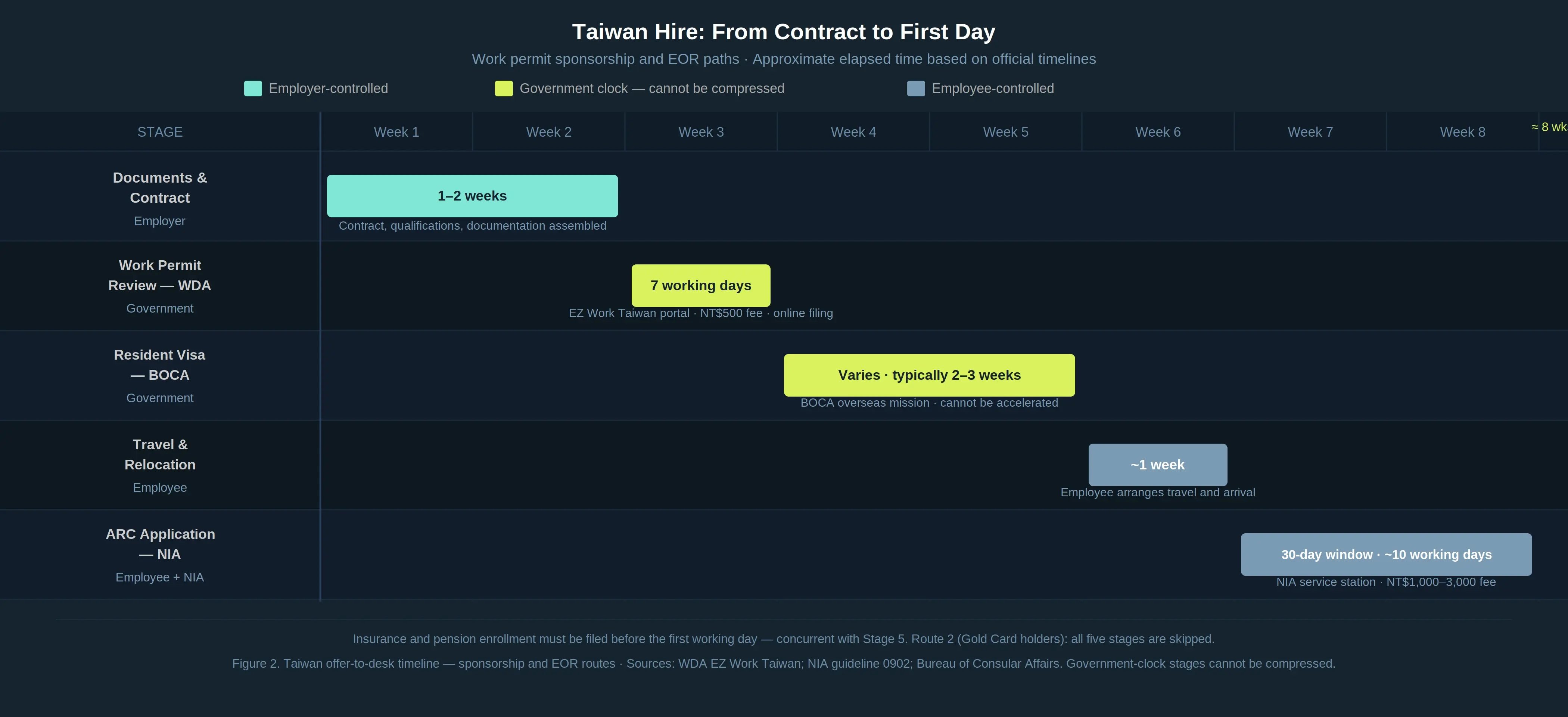
Figure 2. Taiwan offer-to-desk timeline (Routes 1 and 3)
There are only two stages on the government's clock that cannot be compressed: the permit review and the visa issuance. For every other stage, your preparation determines the pace. Incomplete or incorrect documentation at the time of submission is the most common source of delay. It is also the most avoidable.
8. What It All Costs
Below is the complete cost picture for a Taiwan hire, organized by what you pay once per hire and what recurs monthly for the duration of employment:
| Item |
Amount (NT$) |
US$ Equivalent |
Applicable Route |
| One-Time Fees, Per Hire |
| Work permit review fee |
NT$500 |
US$16 |
Sponsorship and EOR hires |
| ARC — 1/2/3 years |
NT$1,000 / 2,000 / 3,000 |
US$31 / 63 / 94 |
Sponsorship and EOR hires |
| Resident visa |
Varies by nationality and post |
Varies |
Sponsorship and EOR hires |
| Gold Card — 1/2/3 years |
NT$3,700 / 4,700 / 5,700 |
US$116 / 148 / 179 |
Gold Card applicant |
| Permit extension |
NT$500 |
US$16 |
Sponsorship and EOR hires |
| Recurring Monthly Statutory Contributions, Employer Share |
| Labor insurance and occupational accident insurance |
~8-9% of insured wage bracket |
— |
All hiring arrangements |
| National Health Insurance |
~5% of insured wage bracket |
— |
All hiring arrangements |
| Labor pension |
Minimum 6% of monthly wages |
— |
All hiring arrangements |
Converted at NT$31.848 to US$1 (CBC interbank spot market closing rate, August 21 2026). Statutory contribution rates are set annually and depend on the employee's insured salary bracket.
The one-time government fees for a first hire total roughly NT$1,500 to NT$3,500 depending on the ARC validity period. Monthly contributions (labor insurance, NHI, and pension) scale with the insured salary and continue for the duration of employment.
For a full breakdown of how each contribution is calculated, see our guide on employer contributions in Taiwan.
9. Compliance, Renewals, and Penalties
Getting to a legal hire is step one. Keeping it that way over time is where most companies get caught out, usually because a permit renewal window closes without anyone noticing.
| Compliance Item |
Detail |
Legal Basis |
| Permit renewal window |
Within 4 months before expiry; for permits under 6 months, after two-thirds of the term has elapsed |
ESA Article 52; Regulations Article 11 |
| Penalty: no valid permit |
NT$150,000 to NT$750,000 fine |
ESA Article 63 |
| Repeat offense within 5 years |
Up to NT$1,200,000 fine and/or up to 3 years' imprisonment |
ESA Article 63 |
Apply for an extension within the four months before the permit expires. For permits shorter than six months, the window opens once two-thirds of the term has elapsed. Apply early rather than at the deadline since the WDA may request corrections, and any back-and-forth eats into the time you have left. A lapsed permit, even briefly, puts you in penalty territory, and the most common route there is not an intentional violation but a gap between expiry and renewal approval that nobody was tracking.
The 2026 pension change
Before 2026, foreign professionals without permanent residency were not covered by Taiwan's new labor pension system. That changed on January 1, 2026. Employers must now contribute at least 6% of monthly wages to an individual pension account for every foreign professional they hire, from the hire date, regardless of residency status. If you have foreign professionals on your Taiwan payroll who joined before 2026, check whether their pension enrollment reflects the current rules. The
Bureau of Labor Insurance's January 2026 announcement covers the full scope of the changes.
10. How Slasify Hires in Taiwan for You
Once you have found your ideal candidate and the offer has been accepted, the steps this article describes begin right away. Since we were founded in Taiwan and operate our own entity here, we can act as the legal employer for companies with no local entity, and manage payroll and compliance for your hires during their employment.
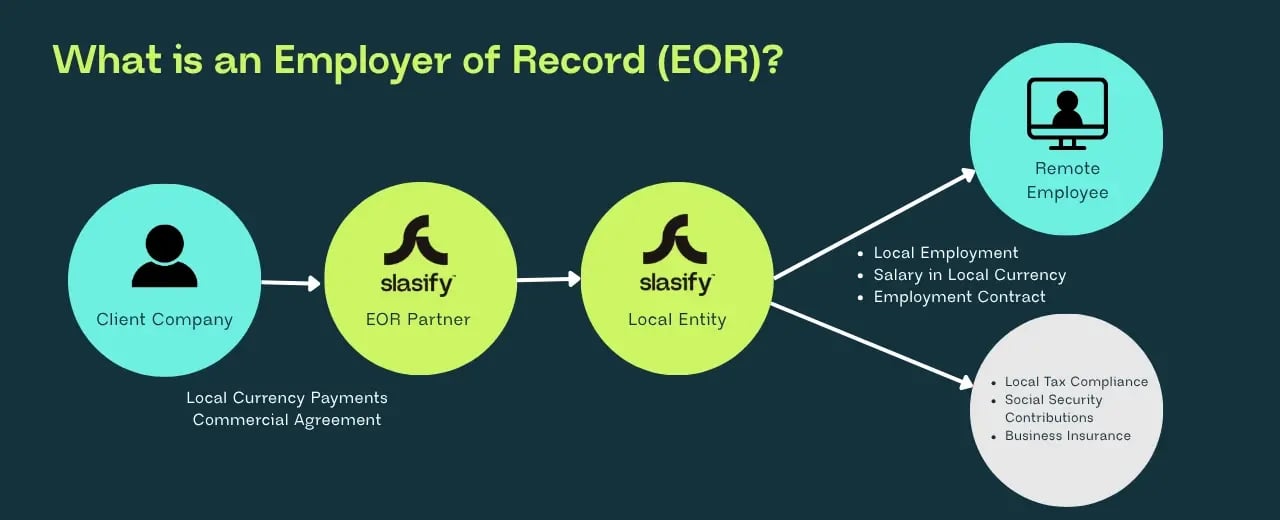
From accepted offer to first paycheck, and through every renewal that follows:
- —Employment contract drafting in line with the Labor Standards Act
- —Taiwan work permit application and documentation management
- —Statutory enrollments: labor insurance, National Health Insurance, and labor pension
- —Monthly payroll in New Taiwan Dollars, with withholding and annual reporting
- —Work permit renewals tracked and filed before the four-month window closes
- —Ongoing compliance with Taiwan employment law, including the 2026 labor pension rules
This applies across all three routes: sponsored permit, Gold Card hire, or full EOR employment. For the full product scope, see our Employer of Record and Global Payroll services.
For three consecutive years, we have been recognized as a participant in Taiwan's national talent sustainability initiative, demonstrating a long-term commitment to ethical hiring practices. Beyond Taiwan, we operate across 150+ countries through 600+ local partners, pay in 130+ currencies for 900+ companies, and hold ISO 27001 certification to ensure data security.
Taiwan Work Permit FAQs: Eligibility, Gold Cards, and Employer Obligations

Q1. How do you get a work permit for an employee in Taiwan?
To obtain a Taiwan work permit for an employee, submit the application through the WDA's EZ Work Taiwan portal, together with the signed employment contract, your hire's qualification documents, and evidence that your company clears the Article 36 financial threshold. The review fee is NT$500. A complete online application is decided within seven working days of submission.
Q2. Can we hire a US citizen to work in Taiwan?
Yes, and the process is identical to any other nationality. There is no separate Taiwan work visa for US citizens, and the permit rules are nationality-neutral. A US citizen needs either employer sponsorship, a Gold Card, or another personal work permit. Visa fees and processing times differ by nationality and by the overseas mission, but the eligibility rules do not.
Q3. How long does a Taiwan work permit take to process?
Seven working days for a complete online application, counted from the day after the WDA receives it. Paper filing takes twelve working days. That figure covers the permit only. The full timeline from contract signing to a legally active start date typically runs four to eight weeks once the resident visa, travel, and ARC are factored in.
Q4. Can we hire someone who already has a Taiwan Gold Card without sponsoring them?
Yes. A Gold Card carries open work rights and needs no employer application. However, every other employer obligation applies from day one: labor insurance, NHI, at least 6% pension contributions, and withholding. Plan for the card's expiry, because it belongs to the holder rather than to you.
Q5. What happens when an Employment Gold Card expires during employment?
Their right to work ends when the card expires. If a holder you employ does not renew in time, or renewal is refused, employment must stop. Your options at that point are to apply for a sponsored work permit or end the employment. Treat card expiry with the same attention you would give any critical contract renewal.
Q6. Does our company qualify to sponsor a work permit in Taiwan?
Your company must clear at least one of the Article 36 financial thresholds before it can sponsor a work permit. For companies under one year old, that means NT$5 million in paid-in capital, NT$10 million in turnover, or US$1 million in import-export volume. Established companies need NT$10 million in average annual turnover or equivalent trade figures. Meeting any single one qualifies.
Q7. Can an EOR sponsor a work permit in Taiwan if we have no entity?
Yes, provided the EOR already operates as a registered Taiwan employer that meets the Article 36 eligibility criteria. The EOR applies for the work permit and handles all employment compliance, payroll, and statutory enrollments as the legal employer — your company retains day-to-day management of the work. Slasify has operated its own Taiwan entity since 2016 and qualifies under these criteria; our EOR service covers the full sequence from permit application through payroll and renewals.
Hire Overseas Talent in Taiwan Fast with Full Compliance
Taiwan is one of the more workable markets in Asia for foreign professionals once you know which hiring route you are on. The Taiwan work permit clock is short, the fees are affordable, and the rules are published and updated clearly. The part that catches companies off guard is the employer qualification test and everything that lands on payroll and compliance afterwards.