|
Key Takeaways
|
-
In about 28 countries, a 13th month is the law, not a bonus. Skip it, and you owe back pay plus penalties.
|
-
Most of Latin America mandates it, along with the Philippines, Indonesia, Portugal, Spain, Greece and Italy.
|
-
The US, UK, Canada and Australia have none. Much of Western Europe pays it only by custom, so it binds you only once it sits in a contract or collective agreement.
|
-
Some countries add a 14th month (Peru, Ecuador, Guatemala, Honduras, Portugal, Greece, Angola), usually on a second date such as mid-year or Easter.
|
- Watch the lookalikes. The Dutch 8% holiday allowance and the Gulf's end-of-service pay are mandatory, but they are not 13th months, and paying one does not cover them.
|
You budget twelve monthly salaries for your first hire in Brazil, then find a thirteenth is owed by law, on a fixed December date, with penalties if you miss it. In Mexico it is the aguinaldo. In the Philippines it is 13th month pay. In Portugal there are two extra payments, not one. None of these is a bonus you can choose to skip. They are statutory wages.
The mistake runs both ways. Treat a mandatory 13th month as optional, and you have breached local labor law and owe back pay. Treat a customary one as mandatory, which is the norm across Western Europe, and you overpay and lock in an expectation you cannot easily walk back. Knowing which is which, country by country, is what decides your exposure.
This reference maps it country by country: who owes a 13th, who adds a 14th, how much, when, and how it is taxed. We run global payroll and Employer of Record across more than 150 countries, so the tables below reflect how the rules actually reach a payslip, not just what the statute says.
1. What 13th and 14th month pay actually is
A 13th month is one extra month of salary paid once a year, on top of the usual twelve. The name is just arithmetic: thirteen months of pay across a twelve-month year. A 14th month is a second such payment, usually pegged to a different date so the two fall in different halves of the year.

What matters is not the name but the legal status. Every country sits in one of three regimes:
- Mandatory. A statute, or in a few countries a binding national agreement, requires it. The amount, deadline and eligibility are set by law, and a missed deadline means penalties. Most of Latin America, southern Europe and two Southeast Asian markets fall here.
- Customary. No law requires it, but it is widespread, usually through a sector or company collective bargaining agreement (CBA). It binds you only once it is in a contract, a CBA, or an established practice. This is Western and Central Europe and most of the developed Asia-Pacific.
- None. No 13th month, and any year-end bonus is discretionary. The US, UK, Canada, Australia and the Gulf sit here.
The customary bucket is where employers slip. "Everyone pays it" is not the same as "the law compels it," and that difference decides whether skipping it is a breach or a choice.
2. The global map: mandatory, customary, or none
The table below groups the major hiring markets by regime. The regional sections that follow give the amount, the deadline, and the 14th-month position for each country.
|
Regime
|
Countries
|
|
Mandatory 13th month
|
Brazil, Mexico, Argentina, Colombia, Peru, Bolivia, Ecuador, Costa Rica, Panama, Dominican Republic, Guatemala, El Salvador, Honduras, Nicaragua, Uruguay, Paraguay, Venezuela, Portugal, Spain, Greece, Italy, Malta, Philippines, Indonesia, India, Angola, Cote d'Ivoire, Puerto Rico
|
|
Customary / collective-agreement
|
Germany, Austria, Switzerland, France, Belgium, Finland, Luxembourg, Cyprus, Croatia, Czech Republic, Slovakia, Romania, Serbia, China, Japan, Taiwan, Singapore, Malaysia, Hong Kong, Thailand, Vietnam, South Korea, Nigeria, South Africa, DR Congo, Israel
|
|
None (discretionary bonus only)
|
United States, United Kingdom, Canada, Australia, Saudi Arabia, United Arab Emirates, Chile, Turkey
|
Note: All contribution rates, thresholds, and figures reflect publicly available guidance as of July 2026.
Two things the table doesn’t show. Poland mandates a 13th month in the public sector only. And a few countries, including the Netherlands, Slovenia, Australia and the Gulf, have a mandatory annual payment that is not a 13th month and does not replace one. Section 7 handles those.
3. Latin America: the strictest region
Latin America mandates a 13th month more consistently, and enforces it harder than anywhere else. Almost every country requires it, most call it the Aguinaldo, and several add a full second month.
|
Country
|
What is owed
|
When it is due
|
14th month
|
|
Brazil
|
One month (1/12 per month worked)
|
Two installments, by Nov. 30 and Dec. 20
|
No
|
|
Mexico
|
Minimum 15 days' salary
|
By December 20
|
No
|
|
Argentina
|
50% of the highest monthly salary per semester
|
By June 30 and December 18
|
No
|
|
Colombia
|
30 days' salary (prima de servicios)
|
By June 30 and within first 20 days of Dec
|
No
|
|
Peru
|
One full month, twice a year
|
First half of July and first half of December
|
Yes
|
|
Ecuador
|
13th: 1/12 of annual pay; 14th: flat basic-salary amount
|
13th by 24 Dec; 14th by 15 Aug or 15 Mar
|
Yes
|
|
Bolivia
|
One month (second month if GDP growth clears 4.5%)
|
By 20 December
|
Conditional
|
|
Costa Rica
|
One month (1/12 of gross annual earnings)
|
First 20 days of December
|
No
|
|
Panama
|
One month, in three installments
|
15 Apr, 15 Aug, 15 Dec
|
No
|
|
Dominican Republic
|
1/12 of ordinary annual salary
|
By 20 December
|
No
|
|
Guatemala
|
Aguinaldo plus Bono 14
|
Aguinaldo Dec/Jan; Bono 14 in July
|
Yes
|
|
El Salvador
|
15 to 21 days by tenure
|
Between Oct 20 and Dec 20
|
No
|
|
Honduras
|
One month in December, one in June
|
December and June
|
Yes
|
|
Nicaragua
|
One month (aguinaldo)
|
First 10 days of December
|
No
|
|
Uruguay
|
1/12 of annual money wages
|
By June 30 and December 20
|
No
|
|
Paraguay
|
1/12 of annual remuneration
|
By December 31
|
No
|
|
Venezuela
|
Minimum 30 days (up to 120 via profit share)
|
First 15 days of December
|
No
|
Brazil's décimo terceiro comes in two installments, with income tax and social security taken out of the December one.¹ Mexico sets a floor of 15 days' salary under Article 87 of the Federal Labor Law, due before 20 December. Most employers pay 30 days, but 15 is the legal minimum.²
Argentina's Sueldo Anual Complementario is half the highest monthly salary in each semester, on fixed June and December dates.³ Colombia's prima de servicios is a full month, split across June and December, and a 2016 law pulled domestic workers and drivers into it.⁴
Four countries run a real 14th month. Peru pays two full-month gratificaciones, so a full year earns fourteen months of pay.⁵ Ecuador splits them: a 13th at one-twelfth of pay, and a 14th fixed at USD 482 for 2026 regardless of salary.⁶ Guatemala adds Bono 14 in July, and Honduras pays its fourteenth in June.⁷ ⁸
There are two outliers worth noting. Bolivia's second aguinaldo only triggers when GDP growth tops 4.5%, which recent years have missed, so it sits dormant on the books.⁹ Chile is the exception: no statutory 13th month at all, and the mandatory gratificación legal it does have is a profit share, not a fixed month of pay.
4. Europe: mandatory in the south and customary in the west
Europe splits cleanly. The south writes a 13th, and often a 14th, into law or into a near-universal agreement. On the other hand, the west and north treat it as custom, binding only through a contract or CBA.
Southern Europe: statutory or effectively universal
|
Country
|
What is owed
|
When it is due
|
14th month
|
|
Portugal
|
Holiday subsidy + Christmas subsidy, each one month
|
Christmas subsidy by 15 Dec; holiday subsidy before leave
|
Yes
|
|
Spain
|
Two pagas extraordinarias, each at least one month
|
December and a second month set by CBA
|
Yes
|
|
Greece
|
Christmas (one month) + Easter (half) + summer (half)
|
By 21 Dec; before Easter; before summer leave
|
Yes
|
|
Italy
|
Tredicesima (one month), universal via CBA
|
December
|
Sometimes
|
|
Malta
|
Four fixed statutory bonuses, about EUR 512.52/year
|
Quarterly (Mar, Jun, Sep, Dec)
|
Yes (flat sum)
|

- Portugal owes two full months: a subsídio de Natal (Christmas subsidy, Article 263) and a subsídio de férias (holiday subsidy, Article 264), the Christmas one due by December 15. Miss it, and it is a serious labor infraction.¹⁰ Spain requires two pagas extraordinarias under Article 31 of the Workers' Statute, one at Christmas and one set by the sector agreement.¹¹
- Greece is the fullest case: a full month at Christmas, half a month at Easter and half before summer leave, close to two extra months a year. This is private-sector only. The public-sector versions died in the 2012 crisis and never came back.¹²
- Italy's tredicesima is set by national sector agreements rather than a single statute, but it covers essentially every private-sector worker, so treat it as mandatory. The quattordicesima, or 14th, depends on the specific agreement.¹³
- Malta is the odd one out: its mandatory extra pay is four fixed statutory sums totaling about EUR 512.52 a year, real but far smaller than a month's salary.³²
Western, Northern and Central Europe: customary
Across Germany, Austria, Switzerland, France, Belgium, the Nordics and much of Central Europe, no statute requires a 13th month. It is common, but it binds you only through a collective agreement, a contract, or a settled practice.
|
Country
|
Position
|
Typical amount
|
|
Germany
|
Customary; binding via Tarifvertrag, contract or 3-year practice
|
Weihnachtsgeld, a fixed sum up to one month
|
|
Austria
|
Near-universal via collective agreement (Kollektivvertrag)
|
13th and 14th, each about one month
|
|
Switzerland
|
Market norm; compulsory in CCT-covered sectors
|
One month (treizième salaire)
|
|
France
|
Mandatory only where the sector agreement provides it
|
Treizième mois, about one month
|
|
Belgium
|
De facto via sector CBAs (e.g. Joint Committee 200)
|
End-of-year bonus, about one month
|
|
Finland
|
Customary via CBA (holiday bonus)
|
50% of holiday pay, about half a month
|
|
Luxembourg
|
Customary; binding via contract, CBA or custom
|
About one month
|
|
Cyprus
|
Customary; widespread in the private sector
|
One month; some sectors add a 14th
|
- Germany's Weihnachtsgeld reaches about half of all employees and becomes binding once it is in an agreement or contract, or after three years of paying it.¹⁴
- Austria delivers a 13th and 14th to most workers through industry agreements, taxed at a favorable flat rate under the "annual sixth" rule.¹⁵
- France's treizième mois is not in the Code du travail, but it is compulsory wherever the sector convention collective sets it, so the answer depends on the branch.
There are also two traps here. Poland is not a blanket 13th-month country: the extra annual salary is mandatory for public-sector staff only, and private bonuses are discretionary.¹⁷ One market worth addressing here, since its US affiliation often leads to misclassification: Puerto Rico, a US territory, does mandate a Christmas bonus, up to 2% of wages, capped at USD 600 and lower at small employers, paid between 15 November and 15 December. That is why the US answer is "no federally, yes in Puerto Rico."¹⁸
5. Asia-Pacific: two mandates, the rest by custom
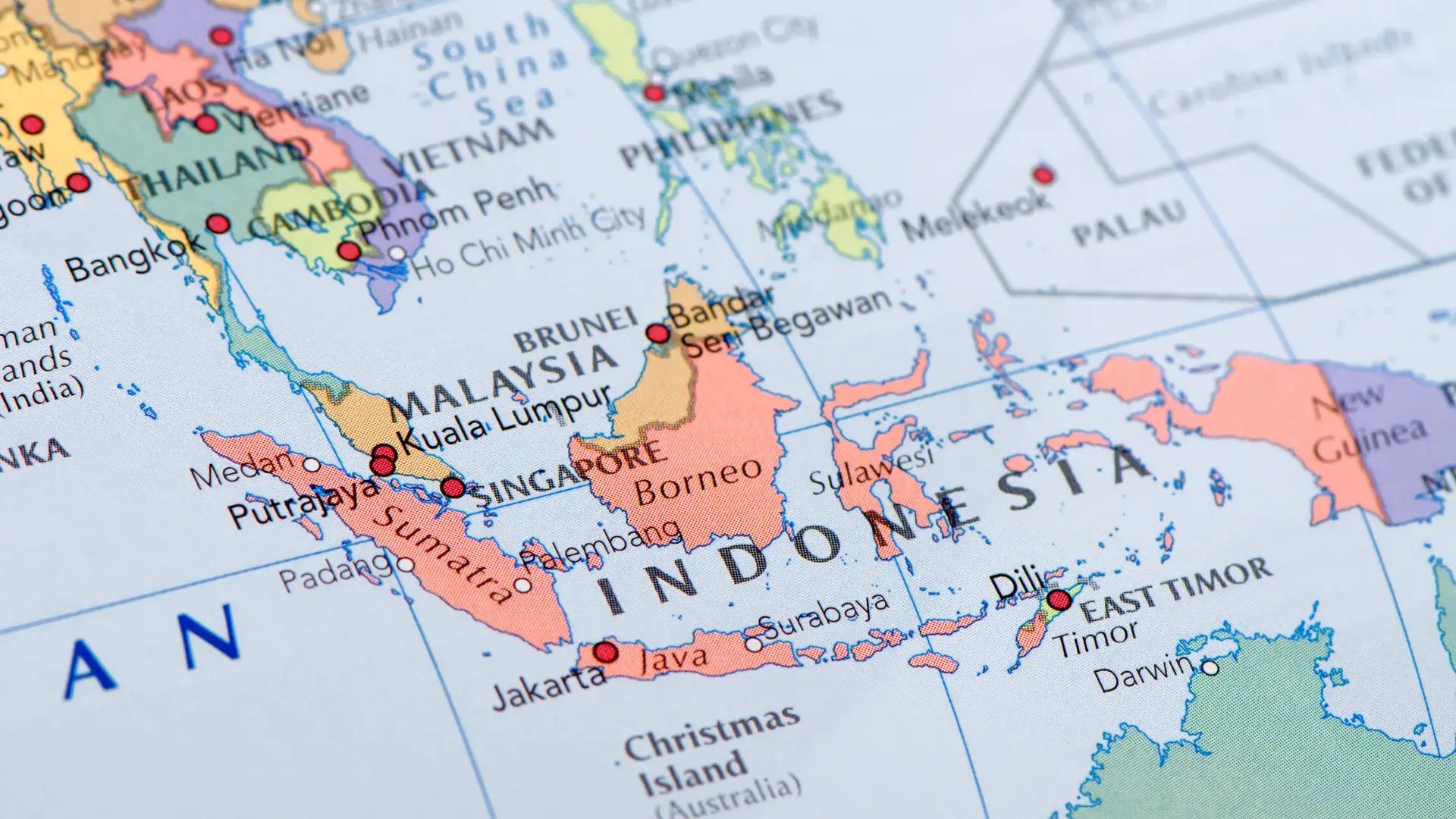
Only two Asia-Pacific economies mandate a broad 13th month, and India adds a narrower statutory bonus. Everywhere else it is customary, though in several markets it is so entrenched that skipping it is commercially unthinkable.
|
Country
|
Position
|
Amount and timing
|
|
Philippines
|
Mandatory
|
1/12 of basic annual salary, by 24 December
|
|
Indonesia
|
Mandatory
|
One month, paid before the religious holiday
|
|
India
|
Mandatory (covered establishments)
|
Statutory bonus 8.33%-20%, within 8 months of year-end
|
|
China
|
Customary
|
About one month, before Lunar New Year
|
|
Japan
|
Customary
|
Summer and winter bonuses, each 1 to several months
|
|
Taiwan
|
Customary
|
About one month, before Lunar New Year
|
|
Singapore
|
Customary
|
Annual Wage Supplement, about one month, year-end
|
|
Malaysia
|
Customary
|
About one month, year-end
|
|
Hong Kong
|
Customary
|
"Double pay," about one month, year-end
|
|
Vietnam
|
Customary
|
About one month (Tet bonus), before Lunar New Year
|
|
South Korea
|
Customary
|
Bi-annual bonuses, common at larger firms
|
|
Thailand
|
Customary
|
About one month, performance-linked
|
The Philippines is the clearest mandate anywhere. Under Presidential Decree 851, every rank-and-file employee with at least a month of service is owed one-twelfth of basic annual salary by 24 December.²⁰ It is tax-free up to a combined PHP 90,000 under the Tax Reform for Acceleration and Inclusion (TRAIN) Law.³¹
Indonesia's Tunjangan Hari Raya (THR) is one month's wages after a year of service, paid at least seven days before the employee's religious holiday. Pay late and there is a 5% fine.²¹ India is narrower still: the Payment of Bonus Act sets 8.33% to 20% of wages, but only for employees under a wage ceiling at firms with 20 or more staff, paid within eight months of year-end.²²
"Customary" here does not mean rare. Japan runs two bonuses a year, summer and winter, each often worth one to several months. Neither is statutory, but both are near-universal and enforceable once they sit in work rules or a CBA.²⁴ China's year-end bonus, usually a month before Lunar New Year, is not required by law, but it gets a preferential separate tax calculation, now extended to the end of 2027.²³
Singapore's Annual Wage Supplement is the local 13th month, but the Ministry of Manpower makes it clear that it’s not compulsory unless the contract requires it.²⁵ Hong Kong treats "double pay" as a contractual end-of-year payment once it exists, with pro-rata rules that favor dismissed staff over those who resign.²⁶ Malaysia is the same shape: customary under the Employment Act 1955, though a CBA can make it compulsory in sectors like manufacturing and plantations.¹⁹
6. Africa and the Middle East
Mixed. A couple of African markets mandate a 13th month, several treat it as strong custom, and the Gulf has none, though it does require an end-of-service benefit that people keep confusing for one.
|
Country
|
Position
|
Notes
|
|
Angola
|
Mandatory
|
Holiday subsidy + Christmas subsidy, each 50% of base pay
|
|
Cote d'Ivoire
|
Mandatory (via national CBA)
|
13th-month gratuity, pro-rated to service
|
|
Nigeria
|
Customary
|
About one month, December, at employer discretion
|
|
South Africa
|
Customary
|
"13th cheque," about one month, December
|
|
DR Congo
|
Customary
|
About one month Christmas gratuity
|
|
Israel
|
No statutory 13th
|
High-tech custom; mandatory Recuperation Pay is separate
|
|
Saudi Arabia
|
None
|
End-of-Service Award is severance, not a 13th month
|
|
United Arab Emirates
|
None
|
End-of-Service Gratuity is severance, not a 13th month
|
Angola mandates two subsidies, holiday and Christmas, each 50% of base monthly salary, under a General Labour Law rewritten in 2023, so older guides are out of date.²⁹ Cote d'Ivoire owes a 13th-month gratuity through its national interprofessional agreement.
The Gulf is the sharpest correction. Saudi Arabia and the United Arab Emirates have no statutory 13th month, and any bonus is discretionary.²⁷ Both require an End-of-Service benefit, but that is a service-based payment made when employment ends, a severance, not an annual top-up. Treating it as a 13th month gets both the timing and the math wrong.²⁸ Israel is similar: no statutory 13th month, but a mandatory annual Recuperation Pay (Dmei Havra'a), a per-day sum scaled by seniority, paid in summer.³⁰
7. Payments that look like a 13th month but are not
Some countries have a mandatory annual payment that is easy to mistake for a 13th month. It is not, and paying a 13th month does not clear the separate obligation. These are the traps that cause both underpayments and double payments.
- Netherlands, the 8% holiday allowance. Dutch law requires vakantiegeld, at least 8% of gross annual salary, paid as a lump sum in May or June. Mandatory, but a holiday allowance, not a 13th month. A true Dutch 13th month is voluntary, and the 8% does not cover it.¹⁶
- Slovenia, the holiday allowance (regres). At least the minimum wage, due by 1 July. A distinct entitlement, not a 13th-month salary.
- Australia, leave loading. Employees often get annual leave loading on holiday pay. Not a 13th month, and Australia has none.
- Belgium, double holiday pay. The statutory double pécule is separate from the end-of-year bonus that sector CBAs provide.
- Chile, the gratificación legal. A share of company profit, not a fixed month, and there is no statutory Christmas 13th month.
- Gulf end-of-service pay. Severance settled at termination, not an annual supplement.
In any of these markets, budget the mandatory item on its own and decide the 13th month separately.
Not sure which of these obligations apply to your headcount? Talk to our team, and we'll map your exact exposure by country.
8. How to calculate 13th and 14th month pay
Most mandatory 13th months come down to one formula: one month of pay, or one-twelfth of annual earnings, pro-rated for anyone who did not work the full period. Two things move the number: the base and the pro-ration.
- The base: Some countries count basic salary only, stripping out overtime and allowances. The Philippines is the clean example: one-twelfth of basic pay. Others count total remuneration, including commissions and regular allowances, like Costa Rica and Paraguay. Use gross where the law says basic, or the reverse, and you are wrong across every employee at once.
- Pro-ration: A full year earns the full amount. A mid-year starter or leaver earns a fraction, usually by complete months. Take someone on USD 60,000. A full-year 13th month is one-twelfth, so USD 5,000. Start them in June, at seven of twelve qualifying months, and you owe seven-twelfths, about USD 2,917. The same math applies on the way out, which is why a pro-rated 13th month is a standard line in a final settlement. Our termination laws guide and offboarding checklist cover where it fits the exit sequence.
- Fixed-sum regimes: A few countries skip the one-month formula. Malta pays fixed statutory sums, India a capped percentage, and Ecuador's 14th month is a flat figure regardless of salary. There, the statute's math wins.
9. Tax treatment and the mistakes that cost the most

A 13th month is usually taxable as income, but the exemptions are specific. The Philippines exempts 13th month pay plus other benefits up to a combined PHP 90,000, then taxes the rest.³¹ Mexico exempts part of the aguinaldo before the surplus is taxed. Several Latin American countries, including Costa Rica, Nicaragua and Bolivia, exempt it entirely, while Brazil and Uruguay tax it in full and Argentina taxes it above a floor.
The errors that cost the most are the same everywhere:
- Missing the statutory deadline. These are legal dates, not targets. The Philippines' 24 December, Mexico's 20 December and Portugal's 15 December are enforced, and late payment draws penalties.
- Using the wrong base. Gross where the law says basic, or dropping allowances the law includes, breaks every payslip the same way.
- Forgetting pro-ration on exit. A leaver is usually owed a pro-rated 13th month in final pay, and it is one of the most common underpayments an ex-employee will chase.
- Confusing a holiday allowance with a 13th month. The Dutch 8% and the Gulf gratuities are separate obligations. Netting them against a 13th month leaves a gap.
- Treating contractors as entitled. A 13th month is an employee entitlement, so genuine contractors do not get one. A misclassified contractor, though, can later claim it in a reclassification. Our contractor and employee pay comparison draws the line, and our Contractor Management service keeps it clean.
For the wider set of withholdings that ride alongside a 13th month each cycle, our payroll tax compliance guide covers the mechanics country by country.
10. How Slasify handles 13th and 14th month pay

Where a 13th or 14th month is mandatory, we run it end to end: the correct statutory base, pro-ration for partial years and leavers, payment on the legal date, and the right withholding and reporting per country. Under Employer of Record, we do it inside our own local entity, so a company hiring in Brazil or the Philippines carries no entity and no exposure to a missed date. Under Global Payroll, we run the same on a company's own entities. Payroll data sits under our ISO 27001-certified controls.
Where the payment is only customary, we flag it as a number to budget for, not a legal duty, so you decide with the full picture instead of learning the market norm after the offer is out.
"Slasify helped us scale in Vietnam, Philippines, Indonesia, and Malaysia. Their local knowledge and execution saved us time and costs." - Head of Operations, Astro Malaysia Holdings Berhad
We cover payroll and hiring in over 150 countries and 130-plus currencies for more than 900 companies, backed by a network of 600+ local partners on the ground, which is what lets a mandatory 13th month in Manila and a customary bonus in Kuala Lumpur run through one process instead of four local accountants.
"We've partnered with Slasify for 3 years to launch healthcare MVPs. Their developers have become key team members, and their flexibility and speed in resolving challenges have been outstanding." - Alda P., VP of Technology, House Rx
Request a demo and see where your headcount actually sits against our coverage.