For a Taiwanese company entering the EU, two institutions should be on every planning call before the incorporation paperwork starts: TAITRA, Taiwan's government-backed trade promotion council with offices in Düsseldorf and Munich, and AHK Germany (the German Trade Office Taipei), the official bilateral chamber connecting German and Taiwanese businesses since 1981. Both offer services that compress the timeline and reduce the cost of a Germany market entry — but they operate differently, and knowing which to use first changes the sequence.
| Key Takeaways |
| TAITRA and AHK Germany serve different roles — use them in sequence |
TAITRA (Düsseldorf and Munich) is Taiwan's government-backed trade promotion arm — strongest on market intelligence, trade fair access, and subsidised introductions. AHK Germany is the bilateral chamber run by the German side, strongest on structured partner search, company formation guidance, and credibility with German counterparts. Use TAITRA first to validate the market; AHK Germany once you have a specific partner or formation goal. |
| Neither institution makes you a compliant employer in Germany |
TAITRA and AHK Germany open doors and support market entry. They do not process German payroll, register your employees with the Krankenversicherung, file your monthly Lohnsteuer-Anmeldung, or manage Betriebsrat obligations. Once the first hire is made, employment compliance is a separate, parallel track that requires a specialist. |
| An EOR lets you hire in Germany before your GmbH is registered |
German GmbH formation takes 6–10 weeks and requires notarisation, Handelsregister registration, and statutory capital of €25,000. An Employer of Record can have a Germany-based employee on compliant payroll — with full social insurance enrollment and Lohnsteuer withholding — within 3–14 days, with no entity required. |
In This Guide
- Why Germany Is the Gateway to the EU for Taiwanese Companies
- What TAITRA Does in Germany — and How to Use It
- What AHK Germany Does — and How It Differs from TAITRA
- How TAITRA and AHK Germany Work Together in Practice
- Entity Setup in Germany: the Legal and Compliance Steps
- Employment Compliance in Germany: What Institutions Don't Cover
- Hiring Before Your German Entity Is Ready
- How Slasify Supports Taiwanese Companies Entering Germany
- FAQs
Taiwan–Germany bilateral trade has exceeded USD20 billion for five consecutive years. In 2025, it grew 6% to USD21.7 billion — driven by Taiwanese semiconductor and electronics exports meeting German demand for AI infrastructure, and German precision machinery meeting Taiwan's semiconductor expansion needs on the import side. TSMC's €10 billion European Semiconductor Manufacturing Company (ESMC) project in Dresden has added a structural dimension to the relationship that goes well beyond trade statistics: it is pulling Taiwanese component and materials suppliers toward Europe in the same way that TSMC's Arizona investment has pulled them toward Phoenix.
For a Taiwanese company deciding to establish its first EU presence, Germany is the logical starting point. It is Taiwan's largest European trading partner, the home of the AHK bilateral chamber network, the location of both TAITRA's European flagship offices, and the market where institutional support for Taiwan-origin companies is most developed. But the institutional support network is not the same as the compliance and employment infrastructure a company needs once it actually hires someone or opens a legal entity. This guide explains both layers: who the institutions are, what they actually do, and what a Taiwanese company still needs to sort out independently once the introductions are made.
.png?width=1920&height=1080&name=Florida%20(2).png)
1. Why Germany Is the Gateway to the EU for Taiwanese Companies
Germany's role as the primary EU market for Taiwanese companies has deep historical roots and an accelerating present. The first TAITRA office in Europe opened in Düsseldorf in 1988 — not Brussels, not Paris — because Germany was already where Taiwanese electronics and machinery exports were finding their biggest European customers.
Bilateral trade reached USD21.7 billion in 2025, up 6% year-on-year. Taiwan's exports to Germany amounted to approximately USD7.4 billion, with machinery and electrical equipment accounting for more than 60% of that total. Exports of electronic components grew 24.1% year-on-year, reflecting Germany's sustained demand for Taiwanese semiconductors. On the import side, German electrical machinery exports to Taiwan surged 91% — driven by Taiwan's semiconductor capacity expansion and smart manufacturing upgrades. (AHK Germany, January 2026)
TSMC's ESMC fab in Dresden — a €10 billion investment supported under the EU Chips Act — signals that Taiwan's engagement with Europe is moving beyond product exports toward embedded local manufacturing and R&D. For a Taiwanese supplier, engineering firm, or technology company considering EU expansion, Germany offers three practical advantages:
- —Customer proximity: German industry — automotive, mechanical engineering, chemicals, healthcare — is one of Taiwan's most significant end-customer bases. A presence in Germany shortens the sales and service cycle for existing customers.
- —Supply chain positioning: TSMC's ESMC and related investments create downstream demand for Taiwanese materials, chemicals, precision equipment, and engineering services — and that demand needs local fulfilment capability.
- —Institutional infrastructure: Germany has more bilateral support infrastructure for Taiwanese companies entering Europe than any other EU market: two TAITRA offices, the AHK Germany bilateral chamber, Germany Trade & Invest representation in Taipei, and a well-established IHK (regional chamber) system.

Germany as the EU gateway in practice
Many Taiwanese companies use Germany not only as their primary EU market but as the base for serving the rest of Europe. A German GmbH can enter EU single-market contracts, employ EU nationals, and access EU public procurement. For companies whose EU sales span France, the Netherlands, Poland, and the Nordics alongside Germany, a single German entity often supports all of those markets from one legal structure.
2. What TAITRA Does in Germany — and How to Use It
TAITRA (Taiwan External Trade Development Council) is Taiwan's foremost non-profit trade promotion organization, founded in 1970 and jointly sponsored by the government and industry associations. It operates over 60 overseas offices worldwide, with two offices in Germany: Düsseldorf (the European flagship, opened 1988) and Munich (covering southern Germany and the German-speaking market).
What TAITRA's Germany offices actually do
| Service area |
What it involves |
Most useful for |
| Market intelligence and research |
Industry reports, market sizing, regulatory landscape briefings, sector-specific demand analysis for the German and EU market |
Companies validating demand before committing to a Germany entry |
| Trade fair support |
Taiwan Pavilion organisation at Hannover Messe, electronica, MEDICA, automatica; shared booth subsidies; logistics coordination for Taiwanese exhibitors |
Companies entering the German market through trade show exposure before investing in a permanent presence |
| Procurement meetings and buyer matchmaking |
Organised B2B meetings between Taiwanese suppliers and German/European buyers; procurement meetings hosted in Germany or Taiwan |
Manufacturers looking to open customer relationships without a permanent Germany sales team |
| Business consulting and referrals |
Initial market entry consulting; referrals to German lawyers, accountants, and local advisors; introductions to sector associations (ZVEI, VDA, VDMA) |
Companies at the pre-incorporation stage needing Germany-fluent professional referrals |
| Digital and e-commerce promotion |
Taiwantrade.com platform promotion; digital marketing support; visibility campaigns for Taiwanese products in European channels |
Consumer goods and B2B product companies building European brand recognition |
.png?width=1920&height=1080&name=Florida%20(3).png)
Taiwan Expo Europe is TAITRA's largest European engagement platform. The 2026 edition in Warsaw attracted more than 3,000 visitors from 46 countries, with over 900 business meetings across three days, focusing on semiconductors, AI, advanced manufacturing, and resilient supply chains.
How to engage TAITRA's Germany offices
TAITRA's Düsseldorf and Munich offices are the practical starting point for most Taiwanese companies exploring Germany. Both offices are staffed with trade specialists who speak Mandarin, German, and English and provide initial market briefings, sector-specific buyer introductions, and professional referrals — typically at no or low cost for Taiwanese companies, as TAITRA is government-sponsored. Contact: www.taitra.org.tw
3. What AHK Germany Does — and How It Differs from TAITRA
AHK Germany — formally the German Trade Office Taipei (GTO) — is the Delegation of German Industry and Commerce in Taiwan, established in 1981. It is part of the worldwide network of German Chambers of Commerce Abroad (AHKs), operating in 150 locations across 93 countries. Its service arm, DEinternational Taiwan Ltd., provides commercial services: market entry support, partner search, recruiting, training, and office-in-office arrangements.
AHK Germany's services for Taiwanese companies entering Germany
| Service |
What it involves |
Practical use |
| Business partner search |
Three-step process: identification of potential German partners (from €475), contact and initial outreach in German (from €140), and meeting support including translation (from €150) |
Finding distributors, agents, JV partners, or customers in Germany without a Germany-based sales team |
| Market entry advisory |
Tailored market analysis, regulatory guidance, company establishment advisory, investment consulting, legal and accounting referrals within the AHK Germany member network |
Companies planning a GmbH or branch registration needing local professional referrals with AHK vetting |
| Business delegations |
DEinternational Taiwan organises business delegations to Germany and market survey trips for Taiwanese companies wanting structured, accompanied exposure to German counterparts |
Senior leadership teams making market go/no-go decisions before committing capital |
| Trade fair representation |
AHK Germany represents trade fair companies in Germany; helps Taiwanese companies navigate exhibitor registration, logistics, and B2B programmes at German exhibitions |
Companies exhibiting at Hannover Messe, electronica, or industry-specific German trade shows |
| Recruiting and HR advisory |
Recruiting and training services; guidance on German employment norms and candidate sourcing via the AHK member network |
Taiwanese companies planning their first Germany-based hire and needing guidance on German employment norms |
AHK Germany vs TAITRA: the key distinction
TAITRA is a Taiwanese government institution — government-subsidised, Mandarin-first, focused on outbound promotion for Taiwanese companies. AHK Germany is a German bilateral chamber — commercially structured, German-first, focused on bilateral trade facilitation in both directions. TAITRA's value is lower-cost entry validation and Taiwanese-government-backed introductions. AHK Germany's value is credibility with German counterparts and access to vetted professionals inside Germany. For most Taiwanese companies: TAITRA opens the door; AHK Germany helps close the deal.
4. How TAITRA and AHK Germany Work Together in Practice
The two institutions are complementary, and a Taiwanese company entering Germany typically benefits from engaging both in sequence.
| Entry stage |
Primary institution |
What they provide |
What you still need separately |
| Market validation |
TAITRA Düsseldorf or Munich |
Market reports, sector briefings, introductions to German industry contacts, trade fair participation |
Legal assessment of your product for EU regulatory compliance (CE marking, GDPR, product liability) |
| Partner identification |
AHK Germany (DEinternational Taiwan) |
Structured three-step partner search in German, vetted contact list, meeting facilitation with translation |
Legal review of distribution, agency, or JV agreement under German commercial law |
| Entity formation |
AHK Germany + Germany Trade & Invest (GTAI) |
GmbH vs branch vs representative office guidance; investor incentive information; investment location advisory |
Notary engagement, Articles of Association drafting, Handelsregister registration, Finanzamt registration, statutory capital arrangement |
| First German hire |
AHK Germany (recruiting advisory) + EOR or own entity |
Candidate sourcing guidance, German employment norms briefing, introductions to local HR counsel |
Written employment contract under German law, social insurance registration, Lohnsteuer withholding and monthly payroll |
| Ongoing operations |
Own Germany entity + payroll/HR provider |
TAITRA and AHK Germany remain relevant for trade fair promotion, business development introductions, and bilateral events |
Monthly Lohnsteuer filing, quarterly VAT, Betriebsrat obligations (>5 employees), ongoing payroll compliance |

Also worth knowing: Germany Trade & Invest (GTAI)
GTAI is the German government's economic development agency, with a Taipei representative office. It provides detailed investment location data, sector analysis, and investor incentive guidance for foreign companies entering Germany. For a Taiwanese company deciding between Düsseldorf, Frankfurt, Stuttgart, or Munich — or evaluating a federal state incentive for a manufacturing facility — GTAI is the right contact. It works closely with the AHK network and is a natural complement to the institutional support sequence.
5. Entity Setup in Germany: the Legal and Compliance Steps
TAITRA and AHK Germany open doors and provide introductions. They do not incorporate your company for you. The GmbH is the most common legal form for foreign companies establishing in Germany — limited liability, suitable for holding real estate and IP, and the expected structure for a business entering Germany as a serious operational subsidiary.
| Step |
What it involves |
Timeline |
| Articles of Association (Gesellschaftsvertrag) |
Draft and notarise the founding documents. A German notary must be present at signing — foreign shareholders may require a physical appearance or power of attorney |
1–2 weeks |
| Statutory capital deposit |
Deposit minimum €25,000 (at least 50% at formation, i.e. €12,500) into a German bank account. The bank confirmation is required for Handelsregister registration |
1–3 weeks (bank account opening for foreign entities often takes the longest) |
| Handelsregister registration |
The notary files the registration with the commercial register at the local court (Amtsgericht). The GmbH has no legal standing until this registration is complete |
1–3 weeks after notarisation |
| Finanzamt (tax authority) registration |
Register for Körperschaftsteuer (corporate income tax), Gewerbesteuer (trade tax), and VAT (Umsatzsteuer). A Steuernummer is issued, required for all invoicing |
2–4 weeks after Handelsregister |
| Transparency Register |
Since 2021, beneficial owners holding more than 25% must be disclosed. This applies to all foreign shareholders of a German GmbH |
At formation |
| Employer registration (pre-first hire) |
Register with the Bundesagentur für Arbeit and enroll with the relevant Krankenkasse and Berufsgenossenschaft before the first employee starts |
1–2 weeks (can run in parallel with Finanzamt) |
End-to-end, a GmbH formation for a Taiwanese company with no prior German presence typically takes 6–10 weeks from the notary appointment to a fully registered, tax-enrolled entity ready to make its first hire. Bank account opening is often the slowest step: German banks apply thorough KYC checks to foreign entities.
Planning your Germany entity setup and need employment compliance sorted in parallel?
Our Germany team can map the hiring and payroll timeline against your formation schedule — so your first employee doesn't have to wait for your Steuernummer.
6. Employment Compliance in Germany: What Institutions Don't Cover
Once a Taiwanese company has a German entity and makes its first hire, it enters one of the more complex employment compliance environments in the world. Germany's labour law framework is built around strong employee protections, mandatory social insurance contributions, works council rights, and sector-wide collective agreements.
Social insurance contributions — the German SSC stack
| Insurance type |
Total rate (approx.) |
Employer share |
Notes |
| Krankenversicherung (health insurance) |
~14.6% + supplementary |
~7.3% |
Employees above the income threshold may opt for private insurance |
| Rentenversicherung (pension) |
18.6% |
9.3% |
Subject to contribution ceiling (Beitragsbemessungsgrenze); reset annually |
| Pflegeversicherung (long-term care) |
~3.4% |
~1.7% |
Rate varies by number of children; higher for childless employees over 23 |
| Arbeitslosenversicherung (unemployment) |
2.6% |
1.3% |
Subject to contribution ceiling |
| Unfallversicherung (accident insurance) |
Varies by sector (0.5%–10%+) |
100% employer |
Administered by the Berufsgenossenschaft; rate depends on industry risk classification |

Key employment law points for Taiwanese employers entering Germany
- —Written contracts required: German law requires written employment contracts specifying start date, place of work, job description, remuneration, working hours, holiday entitlement, notice periods, and reference to any applicable collective bargaining agreement.
- —Holiday entitlement: The minimum statutory annual leave is 20 working days (based on a 5-day week). Most employment contracts and collective agreements provide 25–30 days.
- —Sick pay: Employers pay full salary for the first six weeks of illness under the Entgeltfortzahlungsgesetz. After six weeks, the Krankenkasse takes over.
- —Works councils (Betriebsrat): Required in companies with five or more employees. The Betriebsrat must be consulted on major HR decisions including dismissals, changes to working hours, and internal policies. This is the single most important German labour law feature for a Taiwanese company unfamiliar with European employment norms to understand before growing past five employees.
- —Dismissal protection: The Kündigungsschutzgesetz applies from six months of employment and in companies with more than ten employees. Dismissals without valid social justification are contestable at the Arbeitsgericht (labour court). Notice periods are statutory and scale with tenure.
- —Lohnsteuer (payroll tax withholding): Employers must withhold income tax from employee wages monthly and remit to the Finanzamt. Monthly Lohnsteuer-Anmeldung is required from the first month of employment.
7. Hiring Before Your German Entity Is Ready
For a Taiwanese company that needs a Germany-based employee before the GmbH formation process is complete, an Employer of Record is the practical solution. Under an EOR arrangement in Germany, the EOR is the legal employer — signing the German employment contract, registering the employee with the relevant Krankenkasse and Berufsgenossenschaft, withholding and remitting Lohnsteuer monthly, and managing all employer-side obligations under German labour law.
| |
Own German GmbH |
EOR arrangement |
| Time to first paycheck |
6–10 weeks from formation decision |
3–14 days from employee onboarding |
| Statutory capital required |
Minimum €25,000 (€12,500 at formation) |
None |
| Employment contract |
Your GmbH signs — your obligation |
EOR signs — EOR's obligation |
| Social insurance |
Your GmbH registers and files all Meldungen |
EOR registers and files all Meldungen |
| Lohnsteuer withholding |
Your GmbH withholds and remits monthly |
EOR withholds and remits monthly |
| Kündigungsschutz |
Applies to your entity — you manage the risk |
Applies to EOR entity — EOR manages compliance |
| Best for |
15+ employees planned; Germany as primary operating base; long-term commitment justified |
1–15 employees; entity not yet formed; speed required; market still being validated |
The EOR is also used by companies that have completed their GmbH formation but want to manage Germany payroll through a specialist provider rather than building an internal German HR and payroll function from scratch. For a Taiwanese company with 2–10 Germany-based employees, running payroll through an EOR or global payroll provider is often more efficient than hiring a German-fluent HR manager and maintaining a local payroll system.
8. How Slasify Supports Taiwanese Companies Entering Germany
Slasify was founded in Taiwan and has supported companies expanding into Germany and across Europe since 2016. For Taiwanese companies that have used TAITRA and AHK Germany to validate the market and identify partners, we handle the employment compliance layer — the part that starts when the first offer letter goes out.
From the point of hire through every monthly payroll cycle and annual reporting obligation:
- —Employer of Record onboarding in Germany — typically 3–14 days from completed employee information, with no GmbH required
- —German employment contract drafting in compliance with the Bürgerliches Gesetzbuch (BGB) and relevant collective bargaining agreements
- —Social insurance registration: Krankenversicherung, Rentenversicherung, Pflegeversicherung, Arbeitslosenversicherung, and Berufsgenossenschaft enrollment
- —Monthly Lohnsteuer withholding, remittance, and Lohnsteuer-Anmeldung filing with the Finanzamt
- —Monthly social insurance Meldungen to the relevant Krankenkasse
- —Annual Lohnsteuerbescheinigung (payroll tax certificates) for all employees
- —Betriebsrat advisory coordination when the five-employee threshold is approached
- —Transition support when the Taiwanese company is ready to transfer employment to its own GmbH
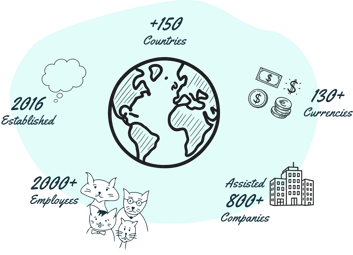
For Taiwanese companies that need multi-country coverage — Germany plus France, the Netherlands, Poland, or other EU markets — Slasify's global payroll solution covers payroll across Europe from a single provider. Slasify supports payroll and hiring in over 150 countries across 130+ currencies, serving more than 900 companies worldwide. We hold ISO 27001 certification for information security.
Use the Institutions. Then Build the Compliance Layer.
TAITRA and AHK Germany are genuinely useful — they represent decades of institutional relationship-building between Taiwan and Germany. But they are market-entry facilitators, not employment compliance providers. The moment a Taiwanese company signs its first German employment contract, a separate compliance obligation begins: monthly Lohnsteuer, social insurance Meldungen, Mindestlohn tracking, and Kündigungsschutz management. That obligation does not go away when the partner search is complete.
Map Your Germany Hiring Timeline
Talk to our Germany team about EOR onboarding, payroll compliance setup, or transitioning to your own GmbH payroll.
Germany Market Entry FAQs for Taiwanese Companies
Q1. What is TAITRA, and how can it help a Taiwanese company enter Germany?
TAITRA (Taiwan External Trade Development Council) is Taiwan's government-backed trade promotion organisation, founded in 1970. In Germany, it operates offices in Düsseldorf and Munich that provide market intelligence, trade fair support, buyer matchmaking, and initial business consulting — typically at low or no cost to Taiwanese companies, as TAITRA is government-sponsored. It is the practical first contact for a Taiwanese company validating whether the German market is a fit. TAITRA does not incorporate companies or provide employment compliance services.
Q2. What is AHK Germany, and how is it different from TAITRA?
AHK Germany is the German Trade Office Taipei — the Delegation of German Industry and Commerce in Taiwan, part of the worldwide network of German Chambers of Commerce Abroad (AHKs). Its commercial service arm, DEinternational Taiwan Ltd., provides structured business partner search services in Germany (starting from €475 for the identification step), market entry advisory, business delegation organisation, and recruiting support. Unlike TAITRA, which is a Taiwanese government institution, AHK Germany is run by the German side and carries credibility with German counterparts. Use TAITRA first for market validation; AHK Germany once you have a specific partner or formation goal.
Q3. How long does it take to set up a GmbH in Germany as a Taiwanese company?
Typically 6–10 weeks from the notary appointment to a fully registered, tax-enrolled GmbH. The main steps are notarisation of the Articles of Association (1–2 weeks), deposit of the minimum €25,000 statutory capital in a German bank account (1–3 weeks — bank account opening for foreign entities often takes the longest due to KYC checks), Handelsregister registration at the local court (1–3 weeks), and Finanzamt registration for corporate tax, trade tax, and VAT (2–4 weeks).
Q4. What are the main employer obligations in Germany that Taiwanese companies are not used to?
The three most common surprises for Taiwanese employers entering Germany are: the Betriebsrat (works council), which must be established in companies with five or more employees and has consultation rights over dismissals, working hour changes, and internal policies; the Kündigungsschutzgesetz (Protection Against Dismissal Act), which requires social justification for terminations from six months of employment; and the German social insurance stack, where the combined employer contribution across health, pension, long-term care, unemployment, and accident insurance runs approximately 20–22% of gross wages per employee. Germany has no concept of at-will employment — the contrast with Taiwan's Labor Standards Act is significant, but Germany's employee protections are considerably stronger.
Q5. Can a Taiwanese company hire someone in Germany before the GmbH is registered?
Yes — through an Employer of Record. An EOR is the legal employer of the Germany-based employee, handling the employment contract, social insurance registration, monthly Lohnsteuer withholding, and all other employer-side obligations under German labour law. The Taiwanese company directs the employee's work and pays a monthly EOR fee. EOR onboarding in Germany typically takes 3–14 days from completed employee information — far faster than the 6–10 week GmbH formation timeline. This is the standard route for Taiwanese companies that need a sales or business development presence in Germany while the entity formation is underway.
Q6. Do I need to use both TAITRA and AHK Germany, or is one enough?
They are complementary rather than alternatives. TAITRA is the better starting point for market validation, initial industry introductions, and trade fair access — all at low or no cost. AHK Germany's DEinternational service arm is better for structured business partner search in German, market entry advisory with local professional network access, and business delegation logistics. For a first Germany entry, engage TAITRA's Düsseldorf or Munich office for the initial briefing, then commission AHK Germany's partner search service once you have a defined product and target customer profile.
Q7. Does Slasify cover Germany payroll and EOR?
Yes. Slasify operates in Germany as part of its global payroll and Employer of Record coverage across 150+ countries. For Taiwanese companies entering Germany, Slasify can onboard a Germany-based employee through EOR within 3–14 days, handling the full employer compliance stack: employment contract drafting under German law, social insurance registration, monthly Lohnsteuer filing, and Betriebsrat advisory support as the team grows. For companies that have already established a GmbH and need German payroll managed externally, Slasify's global payroll solution covers Germany as part of a multi-country service. Contact our team for a specific scope and timeline assessment.
Sources: AHK Germany — Germany–Taiwan Bilateral Trade 2025 Statistics (January 2026); AHK Germany — Who We Are; AHK Germany — Market Entry and Expansion services; TAITRA — About TAITRA; Wikipedia — Taiwan External Trade Development Council; Computer Automation — Taiwan Expo Europe 2026 in Warsaw; Institut Montaigne — Semiconductors in EU–Taiwan Relations; Slasify Employer of Record; Slasify Global Payroll.